
Ask anyone who was a kid in the 1970s to name the coolest job on television, and a lot of them will land in the same place. Not a cowboy. Not a spy. A young firefighter-paramedic in a light-blue uniform, sprinting off the back of a red rescue truck with a big orange box in his hand. His name was Johnny Gage. And the actor who made a whole generation want to grow up and save people for a living was Randolph Mantooth.
Mantooth died on Thursday, July 9, at a hospice in Ventura, California. He was 80. His brother, Donald, confirmed the news. He had been ill for years, fighting a run of cancers that started, back in 2015, with cancer of the throat.
He very nearly made it to another birthday. He was born Randy DeRoy Mantooth on September 19, 1945, in Sacramento, the oldest of four kids. He came up the hard way in the business, small parts and long odds, and then in 1972 a role landed that would follow him for the rest of his life.
The show was “Emergency!” He played John Gage, a paramedic out of the fictional Station 51 of the Los Angeles County Fire Department. Beside him, every single week, was Kevin Tighe as Roy DeSoto. Two young guys, a squad truck, and whatever the city threw at them that hour. It ran on NBC from January 1972 to May 1977, six seasons and a string of TV movies after that, and for millions of families it was appointment viewing.
Here is the part most of those families never realized while they watched. Gage and DeSoto were not just pretending. To make the medical scenes look right, Mantooth and Tighe actually took paramedic classes and trained alongside real firefighters. Mantooth did most of his own stunts too. When you saw Johnny Gage haul someone out of a wreck, a good deal of the time you were watching Randy Mantooth do the hauling.
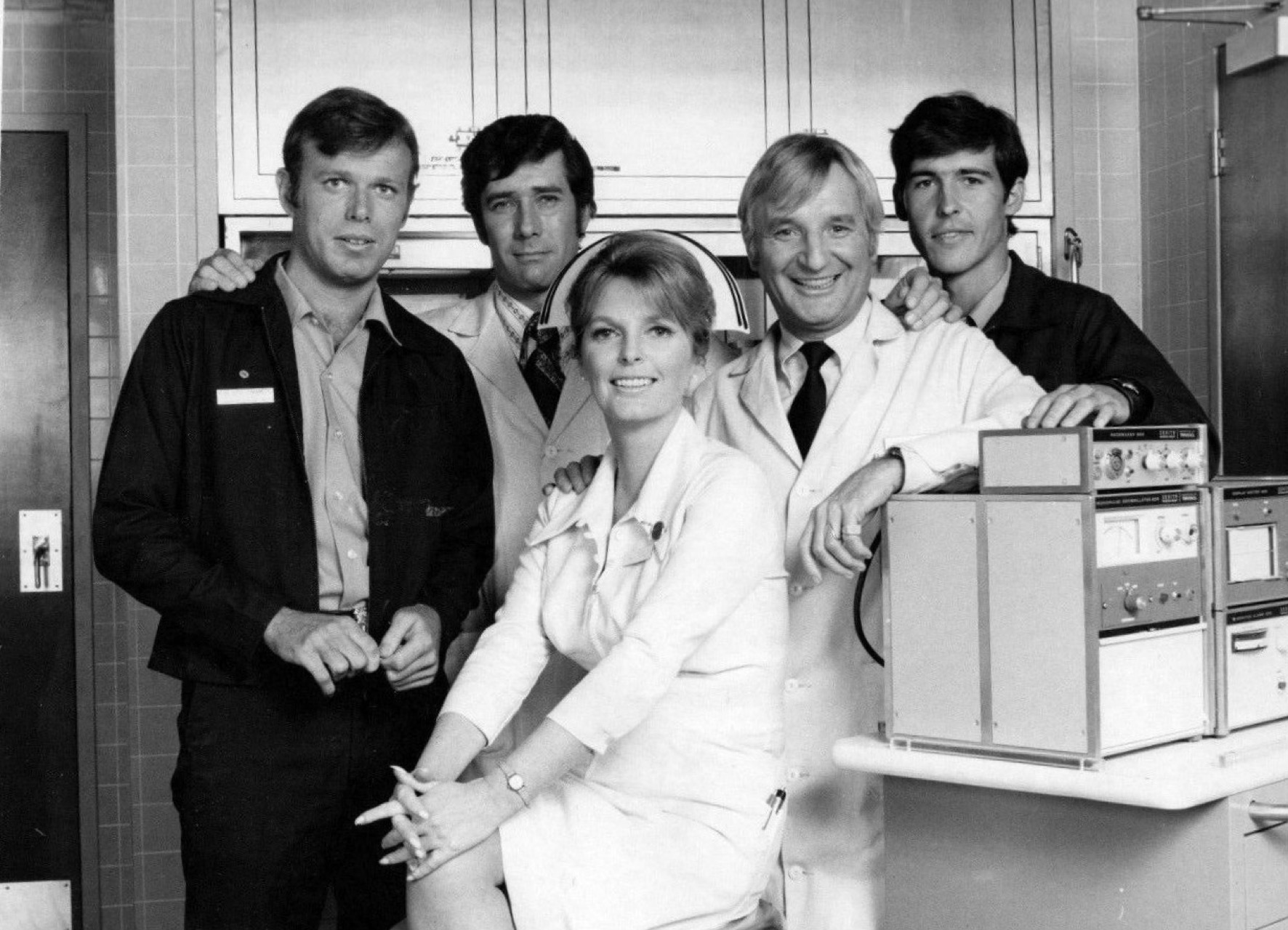
And then the show did something almost no drama ever does. It reached off the screen and rewrote real life.
When “Emergency!” first aired, the paramedic barely existed as a job in America. You could count all the paramedic units in North America on your fingers, roughly a dozen of them. People watched Gage and DeSoto arrive, start an IV, radio a doctor, keep a stranger breathing until the ambulance came, and something clicked in living rooms and city councils across the country. Within three years, 46 states had passed laws putting paramedics on the street. Within ten years, more than half of all Americans lived within ten minutes of a paramedic. A television character in a Tuesday-night rerun helped build the system that shows up when you dial for help today.
Mantooth understood exactly what the show had done, and he never once acted like it was beneath him. For the rest of his life he showed up for firefighters, paramedics and EMTs, at conventions, at fundraisers, at fire stations. In 2012 the Los Angeles County Fire Department made him and Tighe honorary fire chiefs. Not a prop title. A thank-you.
The friendship you saw on screen turned out to be the real thing, too. Randy and Kevin met as two unknowns on their first big show and stayed close for more than fifty years. “We were both working-class kids on our first show,” Tighe told USA Today in 2025, and that plain sentence carried the whole thing. When Mantooth married for the second time, in 2002, there was never a question about who would stand next to him. He asked his old partner from Squad 51 to be his best man.
There was a long career after Johnny Gage, even if that role never let go of him. He worked steadily in daytime television for years, on “Loving” as Clay Alden and later Alex Masters, and on “As the World Turns,” “General Hospital” and “One Life to Live.” A whole second audience knew his face without ever having seen the red truck.
But it is the paramedic they are remembering this week. The lanky kid with the crooked grin who made rescue look like the best job in the world, and who, without ever meaning to, talked a country into building something that outlived him. Somewhere tonight a real paramedic is climbing into a real rig, doing work that half of America only understood because a young actor made it look like heroism forty years ago.
Rest easy, Johnny. Thanks for the ride.