
Picture the ocean 450 million years ago. No forests on the shore, because there were no trees yet. No familiar North Star overhead. The Atlantic didn’t exist. And already, down in that ancient water, something was cruising with a mouth full of teeth and a body built to hunt. Sharks were here first.
We tend to file sharks under “prehistoric,” the way we file dinosaurs, and leave it at that. But sharks aren’t a chapter in the story of old Earth. They’re closer to the cover. When you line them up against the things we call ancient, the sharks keep winning, and it stops being cute and starts being genuinely strange.
Start with trees, since that’s the one that breaks people’s brains. Sharks show up in the fossil record around 450 million years ago, back in the Late Ordovician. The earliest true trees didn’t take root until roughly 390 million years ago. That’s a 60-million-year head start. Sixty million years is longer than the entire stretch from the last non-bird dinosaur to your morning coffee. So a shark’s basic design predates wood. It predates leaves. It predates the whole concept of a forest.
Now look up. The North Star, Polaris, the fixed point we’ve used to steer ships and find our way home, is younger than sharks too. Sharks were already an old success story before that particular star ever lit up. The same goes for the Atlantic Ocean, which only started splitting open a couple hundred million years ago. Sharks watched a brand-new ocean form around them and simply kept swimming.
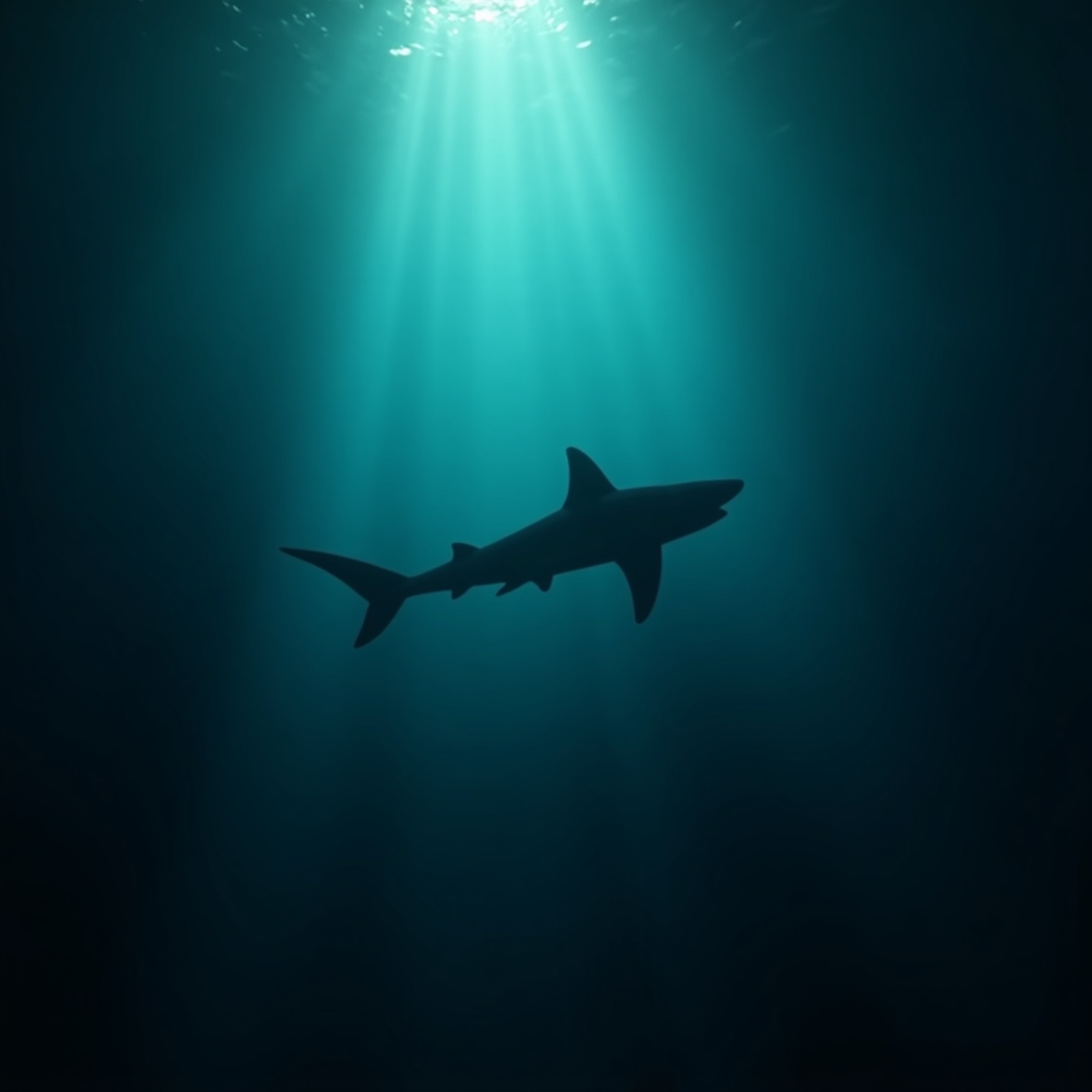
Then there’s the one that really lands. Saturn’s rings, the most recognizable feature in the whole solar system, may be a recent addition. NASA’s Cassini probe took a close look before it ended its mission, and the data pointed to rings that formed somewhere between 10 and 100 million years ago. Read that again. It’s possible the dinosaurs looked up at a Saturn with no rings at all, a plain pale ball in the sky, while sharks had already been patrolling the seas for a couple hundred million years. The rings are the newcomers. The sharks are the old-timers.
So how does anything survive on that scale? Sharks got a lot right, early, and then mostly left it alone. Cartilage instead of heavy bone, which keeps them light and flexible. A sense of smell so sharp it reads currents like a trail of directions. And teeth that never stop coming, rows of them rolling forward and replacing themselves for a whole lifetime, thousands over the years. Lose one, another slides into place. It’s a body that was hard to improve on, so evolution mostly didn’t bother.
That’s the quiet punchline in all of this. Sharks didn’t survive by changing constantly. They survived by nailing the design and holding steady while the world reinvented itself around them. Forests grew. Dinosaurs rose and vanished. Continents cracked apart and ice ages ground across the planet and melted away. Through all of it, the shark kept the same blueprint that was already working in the Ordovician.
Next time someone calls a thing “old as the hills,” you can smile a little, because the hills lost that race a long time ago. There’s an animal in the water right now, this exact moment, running on a design older than trees, older than the North Star, older than the rings of Saturn. What’s the oldest living thing you’ve ever stood next to?