
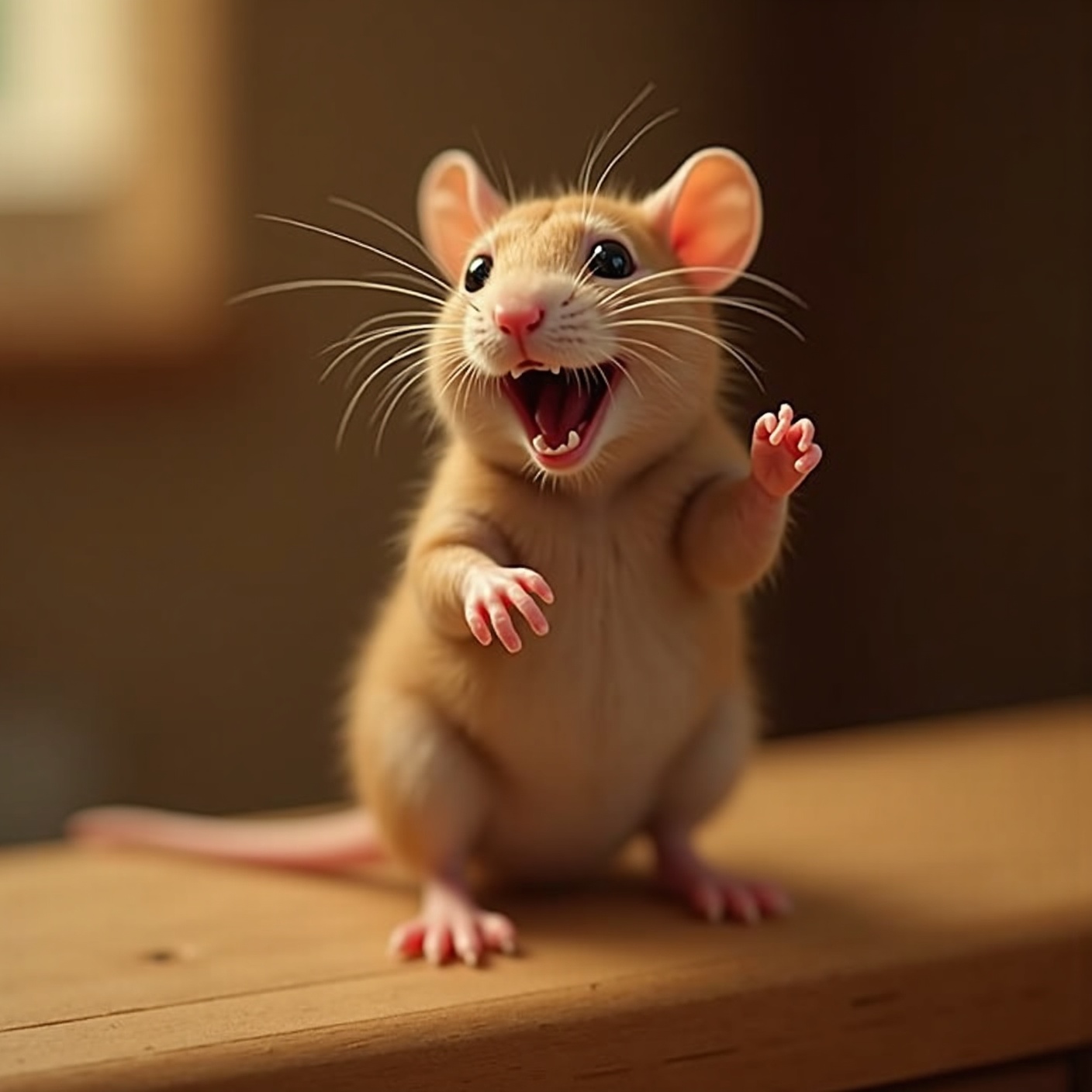
Tickle a rat and it laughs. You just can’t hear it. The sound comes out at a pitch so high it sails clean over human ears, and scientists needed a special microphone before anyone realized the giggling had been there all along.
Back in the late 1990s, a neuroscientist named Jaak Panksepp was working with young rats when he noticed something odd. Every time he tickled them, playing with them the way you might roughhouse with a puppy, they let out little bursts of chirps at around 50 kilohertz. Human hearing tops out near 20. So the laughter was happening the whole time, just pitched into a register we are simply built to miss. Slow the recording down and play it back at a pitch we can hear, and it sounds an awful lot like a giggle.
And it was not some random twitch or squeak of alarm. The chirps came during play, during the good stuff, the way a kid shrieks when you chase them around the couch. The most ticklish rats turned out to be the most playful ones. Even better, once a good tickling session was over, they would come trotting back and chase the hand across the table, asking for more. Panksepp, who spent his career arguing that animals have real emotions, took a lot of grief for the word “laughter.” The rats, it turned out, were on his side.
Then in 2016, two researchers in Berlin, Shimpei Ishiyama and Michael Brecht, went looking for where the laughter actually lives. Writing in the journal Science, they found that tickling lit up neurons in one specific patch of the rat’s brain, the part of the somatosensory cortex that maps the trunk of the body. And here is the uncanny part: when they stimulated that patch directly, with tiny electrodes and no tickling at all, the rat chirped anyway. Its brain could not tell the difference between a real tickle and the memory of one.
There’s a detail in that study that feels almost human. When the rats were made anxious, put under a bright light up on a raised, exposed platform, the ticklishness switched right off. No sense of safety, no good mood, no laughter. Which is exactly how it works for us. You cannot tickle someone who isn’t in the mood, and you certainly cannot tickle yourself into hysterics when you are frightened.
The happiest rats even jumped for joy. German scientists have a lovely word for it, Freudensprünge, joy-jumps, the little unprompted leaps a content animal makes for no reason at all except that it feels good to be alive.
So the next time someone tells you that laughter is the one thing that makes us human, you can gently set them straight. A rat has been laughing this whole time, chasing the hand, leaping in the dark. We just weren’t listening on the right frequency.