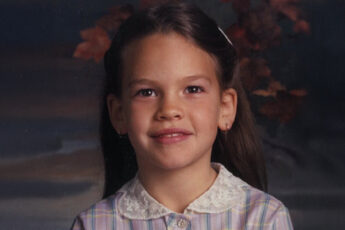
As a little girl, she watched her world shatter — her mother shot and killed her abusive father in self-defense.
Yet instead of breaking, she fought her way forward. Years later, she landed in Hollywood, built a brilliant career, and walked away with the ultimate prize in film — an Academy Award.
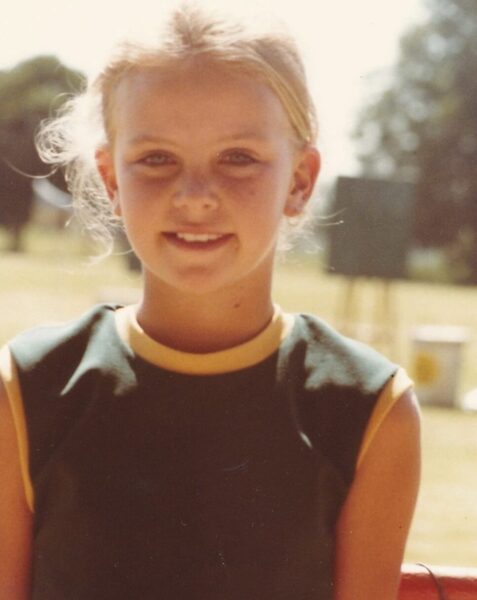
From South African farm girl to Hollywood
Charlize Theron was born on August 7, 1975, in Benoni, South Africa, into an Afrikaner family whose roots stretch back to Dutch, French Huguenot, and German settlers. Her parents, Charles and Gerda, worked in road construction, and among her ancestors is Danie Theron, a noted military leader from the Second Boer War. Afrikaans was her first language; English came later.
On paper, her childhood looked privileged. In reality, it was complicated and often painful.
The awkward kid who didn’t fit in
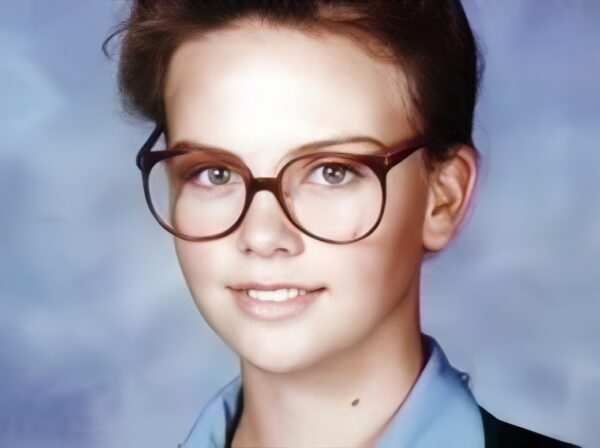
At school, Charlize didn’t feel like the glamorous woman the world would later recognize. She has said she wore thick glasses because of poor eyesight, and the boys simply weren’t interested in her. She had crushes but no boyfriends, and she desperately wanted to be part of the popular crowd.
She admitted that she became almost fixated on one popular girl and even cried because she wasn’t allowed to sit next to her. Classmates teased her about her glasses, hair, and clothes.
“I got a lot of the ‘mean girl’ treatment between about seven and twelve,” she’s recalled, adding that by the time she reached high school, she’d toughened up and grown more resistant to that kind of cruelty.
Living with an alcoholic father
Charlize grew up on her parents’ farm just outside Johannesburg. It could have been a peaceful place, but alcoholism turned it into something much darker.
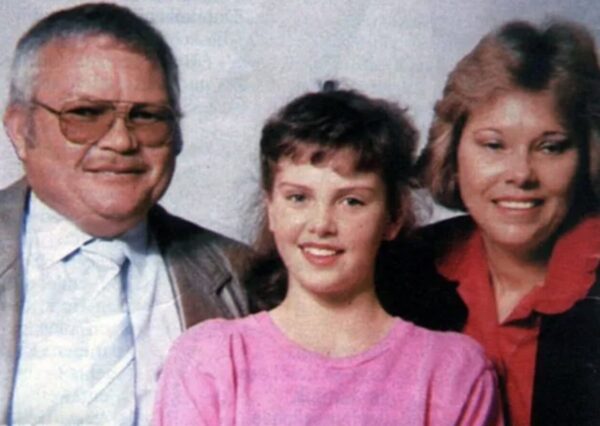
Her father, Charles, was by her own description a tall man with thin legs and a big belly — someone who loved to laugh and enjoy life, but who was also deeply ill with alcohol addiction. He never hit her, she’s said, but he was verbally abusive, and the constant unpredictability of living with an addict left deep marks.
“I knew something bad was going to happen”
On June 21, 1991, when Charlize was 15, everything came to a head. That night her father came home extremely drunk and enraged. A relative even phoned ahead to warn the family that he was in a dangerous state.
Newsner English
Charlize later said that instinct told her something terrible was coming. When her father arrived, he began threatening her and her mother, shouting and losing control. Then he took out a gun.
Charlize and Gerda retreated to Charlize’s bedroom and pressed their weight against the door as he tried to force it open from the other side. Speaking to NPR, Charlize described how he then stepped back and fired three shots straight through the door. Miraculously, none of the bullets hit either her or her mother.
At that point, Gerda grabbed her own handgun and shot her husband to stop him. It was a split-second decision made to save both their lives. Authorities later ruled the shooting an act of self-defense, and she was not charged.
Choosing not to hide the story
For years, Charlize tried to bury what had happened. As a young woman, when people asked about her father, she would tell them he died in a car crash because she simply couldn’t face retelling the real story.
With time, therapy, and distance, her perspective changed. She has said that the daily fear of living with an alcoholic actually affected her more than the single night of the shooting itself. That constant uncertainty — never knowing what mood he’d be in or whether it would be a safe day — is what stayed in her body for years.
Today, she speaks openly about what happened, stressing that many people share similar experiences of family violence and addiction.
“This kind of violence inside the home is something a lot of us have in common,” she’s said. “I’m not ashamed to talk about it, because the more we talk, the more we realize we’re not alone. For me, this story is really about growing up around addiction and what that does to a person.”
Trauma as fuel, not a cage
Charlize has been clear that the shooting didn’t define her entire life, but it did shape how she sees human behavior and darkness. She’s said she’s not afraid of examining the “dark” parts of human nature — in fact, she’s intrigued by them, because they help explain why people do what they do.
Rather than breaking her, the experience ultimately became something she survived and learned from. She credits her mother — who never went through formal therapy herself — with helping her move forward. Gerda’s approach was simple but tough: acknowledge how awful it was, then decide whether you will let it sink you or push you to swim.
From a bank argument to an Oscar
At 19, Charlize arrived in Los Angeles with a suitcase and determination, but no contacts. The turning point came in the most unlikely place: a bank. While arguing with a clerk over a bounced check, she caught the attention of a talent agent standing in line. That chance encounter led to auditions — and eventually to Hollywood.
Her first major breakthrough came with The Devil’s Advocate (1997), playing opposite Al Pacino and Keanu Reeves. But it was her total transformation for Monster (2003), in which she portrayed serial killer Aileen Wuornos, that stunned audiences and critics alike. She gained weight, altered her appearance, and delivered such a raw performance that critic Roger Ebert called it one of the greatest in film history. She won the Academy Award for Best Actress for the role.
Charlize went on to defy Hollywood’s age and gender expectations, especially with her role as Imperator Furiosa in Mad Max: Fury Road (2015), cementing her status as a fierce, versatile star both in front of and behind the camera.
“I survived that, and I’m proud of that”
Looking back, Charlize has said that her real trauma was the long, grinding reality of growing up with an addicted parent — not just the single act of violence. But she also insists she is proud of having survived it.
“I survived that, and I’m proud of it. I worked hard for that,” she’s said in interviews. “I’m not afraid of the darkness. If anything, it fascinates me, because it explains so much about who we are.”
Her story is, at its core, about more than a tragic night. It’s about a young girl who grew up in a chaotic home, endured something most people can’t imagine, and still found a way to build a life, a career, and a voice that inspires others to speak openly about their own pain — and to know they’re not alone.