The engine had been off for a while before Diane noticed her own hand had turned the key. She was still holding the wheel at ten and two, the way her father taught her thirty years ago, sitting in a grocery store parking lot she had pulled into a hundred times without a second thought.
Tonight she could not make herself go in.
It was a Friday in November, the kind of evening that gives up on daylight by five. A thin rain came down and beaded on the windshield, and through it the storefront glowed soft and yellow. People pushed carts out into the wet, loaded paper bags into their trunks, drove home to somebody. The lot light over her car flickered on, buzzed, went dark, came back.
Her husband had left on Tuesday. Twenty-six years, and a duffel bag by the door, and the sound of his car backing down the driveway she had swept a thousand times. She held it together at work. She held it together on the phone with her sister. She even held it together in the quiet of her own head, right up until she sat down that afternoon to make a grocery list and watched her hand write down his coffee. The dark roast he liked. The oyster crackers. The two ribeyes he grilled on Fridays.
A list for two. She did not know how to make one for a single person. It sounds like nothing. It felt like the floor was gone.
So she sat behind the frosted glass, because at least there nobody could watch her come apart.
The knock, when it came, was soft. Two knuckles, patient.
An older woman stood out in the rain in a mustard-yellow raincoat, silver hair pasted to one cheek, a canvas tote hanging empty off her arm. She was not in a hurry. That was the first thing Diane noticed. Everybody was always in a hurry, and this woman stood in the drizzle like she had all evening and nowhere better to spend it.
Diane rolled the window down a couple of inches. Cold air and the smell of wet pavement came in.
“You’ve been sitting out here a good while, honey,” the woman said, gentle. “I’m parked right over there. I’m not going anywhere. You want to tell me what’s the matter?”
And Diane, who had not said it out loud to a living soul, said it to a stranger in a parking lot. “My husband left. Tuesday. I came to buy groceries, and I’m sitting here because I don’t know how to shop for one person. Isn’t that ridiculous? I’m fifty-one years old and I can’t walk into a grocery store.”
She braced for the pity. The head tilt, the “oh, honey,” the advice. It did not come.
“That’s not ridiculous,” the woman said. “That’s just new. Come on. I’ll walk in with you. We’ll go slow.”
She did not say it like a favor. She said it like a plan. And somehow Diane’s hand was on the door, and then she was standing in the rain beside a woman whose name she did not know, walking toward the bright doors on legs that did not feel like hers.
Inside, the store was too loud and too bright, the way the whole world had felt since Tuesday. A cart rattled loose from the corral. The woman in yellow took it, wiped the handle with her sleeve, and pushed it into Diane’s hands like she was handing over something that mattered.
“Now,” she said. “Forget his list. What do you like?”
Diane opened her mouth and found she did not know. Twenty-six years of buying what he liked, and she had lost the thread of her own name. The woman nodded, as if that were the most ordinary answer in the world, and steered them toward produce.
There she picked up a single apple, a good one, deep red, and set it in the cart. “One apple,” she said. “The best one in the bin. Not a bag of six going soft in the drawer. Just one, because you deserve a good apple.” In the next aisle Diane reached on reflex for the dark roast, his brand, and stopped, her hand hanging in the air. The woman said nothing. She waited. Diane put it back and picked up a small bag of the nice kind, the one she had always told herself was too dear to buy for just herself.
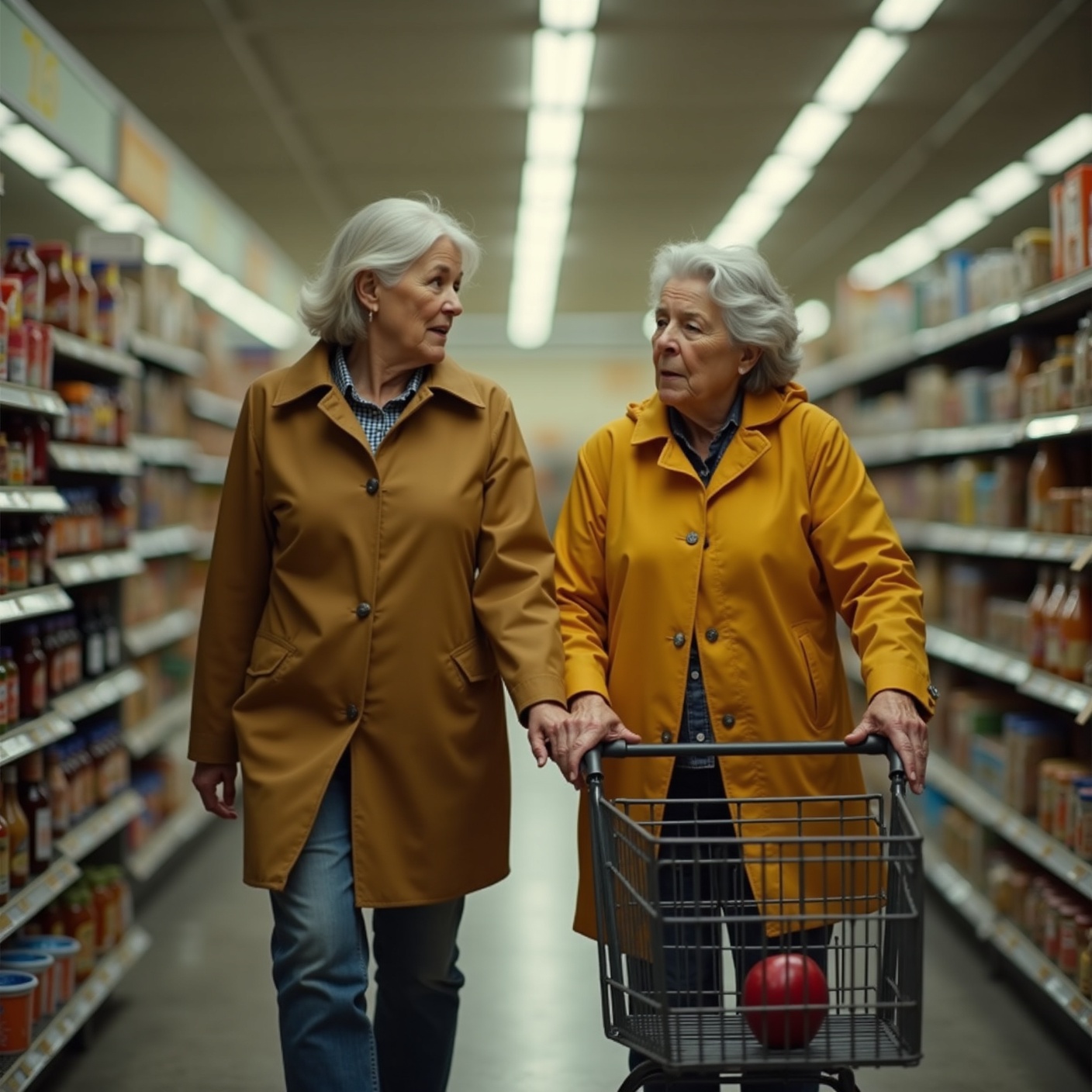
They walked every aisle. Not because Diane needed every aisle, but because the woman moved through the store like they had all the time in the world, and for the first time in days Diane was not watching a clock or bracing for a door to close. A little soup. A loaf of good bread. A bar of chocolate, because the woman raised an eyebrow at it, dropped it in the cart, and said, “For emergencies.” Diane laughed. The sound surprised her. She had forgotten she still had it in her.
They talked about small things. The rain. A garden gone to weeds. A daughter two states away. The woman never once asked what had happened on Tuesday, never once told Diane what she ought to do or feel, and that turned out to be the kindest thing of all. She simply kept her company down the length of a fluorescent aisle, so that a woman who had walked in alone was not alone.
At the register Diane unloaded her small, strange, single-person groceries onto the belt. One apple. One good coffee. Soup for one. She turned to say something, to find some way to thank a stranger for a thing she had no words for.
The woman reached out and squeezed her arm, once, warm and firm.
“You did good,” she said.
That was all. Two words. Diane paid, gathered her bags, and when she turned to walk out together, the woman in the yellow raincoat was gone. Not at the next register. Not by the doors. Gone, the way morning fog is suddenly gone and you can never name the moment it left.
Diane stood in the vestibule with her one small bag and looked out at the dark, wet lot. She never saw the yellow coat again. She never got a name.
She drove home. She carried her bag up the steps of a house that was too quiet now, and she set a single place at the table. One plate. One fork. The good apple washed and shining in a bowl, the nice coffee waiting for morning. It should have been the loneliest supper of her life.
It was not. Somebody had walked every aisle with her like she was worth the time. Somebody had looked at her small, sad cart and called it good.
Diane still shops for one. She has gotten the hang of it now, years on. But every week, without fail, she buys one apple, the best one in the bin, and she cannot pick it up without feeling a hand close warm around her arm. And every so often, in that same parking lot, she is the one who slows down when she sees somebody sitting too long behind a fogged-up window with both hands on the wheel.
She rolls down her own window. She tells them she is not going anywhere. And she means it.