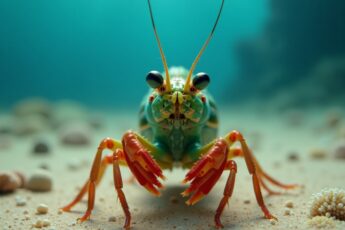
Start with the part that sounds made up: an octopus is carrying three hearts around inside that soft body, and the biggest of the three stops beating whenever the animal swims.
That is not a figure of speech. It is the actual layout of the plumbing.
Two of those hearts are small and have exactly one assignment. They sit near the gills and pump blood through them, over and over, so the blood can dump the carbon dioxide it is carrying and load back up on oxygen from the seawater. Biologists call them the branchial hearts, “branchial” being the old word for gills. Picture two little pumps whose whole life is working the filters.
The third heart is the big one, the systemic heart. Once the blood comes back from the gills loaded with oxygen, this heart takes over and drives it out to everything else: the arms, the organs, the muscles, all the parts that need fuel.
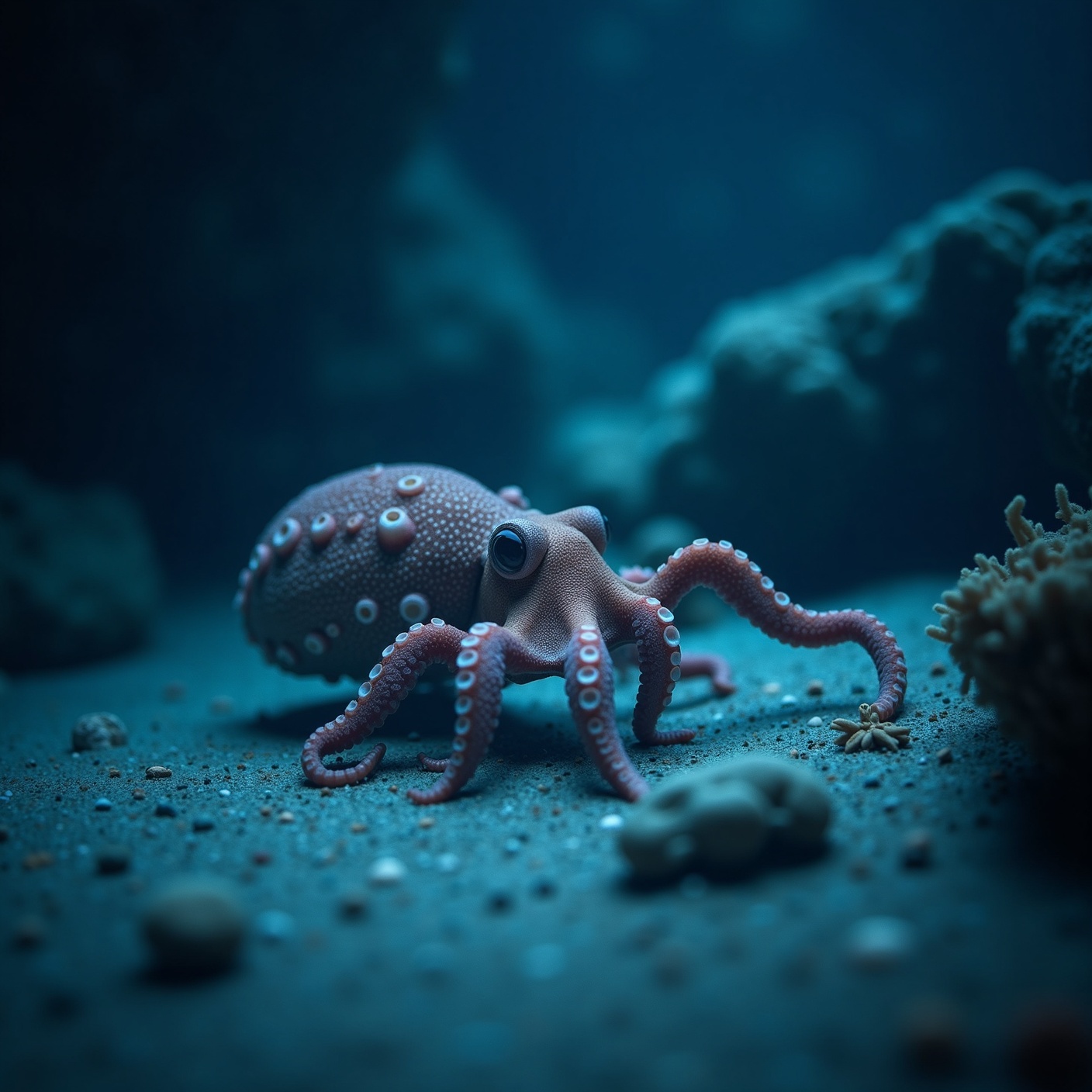
Now the odd bit. That third heart, the important one, switches off the moment the octopus starts to swim. So every time an octopus pushes off and jets through open water, its central pump falls silent. Swimming, for this animal, is draining in a way it is for almost nothing else, because the body is trying to move hard while its main heart is on pause. That one quirk explains something divers notice all the time: given any choice at all, an octopus would rather crawl along the seafloor on its eight arms than swim. Crawling is cheap. Swimming costs it a heartbeat, literally.
Then there is the blood, which is the other thing nobody quite believes. It is not red. It is blue.
Our blood is red for a simple reason. It moves oxygen around on iron, tucked inside a protein called hemoglobin, and iron meeting oxygen reads as red. An octopus does the same job with copper instead of iron, inside a different protein called hemocyanin. Copper meeting oxygen turns things blue, so an octopus that has just taken a breath is quietly pushing blue blood through all three hearts.
This is not a random flourish, either. Copper-based blood is genuinely better than our iron kind for the place octopuses actually live. Down on the cold, dark ocean floor the water sits near freezing and holds very little oxygen. Hemocyanin, a bigger and heavier molecule than our hemoglobin, grabs and carries oxygen more efficiently in exactly those low-oxygen, low-temperature conditions. Where our red blood would start to fail, blue blood keeps the animal running. Evolution did not hand the octopus a gimmick. It handed it the right tool for a hard neighborhood.
While we are counting the strange things: those eight arms are not just limbs waiting on orders from a central brain. Two-thirds of an octopus’s neurons are not in its head at all. They are spread out through the arms. Each arm carries its own dense cluster of nerve cells and can taste, feel, and react partly on its own, which is why people love to say an octopus has “nine brains”, one in the middle and a smaller one in every arm. Block its view of a crevice and an arm will still go exploring on its own. It is less like one animal making one decision and more like a committee that happens to share a body.
Put it all together and the octopus starts to feel less like an animal and more like a thought experiment that got up and swam away. Three hearts, one of which clocks out during exercise. Blue blood built for the deep and the cold. Eight arms that half-think for themselves. No wonder marine biologists keep saying that if you want to picture what a genuinely alien intelligence might look like, you do not have to leave Earth. You just have to look in the water.
And none of this is folklore. The three hearts, the blue hemocyanin blood, the systemic heart pausing mid-swim, the neurons living out in the arms, all of it is plain marine biology, documented and repeated everywhere from Smithsonian magazine to natural history museums. The octopus is simply, quietly, weirder than the stories about it.