Bananas are berries. Strawberries are not. And no, that’s not a typo.
It sounds like the kind of thing a smug relative says at Thanksgiving to annoy everyone. Except this one is true, and the reason it’s true is genuinely satisfying once you see it. The whole confusion comes from the fact that we’ve all been using one word to mean two completely different things.
For a botanist, “berry” is not a vibe. It’s not “small, round, sweet, grows on a bush.” It’s a precise description of how a fruit is put together, and it comes down to a single question: how did this thing grow out of the flower?
The one rule that decides everything
Here’s the definition, stripped of the jargon. A true berry develops from a single flower that has one ovary. When that flower is pollinated, the wall of the ovary swells up and turns entirely fleshy, and the seeds end up embedded right there in the pulp. No pit. No stone. No hard core locked around the seed. Just soft flesh with the seeds scattered through it.
Botanists split that fleshy wall into three layers: the outer skin, the juicy middle, and the thin layer hugging the seeds. In a peach or a cherry, that innermost layer hardens into the stone you spit out. In a true berry, all three layers stay soft. That’s the tell.
Run a banana through this checklist and it sails past. It grows from a flower with one ovary. The whole thing goes soft and fleshy. And those faint brown specks running down the middle of a banana? Seeds. Wild bananas are actually packed with hard little seeds; the ones we eat have been bred over thousands of years until the seeds shrank to almost nothing. But the blueprint is pure berry.
The berries hiding in plain sight
Once you know the rule, your kitchen starts to look strange.
Grapes are berries, which at least feels fair. But so are tomatoes. So are the eggplants and bell peppers in your fridge. Kiwis are textbook berries, right down to the ring of tiny black seeds spread evenly through the green. Even avocados qualify, single giant seed and all, because the definition allows a berry to have just one seed as long as the rest of the wall goes fleshy.
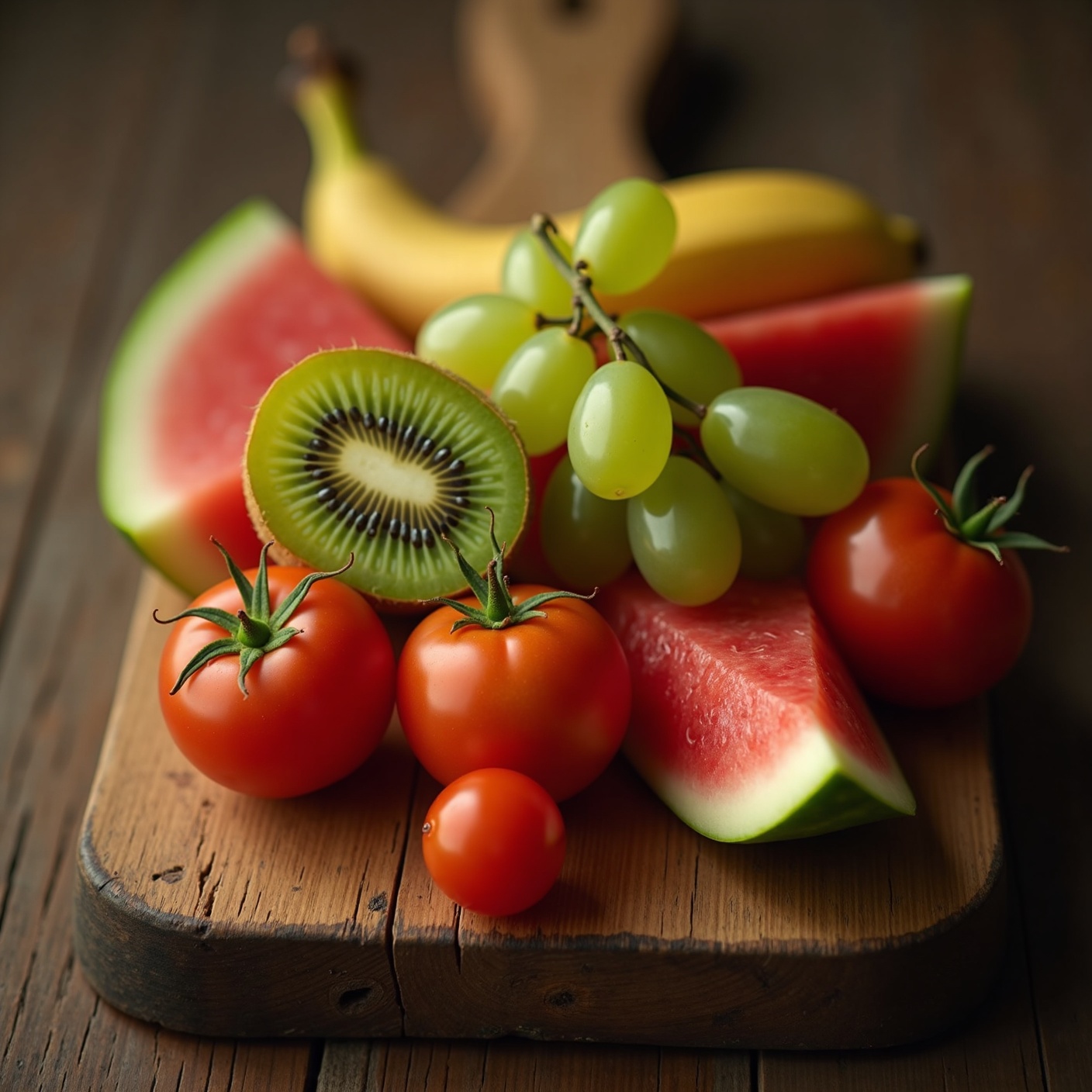
And it gets weirder at the big end of the scale. Watermelons, pumpkins, and cucumbers belong to a special berry sub-class botanists call a pepo, basically a berry with a tough rind. Oranges and lemons are berries too, a modified kind called a hesperidium, that leathery peel and all. So the next time someone hands you a slice of watermelon, you’re technically holding one of the largest berries on the planet.
So why isn’t a strawberry a berry?
Because the strawberry is running a beautiful little con, and almost nobody catches it.
Remember the rule: a berry comes from one flower with one ovary. A strawberry flower has dozens of ovaries. Each of those tiny yellowish specks freckling the outside of the strawberry is a separate fruit in its own right, called an achene, and each one has a single seed sealed inside it. So when you eat one strawberry, you’re actually eating dozens of individual fruits at once.
Then comes the real twist. The sweet red part, the whole reason anyone loves a strawberry, isn’t the fruit at all. It’s the swollen base of the flower, the receptacle, that puffed up and turned red and juicy to lure animals in. Botanists have a name for a fruit like that, where the tasty part grew from something other than the ovary. They call it an accessory fruit, or more precisely an aggregate accessory fruit. A gorgeous impostor, wearing “berry” right in its name.
Raspberries and blackberries get thrown out of the club too, for a related reason. Each little bead on a raspberry is a mini-fruit from its own ovary, all clustered together off one flower. That makes them aggregate fruits, not berries. The word “berry” on the label is doing a lot of lying.
Why any of this actually matters
You could file all this under useless trivia, and honestly, half the fun is that it’s so useless. But there’s a real point buried in it.
Everyday words and scientific words drift apart all the time, and both are correct in their own lane. When you ask a grocer for berries, you want strawberries and raspberries, and you’d be baffled if they handed you a banana and a tomato. That’s the culinary meaning, and it’s perfectly valid. The botanical meaning is a different tool built for a different job: sorting plants by how they actually grow and reproduce, not by how they taste in a smoothie.
So both answers are right. A strawberry is a berry at the breakfast table and a fraud in the botany lab, and it manages to be both without contradiction. That’s the part worth keeping.
Next time it comes up, you get to be the smug one at the table. Just maybe wait until after dessert.