Tuesdays at Dell’s are dead and everybody who works there knows it.
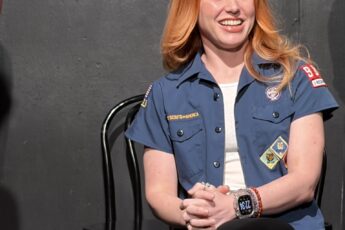
Casey Wheeler had the three-to-close shift, which on a Tuesday in late October meant four tables between four o’clock and nine, a coffee pot she kept warming for nobody, and the sound of the ice machine dropping a load every eleven minutes. She was twenty-four. She was seven months along. Her feet had stopped being feet somewhere around the fifth month and had become two separate problems she carried around behind the counter.
She had a system now. Wipe the ketchup caps standing at the end of the bar so she could lean her hip against it. Roll silverware sitting on the milk crate in the back hall. Take the long way around the dining room instead of the tight turn by the register, because the tight turn made her stop and breathe.
“You’re supposed to be sitting,” said Dot, the cook, through the pass-through window. Dot had run that grill for nineteen years and called everyone under forty “hon” regardless of anything.
“I sit and I don’t get back up,” Casey said. “It’s easier to just stay moving.”
“That’s not a plan, hon. That’s a stubborn streak.”
At six-forty a family of four came in and took the big corner booth, and Casey was so glad to have something to do she nearly ran. They were friendly. The mother noticed before the menus were down.
“When are you due?” she asked.
“December twenty-second,” Casey said. “First one.”
“Oh, a Christmas baby.”
“That’s what everybody says.” Casey smiled and put a hand flat on the counter edge, the way she did without noticing anymore. “My last night here is the fifth. After that we’ll see.”
“They give you leave?”
“Not the kind with a paycheck attached to it,” Casey said, and then heard herself say it and laughed a little to smooth it over. “It’s fine. We’re fine. My husband picked up Saturdays.”
She took their order. Two burgers, a patty melt, a grilled cheese for the little one, no pickle, and she wrote it all down even though she could have held it in her head, because writing it down gave her a reason to stand still for six seconds.
There was one other customer that night.
He was at table nine, two down from the family, and Casey couldn’t have said when he’d come in. Older, maybe seventy, a tan windbreaker he never took off, reading glasses he pushed up on his forehead when he looked at the menu and then forgot were there. He’d said about eleven words total.
“Garden salad,” he’d said. “Ranch on the side. And just water, please.”
“Anything else? Soup’s chicken and rice tonight.”
“That’ll do me,” he said.
So that was the ticket. Eight seventy-five. She rang it in and moved on.
He ate slowly. She noticed that much, because she noticed everything on a dead Tuesday. He’d eat a few bites, set the fork down, look out the window at the highway, pick the fork back up. He didn’t have a phone out. He didn’t have a book. He sat there with his water and his salad and he listened to the corner booth argue about whether the little one had earned dessert.
At one point Casey refilled his water without being asked and he said thank you like she’d done something.
“You want me to warm that roll up?”
“No, ma’am.” A pause. “You’re doing an awful lot of walking.”
“Slow night,” she said. “Walking’s the job.”
“I know it is.” He smiled at the tablecloth and said nothing else.
He paid cash at the table, which almost nobody does anymore, folded the check holder shut, put his glasses back on his face where they belonged, and let himself out the front door. The bell over it did its two-note thing. Through the window she watched him cross the lot in that careful way older men walk on wet asphalt, get into a grey sedan, and pull out toward the on-ramp.
Casey finished with the corner booth. They left her six dollars on a fifty-two dollar tab and told her good luck with the baby and she meant it when she said thank you.
Then she went to bus table nine.
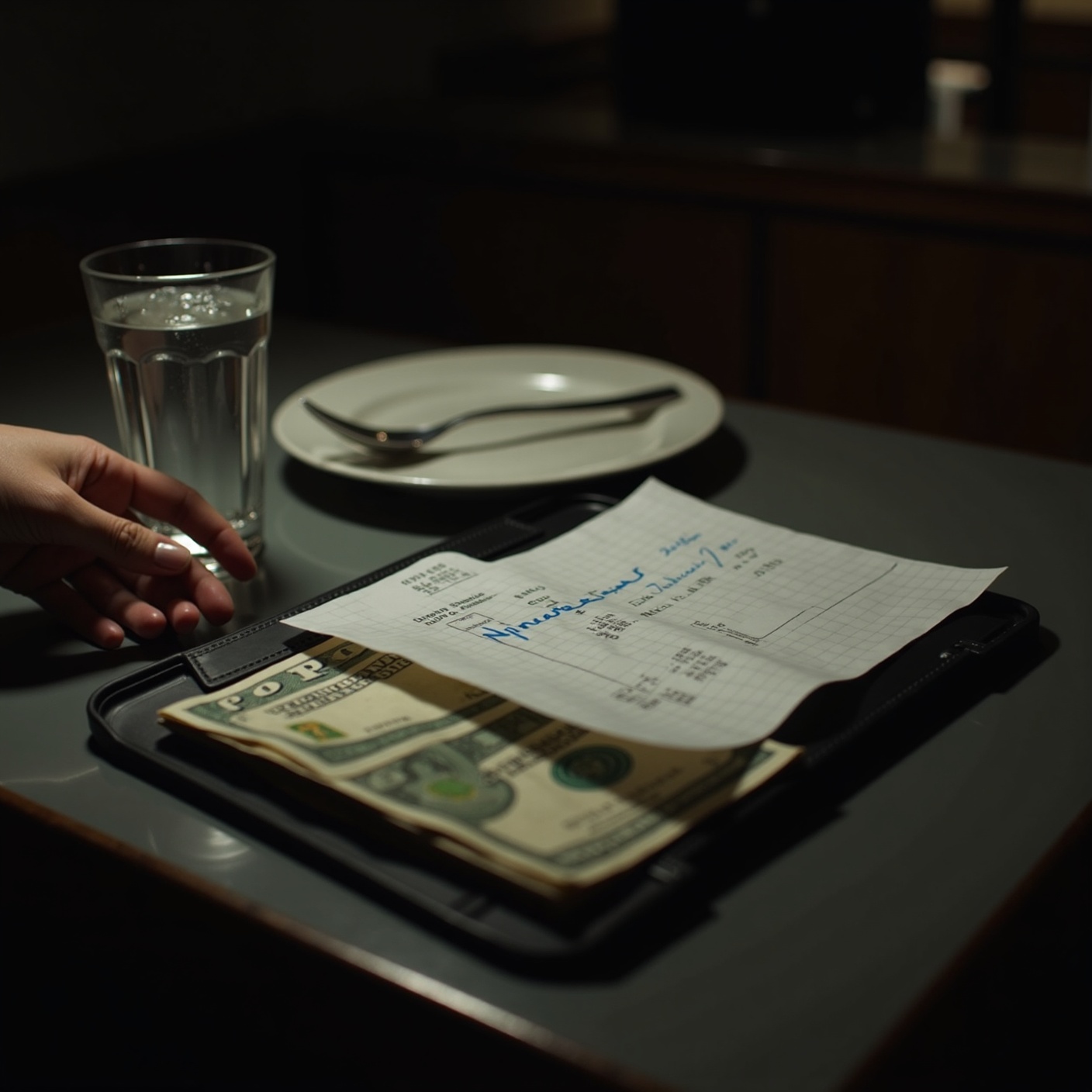
She stacked the salad plate on her arm, wiped the table with the rag from her apron, and opened the black check holder to pull the ticket for the drawer.
She stopped in the middle of the floor.
Under the receipt for eight dollars and seventy-five cents, folded once, there were five twenty-dollar bills. And across the bottom of the ticket, in slow blue ballpoint, in the careful handwriting of somebody who was taught penmanship as a subject:
Enjoy your first. You will never forget it.
Casey stood there and read it twice. Then she put the plate down on the table, which she had never once done in three years of working there, and she went for the door.
The lot was empty. Two sodium lights, her own car, Dot’s truck, a puddle with the sign reflected in it. The grey sedan was gone and had been gone for four or five minutes and there was nothing out there but the sound of trucks on the highway, downshifting for the grade.
She stood in the doorway in her apron with a hundred dollars in her fist and no way on earth to say thank you.
“Casey.” Dot was behind her. “Honey, what happened, what’s wrong?”
Casey turned around and handed her the ticket and couldn’t get anything out at all.
Dot read it. Dot put her hand over her mouth and held it there a second.
“Well,” Dot said finally. “Well.”
They stood in the doorway together and let the cold come in.
Here is the part Casey tells when people ask her about it now.
She went back inside and she sat down in the corner booth, in the seat the mother had been in, and she took her phone out and photographed the ticket. The receipt, the note, the twenties fanned out beside it on the laminate. She looked at the picture for a while.
There was nobody to send it to. That was the whole problem. The man was on the interstate by then, headed somewhere, and he’d never know if it landed, and she’d never get to tell him what it meant that a stranger had done arithmetic in his head about her.
So she sent it to her dad.
Her father, Ray Wheeler, had driven a truck for thirty-one years before his back gave out. He’d eaten more meals at counters like that one than he’d eaten at his own table, and Casey had grown up watching him leave a twenty on a nine-dollar breakfast in towns he was never going to drive through again. She’d asked him about it exactly once, when she was maybe eleven, in a Waffle House outside Roanoke.
“That’s too much,” she’d said.
“It’s the right amount,” he’d said. “You don’t know what kind of week she’s having.”
He answered the text in about ninety seconds, which for her father was a land speed record.
Who was he?
I don’t know. He had a salad. He left before I opened it.
The three dots came and went for a long time.
Casey. That’s been me at a hundred counters. Somebody finally got you.
I couldn’t even say thank you, Dad.
You’re not supposed to. That’s the whole point of it.
Then, a minute later:
Take a picture of that note and keep it. Show it to the kid someday.
She still has it. It’s in the drawer of the nightstand, in a plastic sleeve, because paper receipts fade to blank in about a year and she found that out in time.
The baby came December nineteenth, three days early, seven pounds one ounce, and yes, they went ahead and named her after Casey’s mother because that had been decided since before there was anybody to name.
And the man in the tan windbreaker has never come back to Dell’s, and Casey has watched that door for four years now.
She’s stopped expecting him. She hasn’t stopped watching.