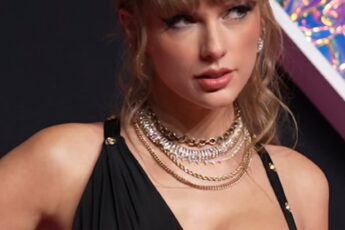
There is a photograph of Linda Ronstadt from 1976, taken in an airport. She is holding a small Rollei camera in one hand, a bag and a magazine in the other, wearing a fur-trimmed coat over a Fair Isle sweater, looking off to the side at something outside the frame. She is thirty years old. She is, at that exact moment, one of the biggest recording artists in the world.
She turned 80 on Wednesday, 15 July 2026.
The numbers, which are absurd
Start with the count, because the count is the part people forget.
Thirty-eight songs on the Billboard Hot 100. Twenty-one of them cracked the top 40. Ten made the top 10. One went all the way: “You’re No Good,” number one on the Hot 100.
Twenty-four studio albums. Fifteen compilations. Eleven Grammy Awards.
“Heart Like a Wheel” went to number one on the Billboard 200. “Simple Dreams” moved three and a half million copies in under a year. Across everything, more than 100 million records sold.
Those are not “successful singer” numbers. Those are the numbers of somebody who was, for a stretch of the 1970s, simply the biggest female rock voice in America, at a time when the industry could not quite decide whether that was a thing that was allowed to exist.
She kept refusing to stay put
The easy version of that career is obvious. Find the sound that sells, make it eleven more times, retire rich.
She did the opposite, repeatedly.
Rock. Country. Pop. Mariachi. She followed the song rather than the format, and she did it while she was at the commercial peak, which is the expensive time to do it. It’s the reason the honors that came later cover such strange, wide ground for one artist: a Latin Grammy Lifetime Achievement Award in 2011, induction into the Rock and Roll Hall of Fame in 2014, a Grammy Lifetime Achievement Award in 2016, and the Kennedy Center Honors in 2019.
Four different worlds. One voice.
The quiet half
In the 1990s she adopted two children, Mary Clementine and Carlos, and the shape of her life started to change without any of it becoming a press event.
Then, in 2011, she announced she was retiring from the stage.
At the time it read like a decision. A great singer, in her sixties, choosing to stop while she still sounded like herself. Fifteen years on, we know it wasn’t quite that.
What was actually happening
Not long after the retirement announcement, it emerged that Ronstadt could no longer sing.
The first answer the doctors gave her was Parkinson’s disease. That answer was wrong. What she actually has is progressive supranuclear palsy, PSP, a condition that is rare enough and similar enough in its early signs that the misdiagnosis is not unusual.
By the time the right name was attached to it, the voice was gone.
She has written and talked about it since without a shred of self-pity in it. Her memoir Simple Dreams came out in 2013. The documentary The Sound of My Voice followed in 2019, and the title is doing a lot of work: she narrates a film about a voice she no longer has.
Eighty
So here is where the story lands, and it is not where a headline usually wants it to.
Linda Ronstadt at 80 is not a tragedy with a soundtrack. She is a woman at home with her books and her children, eleven Grammys and a hall of fame plaque and a hundred million records behind her, who spent her whole working life singing exactly what she wanted to sing and then stopped when her body made the call.
The recordings didn’t go anywhere. “You’re No Good” still comes on the radio. “Heart Like a Wheel” still sounds like it was cut yesterday. The mariachi records still make people who grew up on them cry in the car.
She gave the voice away while she had it. That was the whole point of having it.