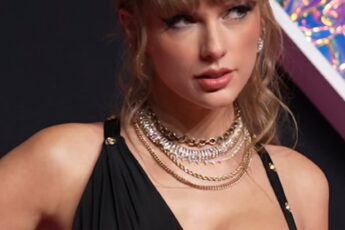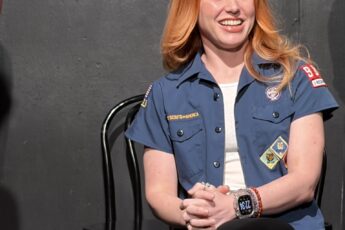
Brooke Shields has been photographed for money since she was 11 months old.
Sit with the arithmetic of that for a second. Before she could form a sentence, there was a contract. Before she could read a script, there were adults in a room deciding what she would wear, what she would be sold as, and what her face was going to mean to millions of people who would never meet her.
By 12, she had starred in “Pretty Baby,” a 1978 film that people are still arguing about half a century later, and rightly so. By 15 she was on billboards. By 16 she was one of the most recognizable faces on the planet, and almost none of the conversation happening about her had anything to do with her.
She was interviewed constantly. That’s the detail that stays with you. A teenage girl sat on couch after couch, under the lights, and was asked to explain and defend choices that grown adults had made about her, while the audience laughed along. She was the child in the room, and she was the one being asked to account for it.
Here is the part she has been careful to explain since, and it complicates every easy version of this story: she wasn’t walking around miserable. She was working. She was a kid who wanted to do a good job and be liked for it, and nobody had ever told her there was a version of this life where she got a vote.
She spent the next forty years getting the vote back. One piece at a time.
The first piece was the private life, because she’d never had one. She married the advertising executive and screenwriter Chris Henchy on May 26, 2001, in Palm Beach, Florida, and they built something that stayed theirs. Two daughters came after: Rowan, then Grier.
It did not come easily. Shields has spoken about the pregnancy she lost and the fertility struggles that followed, and she has spoken about them plainly, in her own words, in her memoirs and on camera. That was the point. The one thing the most photographed girl in America never had was the microphone. As an adult she took it, and she used it on the parts of her life that hurt the most, which is not what a person does when they’re managing an image. It’s what a person does when they’re done being managed.
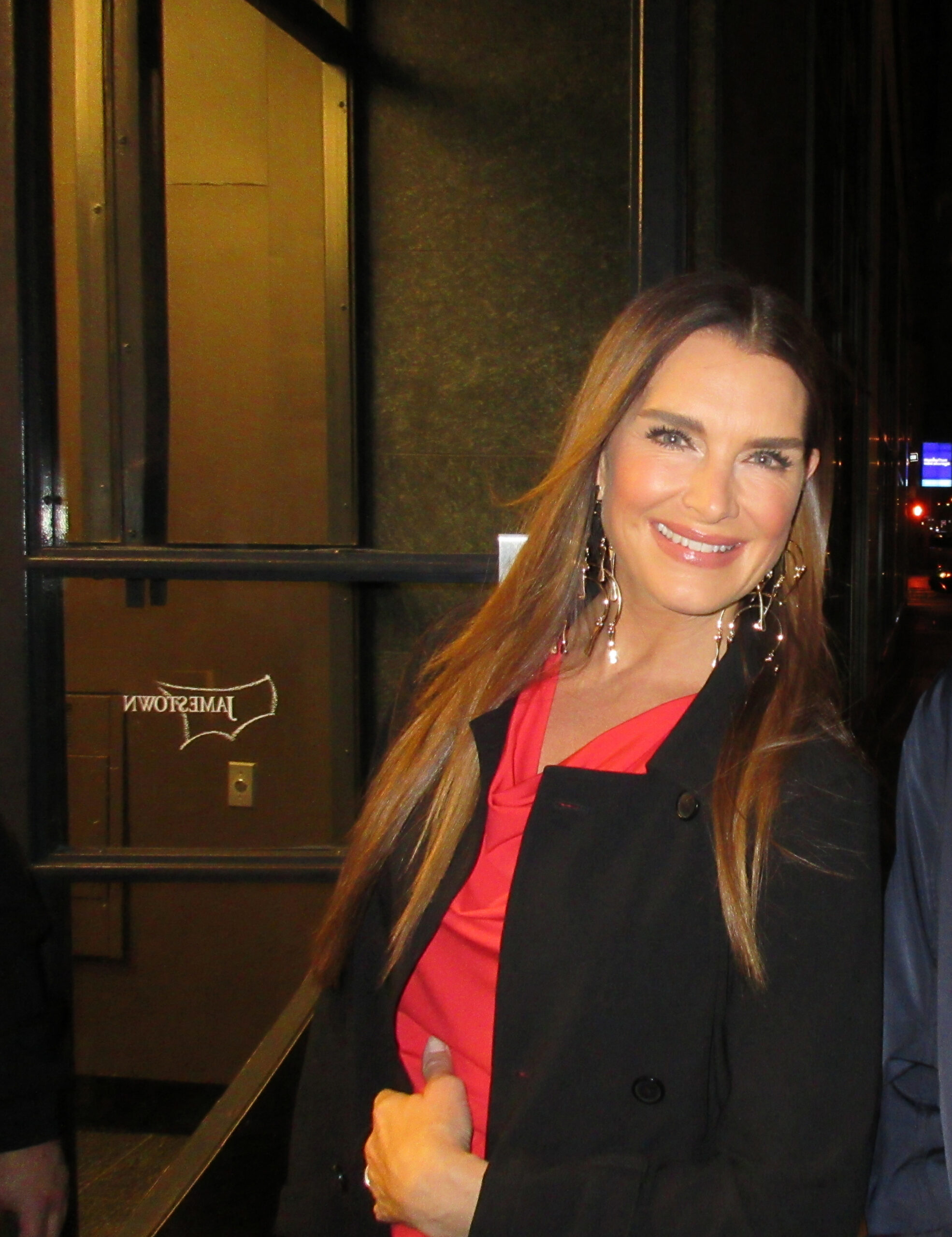
Then, in 2023, she took the whole story back and turned it inside out in public.
“Pretty Baby: Brooke Shields,” the two-part documentary, arrived on Hulu on April 3, 2023, after its debut on the festival circuit at Sundance. It goes straight at the thing everyone had spent decades tiptoeing around: what was done to a child in front of a camera, who profited from it, who cheered, and what it cost the girl at the center of it.
She didn’t make it as a victim’s lament. She made it as a witness statement. She sat there and narrated her own life, at length, with control of the edit, and let the old footage do the damning all by itself. Watching a talk-show host from 1981 grin his way through a question he’d never in a thousand years ask a boy is more effective than any accusation she could have delivered out loud.
The most famous child in America finally got to say what it had been like to be her.
And then came March 2026, and a Hallmark set, and a scene about a grieving boy.
Shields returned to “When Calls the Heart” for Season 13, playing Charlotte Thornton for the first time in nearly a decade. It’s a multi-episode arc, and the emotional spine of it is about helping her on-screen grandson work through the death of his father. Warm show, gentle town, real grief underneath.
She has done thousands of scenes in her life. Scenes with legends, with strangers, with people who terrified her, starting from an age when she couldn’t yet read the pages she was holding.
And on that set, in that arc, her scene partner was her own daughter.
Rowan appears in the episode. It is the first time in Brooke Shields’ entire life, a life that started in front of a lens before she could walk, that she has acted alongside her own child.
Think about what that means, coming from her specifically. Every set she stood on as a girl, she stood on alone, surrounded by adults with their own reasons for being there. She has said for years that the thing she wanted most for her daughters was choice. Not the career. The choice.
So Rowan didn’t get pushed. Rowan showed up. As a grown woman, on her own two feet, and stood across from her mother, and they said their lines.
The girl who never got a vote gave her daughter one, and her daughter used it to walk toward her.
Shields is 61 and she is busier than she’s been in years. She’s been named as host of ABC’s first-responders series “Hearts of Heroes” for its new season. She’s out promoting a new murder-mystery series, “You’re Killing Me.” She stood up at the 2026 American Express Leadership Academy and talked about resilience, reinvention, and purpose, which is the kind of speech that only lands when the person giving it has actually done all three.
She isn’t a comeback story. She never left. She was here the whole time, working, while other people told the world what her life meant.
She just finally took the pen.