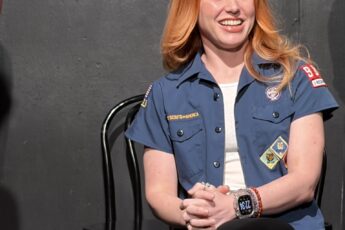
Four days. That’s how long Kayla was gone. Four days, one C-section, one seven-pound daughter named Nora.
Daniel carried the car seat up the walk on Wednesday afternoon, holding it out in front of him with both hands like it might go off. Kayla came behind him with the diaper bag sliding off her shoulder, moving at the speed of a woman who’d been stapled back together on Tuesday and told to walk it off.
The house smelled like the vanilla plug-in Linda always brought over. That should have been the first sign.
The nursery door stood open. Kayla was sure she’d closed it before they left for the hospital. She remembered doing it, remembered the little click, remembered thinking that the next time it opened there would be a person in there.
She stopped in the doorway.
The mobile her sister Jess had hung in April, the one strung with folded paper cranes, was gone. So were the woodland prints, the fox and the rabbit and the sleepy bear. So was the sound machine that had still been sealed in its box under the changing table.
In their place: a pink lamp. A pink shag rug. A gold wall decal over the crib that read PRINCESS in curling script, one corner already lifting off the paint.
“Daniel,” Kayla said. Her voice came out flat. She didn’t have the air in her for anything else.
He stopped behind her in the hallway and looked past her shoulder at the wall.
“Mom has a key,” he said, like that was an answer and not the entire problem.
Kayla sat down on the edge of the glider because her legs told her to. Nora was still asleep in the car seat by the door, doing that fast newborn breathing, seven pounds of person who had no idea any of this was happening.
The story came out in pieces over the next two days, most of it from Linda herself, cheerfully, over the phone, as if she were describing a nice thing she had done.
She’d let herself in on day two. She’d taken down every single item Kayla’s side of the family gave at the shower. Not because they were broken, or ugly, or unsafe. Because they were, in Linda’s words, “so beige, honey.”
“I was doing you a favor,” she said. “You had a baby. You weren’t going to have time.”
“I would have made time,” Kayla said.
“Well, now you don’t have to.”
Three of the gifts had never been opened. The sound machine. A crib sheet set. A soft-sided bassinet Kayla’s mother, Renee, had saved for since February and carried into the shower with a bow on it and her hands shaking a little, because she was proud.
Linda took all three back to the store and traded them for credit.
Kayla learned the exact number on Thursday.
She was out in the garage in her robe at seven in the morning, flattening the shipping boxes Linda had stacked by the recycling bin, and a slip of paper slid out from between two flaps of cardboard and landed on the concrete floor.
A store credit slip. Three items, returned, unopened. Non-refundable to card. Credit issued.
$340.
She stood there and read it three times. The baby monitor hissed on the shelf beside her. Somewhere in the house, Daniel’s alarm was going off for the third time.
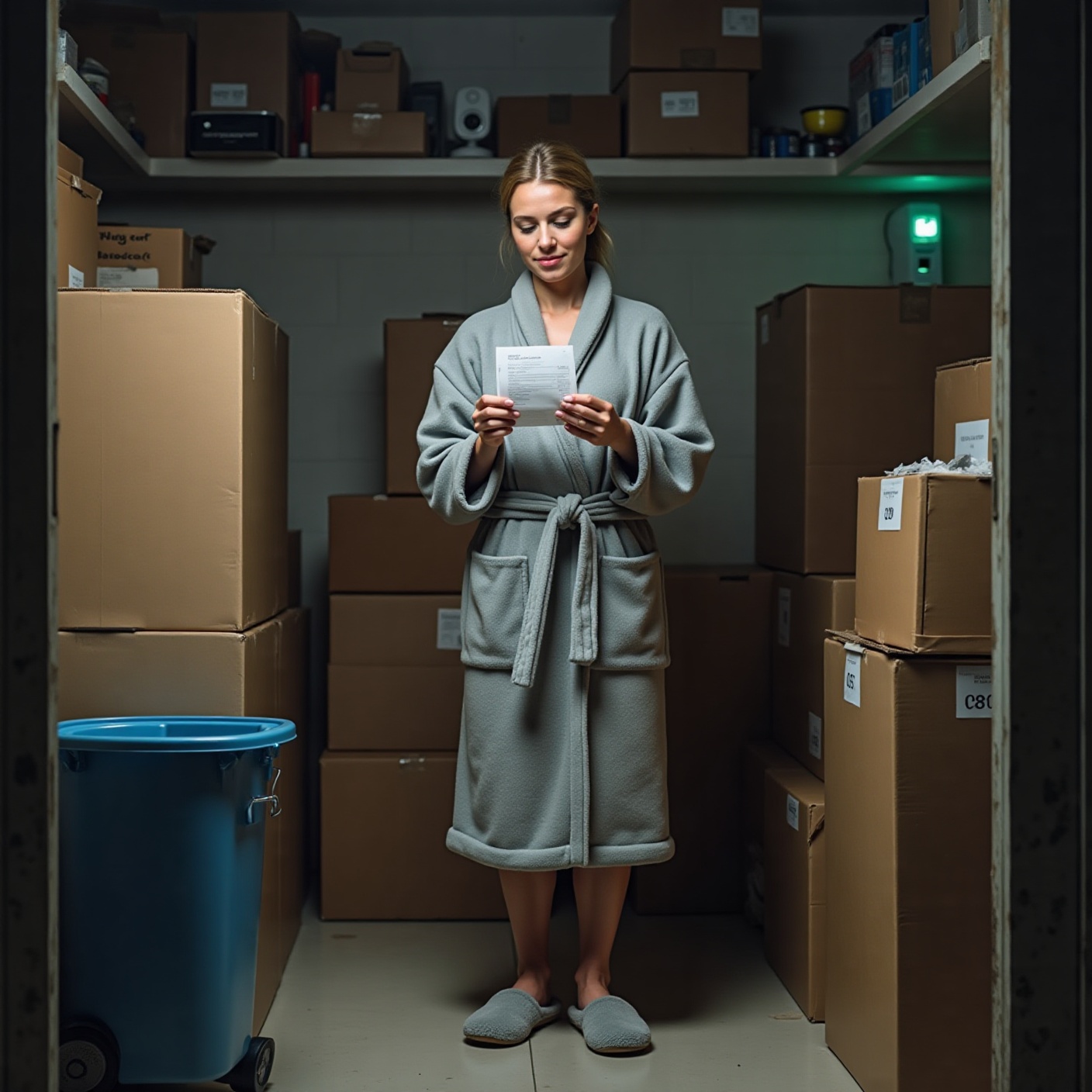
She didn’t tell him that day. She told herself she was waiting for the right moment, which is what people say when they’re actually waiting to stop shaking.
On Friday she went out to the curb with the trash and saw the black garbage bag.
It was tied off, sitting slightly apart from the cans, the way you set something down when you don’t want to look at it too long. Kayla pulled the knot loose.
Inside was the quilt.
Her grandmother Ruth had made it in 1984, hand-stitched, cream and butter-yellow stars on a field of faded blue, the backing worn soft as a T-shirt. Renee had brought it to the shower folded in tissue paper and cried a little when Kayla opened it. Ruth had been gone six years. The quilt was not from a store. There was no counter on earth you could take it to.
It hadn’t gone back with the returns, because you can’t return it. So it had gone in a bag.
Kayla sat down on the curb in her bathrobe, in front of the neighbors, in front of God, and held it against her chest with both arms.
Saturday morning, Jess sent a screenshot.
Linda’s Facebook. A photo of a boarding pass lying on her kitchen counter next to a coffee mug, and beneath it, in her cheerful all-caps: “FLORIDA HERE I COME!! Using some credit I had lying around ☀️😎”
Kayla walked into the living room. Daniel had the game on with the sound off, one hand behind his head. Nora was asleep on Kayla’s shoulder, warm, breathing against her neck.
She didn’t say anything.
She held up the receipt.
He looked at it. He looked at her. He looked at the baby.
Then he got up, took his phone out to the back steps, and closed the sliding door behind him, and Kayla watched through the glass as her husband stood in the cold with his back to the house and made the phone call he should have made on day two.
She couldn’t hear it. She didn’t need to. She could read his shoulders.
He came back in after eleven minutes.
“She says she was helping,” he said.
“I know what she says.”
“I asked for the key back.”
Kayla waited.
“She cried,” Daniel said. “She said we were being cruel. She said the flight’s non-refundable.” He sat down on the arm of the couch and put his face in his hands for a second, and when he came up he looked ten years older and about four years more grown. “I told her she can go to Florida. I told her she’s not coming through that door again until she puts back what she took.”
The locksmith came on Monday and charged them $180 to change three locks, which Daniel paid without a word, and which Kayla noticed he did not mention to anyone.
On Tuesday, Renee drove over. She didn’t ask a single question about the pink lamp. She just walked into the nursery with a Windex bottle and started working the gold decal off the wall with her thumbnail, an inch at a time, humming.
Jess came Thursday and rehung the cranes.
Three weeks later an envelope showed up with no return address. Inside was $340 in cash, in twenties, and no note. Daniel counted it twice at the kitchen table and put it in the drawer where they keep the batteries, and neither of them touched it for a long time.
Linda called on a Sunday in the spring. She got as far as “I’ve been thinking” before she started crying, and Daniel let her talk for twenty minutes without once saying the thing she wanted him to say.
She came for Nora’s first birthday. She brought a card. She asked, out loud, at the door, before she stepped inside: “Is it okay if I come in?”
It was a small thing. It was also the whole thing.
The quilt lives on the rail of the crib now, folded in thirds, cream and butter-yellow stars going soft in the afternoon light. Nora grabs at it in the morning when she wakes up, fistfuls of it, before she’s even fully awake.
Ruth stitched every one of those stars by hand at a kitchen table forty-two years ago, for a great-granddaughter she would never meet.
You can’t put a store credit on that. Not for $340. Not for anything.