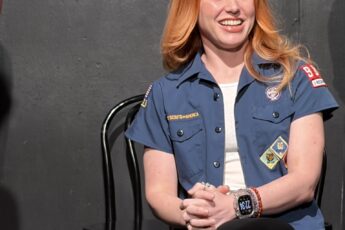
For a while there, it was the most famous face of any 10-year-old on the planet. Hands slapped to his cheeks, mouth open in that scream, home alone and outsmarting two burglars. In 1990 Macaulay Culkin wasn’t just a kid actor. He was the biggest movie star in America, and he happened to be in the fourth grade.
Then the world sort of assumed the worst about how that turns out. And for a long stretch, it looked like the world might be right.
What actually happened is quieter, and a lot kinder, than the tabloid version. It just took him about thirty years to get there.
Start with the part nobody wants to talk about at a birthday party. Culkin has said in interviews over the years — recently again to People and to outlets like Yahoo and NBC News — that the man running his childhood career was his own father, Kit. And that the arrangement was not a warm one. Culkin has described his father as controlling and, in his words, abusive, someone who kept booking his son onto set after set even when the boy was begging for a break.
Think about that for a second. The most beloved Christmas movie kid in the country, the one millions of families watched curled up on the couch, quietly asking the adults in his life for a day off and not getting one.
“Acting stopped being fun,” is the gist of what he’s said about those years. He felt overworked and, worse, unheard.

The turn came when it usually does in these stories — with a door closing. Culkin’s parents split, and after a custody battle his mother won out in 1997. Macaulay and his siblings largely walked away from their father and, by his own account, haven’t really spoken to him since. That’s more than thirty years of silence now. And here’s the part that reframes the whole “tragic child star” headline: Culkin has said flatly that the distance made his life better, not worse.
Cutting his father loose is what finally let him be a regular messed-up teenager. He went to high school. He fell in love. He figured out who he actually was when nobody was pointing a camera at him or counting the box office. He stepped back from Hollywood almost entirely, and instead of chasing the next franchise, he did the strangest, most freeing thing a former mega-star can do — whatever he felt like.
He fronted a comedy rock band that existed mostly to make people laugh. He wrote. He started a comedy website and a podcast. He popped up in oddball indie films and voice-over booths, turned up in commercials, and once, gloriously, danced onstage next to his friend Lizzo just because he could. It wasn’t a comeback in the Hollywood sense. It was a guy quietly building a life that belonged to him.
And then, slowly, the acting came back — this time on his own terms.
In 2021 he joined the cast of “American Horror Story: Double Feature,” his first real return to a big screen role in years. He played a strung-out drifter named Mickey, about as far from lovable little Kevin McCallister as you can get. Fans and critics noticed. NME and Today both ran pieces on how good he was, how the nostalgia of seeing that face again folded right into the eeriness of the show. The kid could still act. He’d just needed the right room, and the right reason, to do it.
The real payoff, though, wasn’t a role. It was a rainy December afternoon in 2023.
On December 1, Hollywood finally handed Macaulay Culkin a star on the Walk of Fame — the sidewalk version of “we’re sorry, and thank you, and welcome back.” His “Home Alone” mother, Catherine O’Hara, showed up to speak, calling his Kevin McCallister a “perfect performance” of an ordinary boy on an extraordinary adventure. Cameras clicked. It was, by every account from Today, E! News, ABC News and ET, a warm afternoon.
But the people who mattered most were sitting a few feet away.
His partner, actress Brenda Song, was there. So were their two little boys — Dakota, born in 2021, and Carson, born the year after. And when it was Culkin’s turn at the microphone, the man who spent his childhood being handled and overworked stopped, looked at the woman who’d given him a family, and nearly lost it.
He called her his “champion.” He told the crowd she was “the best person I’ve ever known,” the one who “gave me all my purpose.” Song, watching from her seat with a kid on her lap, cried. And Culkin, being Culkin, wiped his eyes and closed the whole thing out the only way that made sense — with the line every single person in that crowd had been waiting for since they were children themselves.
“Merry Christmas, ya filthy animals.”
These days the Culkin-Song household is almost aggressively normal. They live in a family-friendly pocket of Los Angeles, the same kind of neighborhood Song grew up in, with her parents close enough to swing by and babysit. He keeps working — voice roles, dark comedies, a steady drip of projects he actually wants to do — but he talks more about his sons than his résumé.
And there’s one thing he keeps coming back to in interviews. Having grown up with a father who withheld warmth like it was rationed, Culkin says he does the opposite on purpose. He praises his boys constantly. He tells them he’s proud. He calls it giving them the unconditional acceptance he never got, and breaking a cycle he knows too well.
The Home Alone kid isn’t lost, and he isn’t a cautionary tale. He grew up, got out, and quietly built the exact thing his own childhood never gave him — a house full of people who are glad he’s there.
Turns out the happy ending was never about being famous again. It was about finally getting to go home, and having someone waiting.