
For three years, my daughter-in-law barely looked at me. And now here I was, sixty-one years old, sitting on a hard plastic chair in a hospital hallway at two in the morning, waiting to be told whether I’d be allowed anywhere near her at all.
My name is Carol. My son Daniel married Rachel four springs ago, and somewhere in there I broke something between us that I never learned how to fix.
The maternity ward at Fairview General has a particular kind of quiet at night. Not silence. A hum. The vending machine buzzing in the corner, a monitor beeping somewhere down the hall, a nurse’s shoes squeaking past every few minutes. I had a cold cup of coffee going gray in my hands and a paper bag on the seat beside me with a knitted yellow blanket folded inside it. I’d brought it just in case. I didn’t really believe I’d get the chance to hand it over.
Daniel had called me a little after eleven. “Mom. Rachel’s in labor. We’re at Fairview.” A pause on the line, the kind of pause I’d gotten used to. “She’s — Mom, I have to be honest with you. She doesn’t want you in the room. But I wanted you to know. I wanted you here.”
“I understand,” I said. And I did. I understood better than he knew.
So I drove over in the dark, and I sat in the waiting area by the elevators, close enough to matter and far enough not to intrude, which had been the exact shape of my place in their lives for three years.
Let me tell you how I lost her, because I’ve had a long time to think about it, and I’m done pretending it was a misunderstanding.
Rachel lost her own mother when she was twenty-four. Ovarian cancer, fast and cruel. By the time Daniel brought her home to meet me, she’d been motherless for two years and she wore it quietly, the way some people carry a limp they’ve decided not to mention. I saw it. I want to say I saw it and I was gentle. But the truth is I was drowning in my own grief back then. My husband, Daniel’s father, had been gone eight months. I’d been married to Tom for thirty-four years, and after he died the house was so loud with silence that some nights I’d talk to the kettle just to hear a voice.
And Daniel was all I had left.
I know now that’s what did it. The night before their wedding, at the rehearsal dinner, I’d had one too many glasses of wine and I said something to my sister in what I thought was a private corner of the restaurant. I said I thought they were rushing it. I said Rachel was sweet but she was lonely, and lonely people latch on, and I wasn’t sure she loved my son so much as she loved having a family again.
Rachel was standing behind me. She’d come to refill the water pitcher herself, because that’s the kind of person she is, and she heard every word.
She never told Daniel. That’s the part that still guts me. She married my son the next day with a bright, careful smile, and she folded that sentence away somewhere private, and from that morning on she was polite to me and nothing more. Perfectly polite. Christmas dinners where she passed me the potatoes and asked about my drive. Birthday cards signed in her neat handwriting, “Warmly, Rachel.” A wall so smooth and so well-mannered that Daniel, bless him, spent two years thinking his mother and his wife simply weren’t close.
I tried. Lord, I tried in all the wrong ways. I’d call too often. I’d offer advice nobody asked for. When they announced the pregnancy last winter, I knitted that yellow blanket and I mailed it, and I waited by the phone for a thank-you that came as a text three days later: “Got the blanket. Thank you.” Six words. I read them about forty times looking for a door in them and there wasn’t one.
I wasn’t invited to the baby shower. Daniel made an excuse about it being “just the girls from Rachel’s office.” I let him have the lie because the truth would have cost him something.
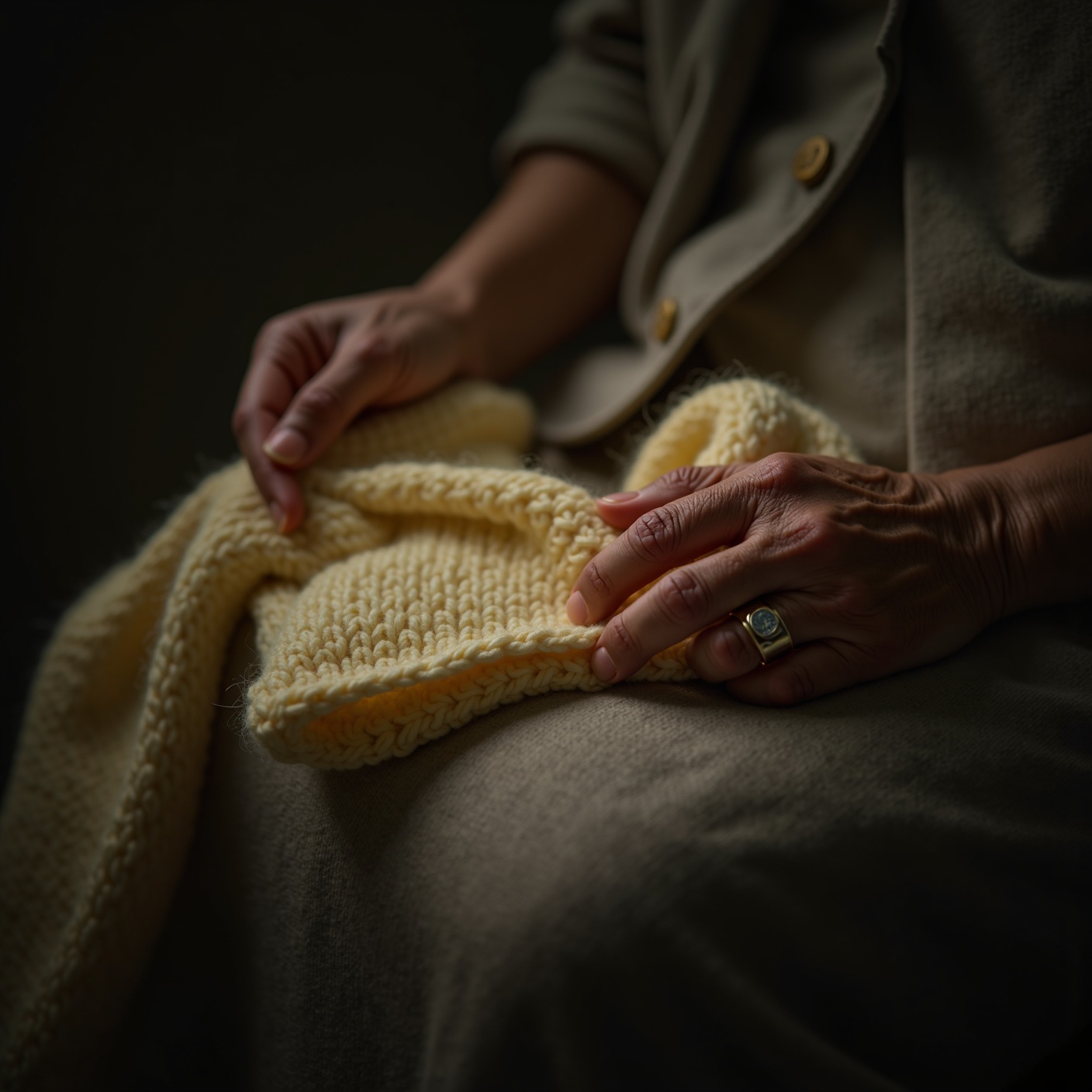
So that’s who was sitting in that hallway at two in the morning. A woman who’d earned her exile and knew it.
The hours went by the way hospital hours do, thick and slow. A little after one, Daniel came out once, in scrubs, his hair a mess, his eyes wet and shining. “It’s going okay,” he said. “It’s slow, but it’s okay.” He crouched down in front of my chair like he used to when he was small and had something to confess. “I’m glad you’re here, Mom. I don’t care what anybody — I’m just glad you’re here.”
“Go on back to her,” I told him, and squeezed his hand. “Go on. I’m not going anywhere.”
He went back through the double doors. And I sat there with my cold coffee and my paper bag, and I made a bargain with God, the kind you make when you’ve got nothing left to trade. I said, I don’t care if I ever hold that baby. Just let them both be all right. Just let her be all right. Rachel. Let Rachel be all right.
It was almost three when the doors opened again and a nurse came out. Young, tired, a clipboard under her arm. She looked around the waiting area, and her eyes landed on me.
“Are you Carol?” she asked.
My heart went sideways. My first thought was the worst thought. “Is everything — is she—”
“Everyone’s fine,” the nurse said quickly, and she gave me a small, strange smile, the kind you can’t read. “Baby’s almost here. A little girl.” She hesitated, then reached into the pocket of her scrubs and pulled out a square of paper, folded over twice, the way you fold a note you don’t want anyone else to open. “She asked me to give you this.”
I took it. My hands were not steady. The paper was warm from being carried against someone. I unfolded it once, and then again, and I saw Rachel’s neat handwriting, the same handwriting from three years of careful birthday cards, and for a moment I couldn’t make the words hold still on the page.
It said: “I kept the blanket on the crib the whole time. I want her to know her grandmother. I want you here, Carol. Please come in. — R.”
I don’t remember standing up. I don’t remember the walk down that hallway, or the nurse holding the door, or setting down the paper bag. I remember the room was warm and gold-lit and full of that particular hush that comes right after the hardest work a body can do. Daniel was crying and laughing at the same time. And Rachel was propped up against the pillows, exhausted and flushed and beautiful, holding a small red bundle against her chest.
She looked up at me. All that smooth politeness was gone from her face. What was underneath it was something raw and young and unguarded, and I realized I was seeing her without the wall for the first time since the night I put it up.
“I heard you,” she said quietly. “That night. Before the wedding. I heard what you said.”
The floor dropped out of me. “Rachel. Oh, honey, I have carried that—”
“I know.” She swallowed. Her eyes filled. “I’ve been so angry at you for so long that I forgot I used to be jealous of Daniel. That he still had a mom to be annoyed by.” Her voice broke on the word. “I don’t want to do this without one. I don’t want her to grow up and never know she had a grandmother down the hall the whole time, too proud and too scared to come in.”
I came to the side of the bed and I sat down, careful, the way you sit next to something you’re afraid to break. Rachel shifted the bundle toward me.
“Do you want to hold her?” she asked.
I did. God help me, I did.
The baby was impossibly light and impossibly warm, with a furious little face and a full head of dark hair, and when she gripped my finger in her whole tiny fist I made a sound I’d been holding in for three years.
“Her name is Eleanor,” Rachel said. “After my mom. And we thought — for a middle name — we thought Grace. If that’s all right with you.”
Tom’s mother, gone forty years now, had been named Grace. I’d never told Rachel that. I never got the chance to ask how she knew, because Daniel came and put his arm around us both, and we three stood in a knot around that new small life, and for a while nobody said anything at all.
Eleanor Grace is four months old now. The yellow blanket goes everywhere she does.
Rachel calls me on Tuesdays. Sometimes there’s nothing to say and we say it anyway, just to hear a voice on the line, and I think of all the nights I talked to the kettle, and I could weep for how much of that I could have spent talking to her.
I don’t deserve the second chance. I know that. But I’ve stopped saying it out loud, because Rachel told me once, quietly, that a person can spend so long apologizing for the past that they miss the whole of the present standing right in front of them, waiting to be held.
So I hold her instead. Both of them. And I keep the note. It lives in my wallet now, folded over twice, warm from being carried.