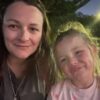
A global pop culture icon. One of the most recognizable faces on the planet.
But with the childhood she had, she just as easily could’ve ended up on the streets.
From almost the beginning, her life was chaos. After her parents split, she was dragged into a restless, nomadic world. Her father — a hardcore Deadhead — was even accused of giving her LSD when she was only three.
The people who were supposed to protect her kept disappearing. She was passed back and forth between the U.S. and New Zealand, then locked up in a youth correctional facility at just 14.
And yet, somehow, she didn’t just survive it — she transformed her life completely. Today, she’s in a place no one from her past could’ve imagined.
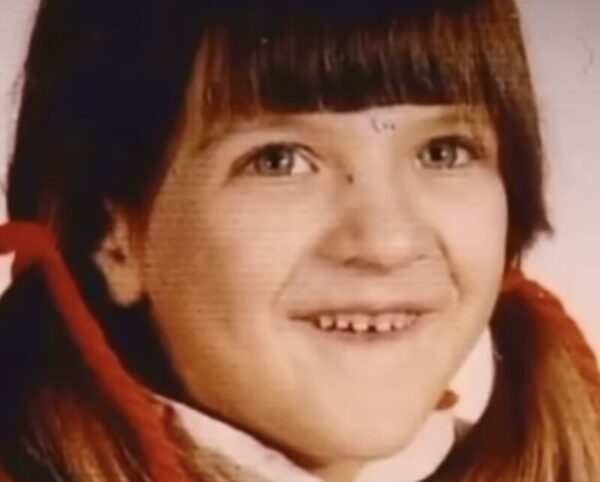
A childhood soaked in chaos
Courtney Love was born July 9, 1964, in San Francisco. On paper, her world looked bohemian and glamorous: her mother was a psychotherapist, her father worked with the Grateful Dead, and her godfather was the band’s bassist, Phil Lesh.
Her parents had even met at a party for jazz legend Dizzy Gillespie.
Her background was a typically tangled West Coast mix – Cuban, English, Irish, German, and Jewish roots, plus connections to writers and artists. She was even named after a character in a 1950s novel, as if someone had already decided her life would be dramatic.
Her mother later remembered her as a ferociously creative child: always staging make-believe plays, inventing characters, overflowing with energy. Courtney herself has said that even as a kid she wanted two things: to be an actress and to be a rock musician.
Behind those fascinating details, though, was a disturbing reality.
After her parents split, Courtney’s early life descended into instability and trauma. She has said that her father gave her LSD when she was just four years old – something she doesn’t remember, but which became part of her family’s dark legend. There were also fears he might abduct her, adding to a constant sense of danger.
She was sent to psychiatrists from around the age of three. There were experiments with different therapies – even “transcendental meditation for toddlers,” as she once put it. When she was nine, a psychologist noted signs of autism, including a strong aversion to being touched. For a time, she barely spoke at all.
Bounced between continents – and locked up at 14
Courtney spent much of her childhood being shuttled from place to place. Her mother relocated to New Zealand in the early 1970s in a burst of “back-to-the-land” idealism and started a sheep farm, leaving Courtney separated from her stepfather in Oregon.
Courtney hated her new life. She clashed with teachers and classmates, eventually getting expelled from school. She was sent back to the U.S., but things didn’t settle down. By 14, she landed in a juvenile correctional facility, reportedly after a shoplifting incident.
Ironically, that bleak chapter was also where she found some of her fiercest inspirations. Behind those walls, she discovered records by Patti Smith, the Runaways, and the Pretenders – the kind of tough, unapologetic women who would shape her own sound and persona.
Throughout 1979 she bounced in and out of foster homes before finally securing legal emancipation in 1980. From that point on, she lived independently and stayed estranged from her mother.
Reinventing herself – topless clubs and club nights
Courtney’s early adult years were messy, improvised, and often desperate. She spent time in Japan working as a topless dancer before being deported. Back in the U.S., she scraped by as a DJ and club dancer and eventually adopted a new surname – “Love” – in part to put distance between herself and the chaos of her past.
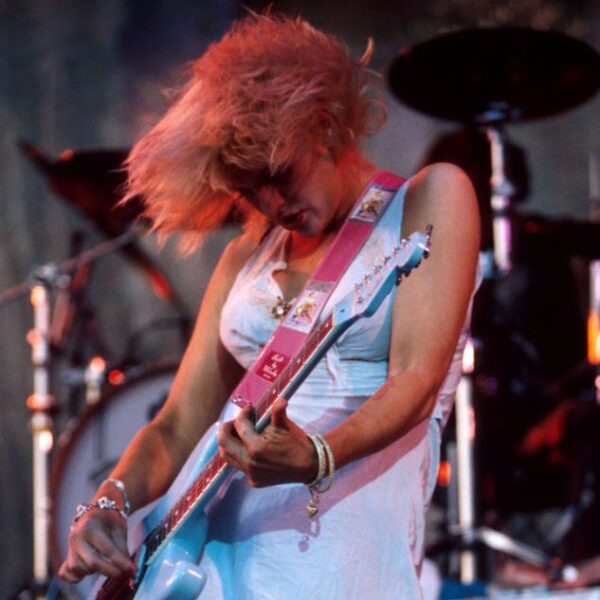
She admits she lacked basic social skills and came from no stable family structure. What she did have was a relentless drive and a near-obsessive hunger to make music.
By the mid-1980s, her world started to shift. She picked up small film roles, including parts in Alex Cox’s cult movies Sid and Nancy (1986) and Straight to Hell (1987), which placed her on the fringes of the punk and alt-rock scenes she loved.
Birth of Hole – and the Kurt Cobain whirlwind
In 1989, everything changed. Courtney co-founded the band Hole with guitarist Eric Erlandson. As lead singer and rhythm guitarist, she fronted the group with a raw, jagged energy that set them apart. Their early records drew praise in the underground press for their aggressive sound and fearless, often disturbing lyrics.
As the alternative and grunge scenes exploded in the late ’80s and early ’90s, Courtney became a rising figure in that world. Then she met Kurt Cobain.
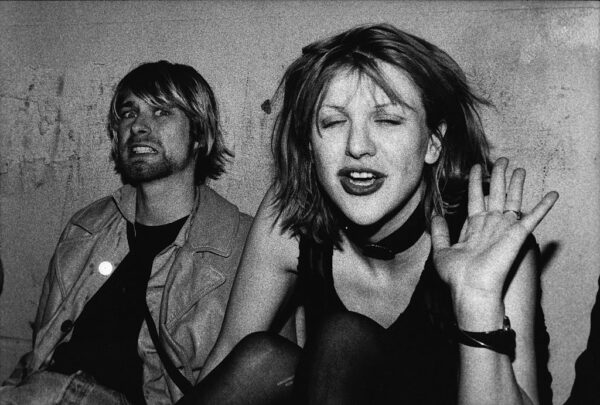
She has been blunt about the beginning of their relationship: she pursued him. Speaking to Sassy magazine, she recalled being very direct – direct enough that “a lot of girls would have been embarrassed,” as she put it. Cobain initially told her he didn’t have time to deal with her, but she felt their connection was “inevitable.”
The two married in 1992, and the combination of Nirvana’s massive fame, Courtney’s own band, and their chaotic personal lives turned them into one of the most talked-about couples in music.
The “mystery rock legend” in this story, of course, is Courtney Love.
Death, ashes, and a second act in Hollywood
When Kurt Cobain died in 1994, Courtney’s life and career were shattered. For a while she retreated from public view, spending time with close friends and family. Cobain’s remains were cremated; Courtney divided his ashes, keeping some in a teddy bear and others in an urn, and later took part in a Buddhist ceremony for them at a monastery in Ithaca, New York.
The following year, she made a dramatic return to acting. Her performance as Althea Leasure in Miloš Forman’s The People vs. Larry Flynt (1996) earned her a Golden Globe nomination and serious critical respect. She also began a relationship with her co-star Edward Norton, which lasted until 1999.
At the same time, Hole reached a new peak. Their third album, Celebrity Skin (1998), brought them three Grammy nominations and cemented Love’s place as a major figure in rock.
In the early 2000s she balanced film roles – including Man on the Moon and Trapped – with music, releasing her first solo album, America’s Sweetheart, in 2004. Legal troubles and addiction followed; by 2005, a judge ordered her into rehab.
Newsner English
Writing, TV roles, and constant reinvention
Courtney never stayed in one lane for long.
Between 2014 and 2015 she released new solo singles and reappeared on TV in series like Sons of Anarchy and Empire. She also explored writing, co-creating the manga series Princess Ai and publishing the scrapbook-style memoir Dirty Blonde.
In 2022, she announced she had finally finished another memoir, The Girl with the Most Cake, after nearly a decade of work.
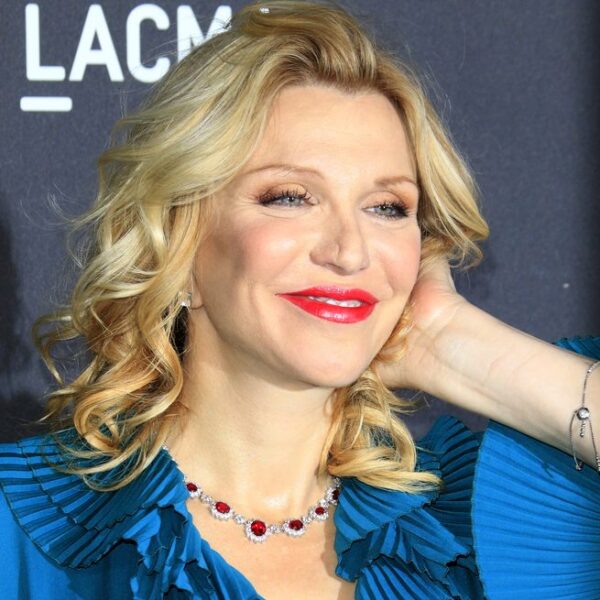
Since Cobain’s death, Love has never remarried. She continues to post emotional tributes to him and remains closely tied, in the public mind, to his legacy. Together they had one child: daughter Frances Bean Cobain, born in 1992. In 2015, Courtney briefly dated director Nicholas Jarecki.
More recently, she has spoken about her admiration for rapper Kendrick Lamar, calling him a “genius” and joking in an interview that she has a “mad crush” on him and would love to collaborate. In another conversation this year, she casually mentioned that she is currently in a “friends with benefits” situation rather than a traditional relationship.
From trauma to legend
Courtney Love’s story is hard to squeeze into neat categories. She has been praised as a feminist icon and attacked as a destructive force; she’s been called both a survivor and a troublemaker.
What’s undeniable is how far she traveled from her beginnings: a little girl bounced between continents, dosed with LSD, sent to psychiatrists and locked up in juvenile detention – who somehow turned herself into a rock star, a Golden-Globe-nominated actress, a writer, and one of the most instantly recognizable women in pop culture.
Her life is proof that even the most chaotic childhood can, in rare cases, fuel a legend instead of ending one.