
The email landed at 4:11 on a Thursday afternoon. I know the time because I stared at the timestamp for a full minute before I let myself read the word under it.
Congratulations.
I’d gotten into the school. The one I’d taped to the inside of my locker two years earlier. The one I hadn’t told most people I’d applied to, because saying it out loud felt like daring it not to happen.
I was eighteen. I had a plan. And I had the one thing most kids my age don’t: a college fund, opened the week I was born by my grandfather, who had quietly paid into it for eighteen years.
He passed away when I was fifteen. The fund stayed. In a very real way, it was the last thing he was still doing for me.
So when I came downstairs that night practically vibrating, I expected my parents to be happy. For about ninety seconds, they were.
Then my mother set down her fork and said, in the careful voice she uses right before she asks for something, “You know, this actually works out with the timing.”
I didn’t understand what she meant.
“Your brother’s wedding,” my dad said, like I was being slow. “We’re going to need to borrow from your fund. Just to cover the extras.”
My brother Ryan is twenty-five. He and his fiancée, Sydney, had settled on a destination wedding, a resort, a beach, the whole production. And the “extras,” it turned out, had gotten away from everyone. The upgraded venue. The welcome dinner. Flights for people I had never met.
“Borrow,” I repeated.
“We’ll put it back,” my mom said. “Eventually. It’s family.”
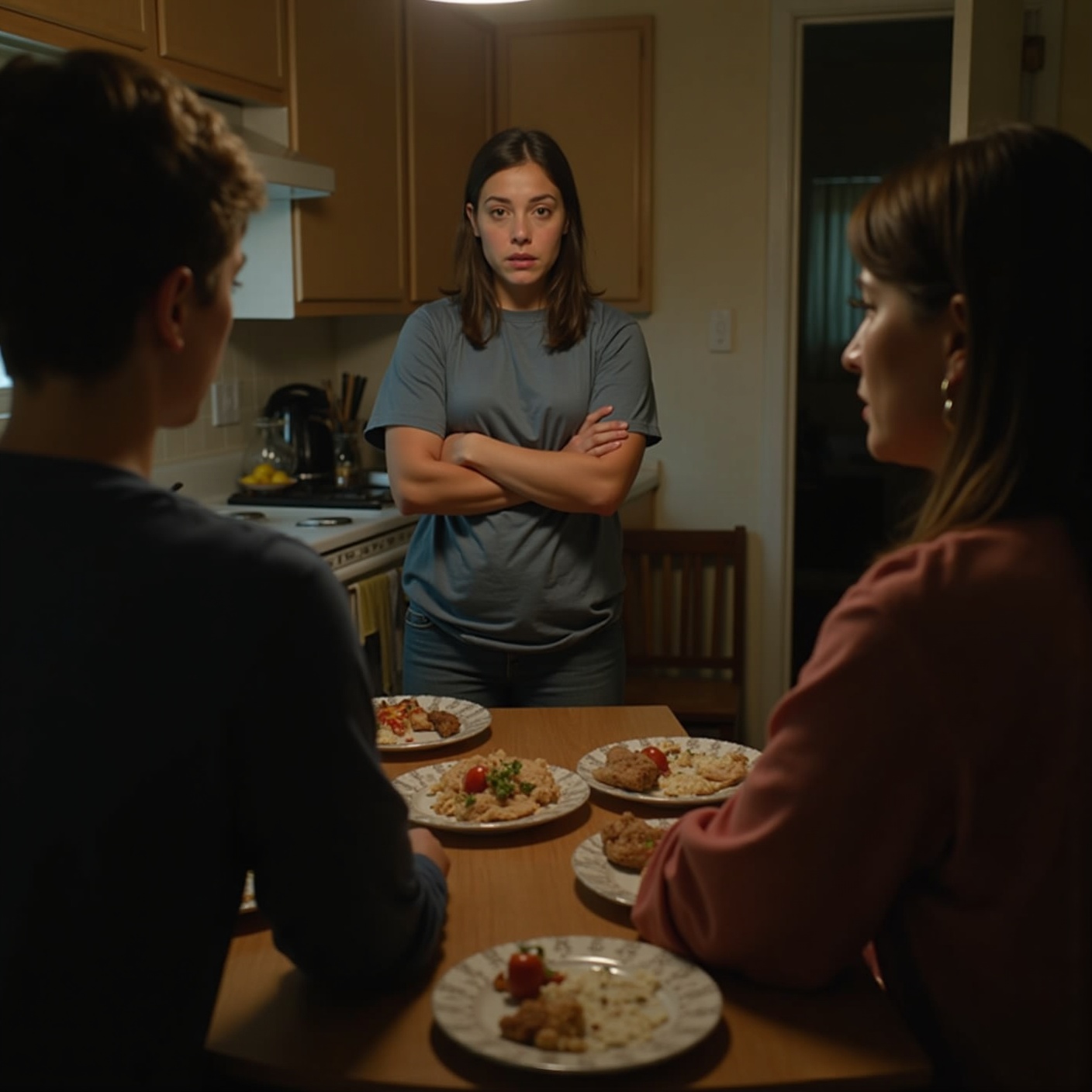
I said no.
I want to be clear about how that one word sounded in our kitchen, because you’d have thought I’d flipped the table. My mother’s face went flat. My father exhaled through his nose the way he does when he’s decided you’re being difficult.
“It’s Grandpa’s money,” I said. “He put it there for school. My school.”
“It’s the family’s money,” my mother corrected. She’s always been good at that, turning a thing that’s mine into a thing that belongs to everyone the second she needs it to.
By the next morning it wasn’t just them. Ryan called me, wounded, like I’d done something to him. “It’s one semester of loans,” he said. “You pay them off later. Everybody does it.” Sydney texted me a whole paragraph about how a wedding only happens once, and how she’d “always thought of me as a little brother,” which was news to me, since we’d met maybe three times.
“Family comes first,” Ryan said. “You’ll get it when you’re older.”
That afternoon my mother sat me down and said the sentence that finally made something in me go quiet.
“It’s what family does,” she said. “You can always take loans. Ryan can’t get this day back.”
And that was when I noticed the way she was talking about it. Like it was already decided. Like the money was already spoken for. Because it was. They’d already told Ryan and Sydney it was handled. They’d promised the resort. In their heads, my fund was gone.
What none of us knew, sitting in that kitchen, was that my grandfather had thought about this exact moment a long time before any of us.
Because two days later, my grandmother came over.
She’s a small woman, my gran, and she doesn’t raise her voice, which is probably why the whole room went still when she set her purse on the counter and said she needed to say something before this went one step further.
“You can’t borrow from that account,” she said. “Not one dollar. And I need everybody in this room to hear why.”
My mother started to talk. Gran held up a single hand, and my mother stopped, which I had genuinely never seen happen.
“Walter didn’t leave that fund to the two of you,” Gran said, looking at my parents. “He left it in a trust. He made me the trustee. The only one. That money can’t be touched by anyone but the boy it was set up for, for school, and nothing else. I sign, or it doesn’t move. And I’m not going to sign.”
You could have heard a pin drop.
“He set it up that way on purpose,” she went on, and now she wasn’t looking at me, she was looking straight at my parents. “Because he watched. For years, he watched. He saw who got the down payment on the condo. He saw who got a car handed to him at sixteen. He saw which grandson learned to ask, and which one learned to go without. And near the end he told me, ‘I’m going to make sure they can’t do to that account what they’ve done with everything else.'”
Nobody said a word. Ryan was studying the floor. Sydney had gone very still.
My mother tried once. “That’s not fair, that isn’t what—”
“It’s exactly what,” Gran said. “And you know it.”
The wedding still happened. It was smaller. Ryan and Sydney trimmed the extras, which, it turned out, they’d been able to afford to trim all along. Nobody took out a loan. Nobody had to.
I started school that fall on my grandfather’s money, exactly the way he’d drawn it up eighteen years before any of us were sitting in that kitchen.
I think about him a lot now. Not the money. Him. A man who saw, clearly and without making a speech about it, how his own family really worked, who got the new sneakers and who got the leftovers, and who quietly made sure that one time, for one grandkid, the pattern didn’t get to win.
He couldn’t fix all of it. But he fixed this.
And on the first cold morning of the semester, walking across a campus I’d only ever seen taped inside a locker, I said thank you out loud, to nobody, to him.