
On Venus, your birthday would come around before a single day was over
Picture waking up on Venus. You stretch, you watch the Sun crawl across the sky, you go about your business, and somewhere in the middle of that one long morning an entire year quietly slips past you. It sounds like a riddle. It isn’t. It’s just how the second planet from the Sun actually works, and it’s the only place in our solar system where the calendar behaves this way.
Start with the two numbers that break your brain. Venus takes about 243 Earth days to spin around once on its axis. That single rotation is the slowest of any planet we know. Meanwhile, it races around the Sun in only about 225 Earth days. Line those up and the conclusion is undeniable: one turn of the planet lasts longer than one lap around the Sun. On Venus, a day is longer than a year.
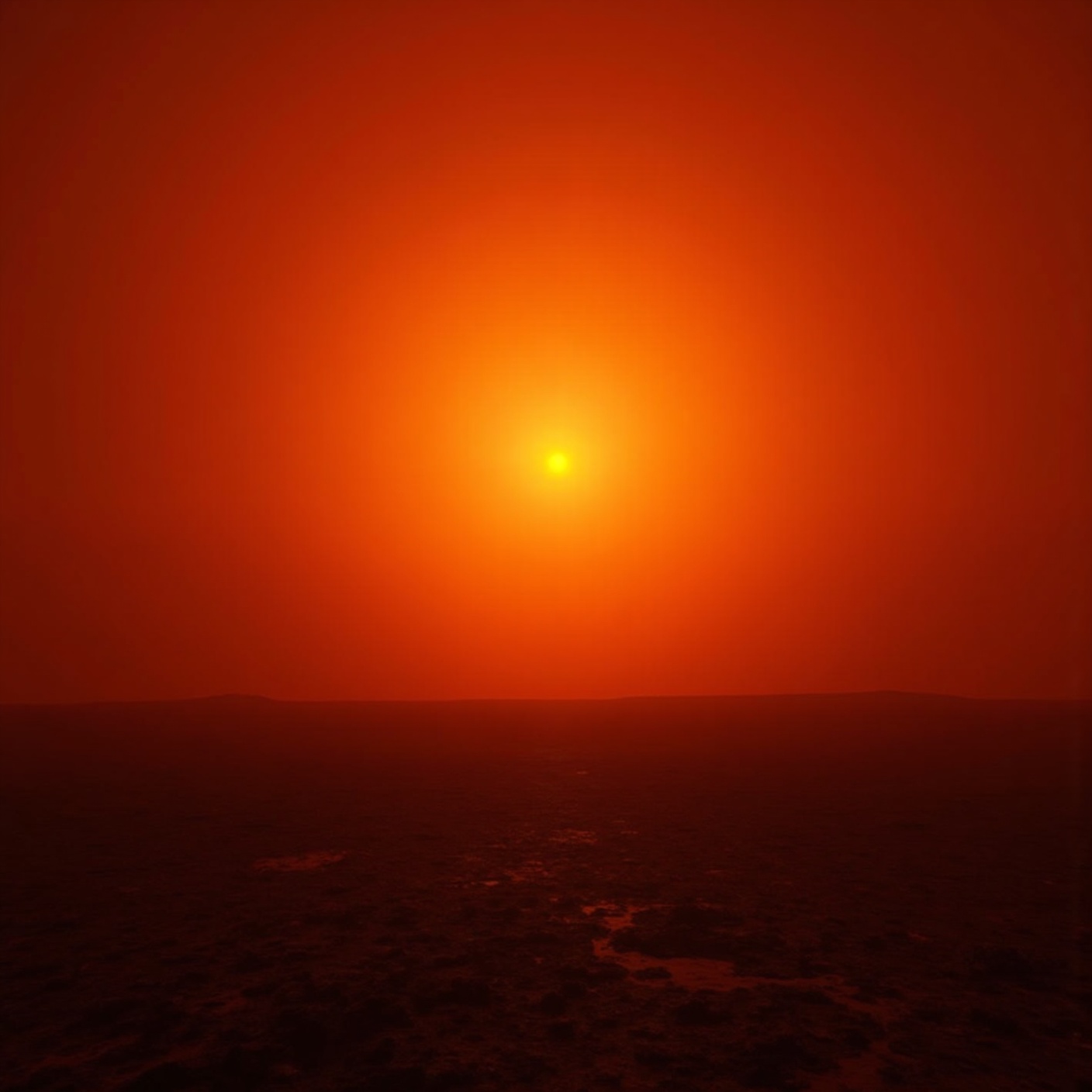
Then comes the detail that makes it weirder still. Almost every planet, including ours, spins in the same direction it orbits, counterclockwise if you float above the Sun’s north pole. Venus didn’t get the memo. It turns the other way, a motion astronomers call retrograde. Practically speaking, that means if you stood on the surface and the sky ever cleared, you’d see the Sun rise in the west and set in the east, the exact reverse of every sunrise you’ve ever known.
There’s a twist even scientists have to say slowly to keep straight. When people say “a day on Venus,” they usually mean one full spin measured against the distant stars, and that’s the 243-day figure. But the day you’d actually live through, the stretch from one sunrise to the next, is a different thing. Because the planet’s slow backwards rotation works against its swift trip around the Sun, that sunrise-to-sunrise “day” comes out to roughly 117 Earth days. So counted one way the day beats the year; counted another way the year beats the day. Both are correct. Venus refuses to give you a clean answer.
So why does the planet barely turn at all? The leading suspect is the atmosphere. Venus is smothered in an incredibly thick, hot, pressurized blanket of gas, with high-altitude winds howling around the globe far faster than the surface beneath them. Researchers think that heavy, churning air presses and drags against the planet like a giant brake pad, and over billions of years it has bled away Venus’s spin, leaving it turning at a crawl. In other words, the weather may have slowed down the world itself.
It’s easy to file this under “space is strange” and move on, but there’s something almost poetic in it. We tend to think of a day and a year as fixed, universal things, the steady drumbeat that governs birthdays, seasons, and the whole rhythm of a life. Venus is a reminder that those numbers are local. They belong to Earth, to our particular speed and tilt and direction. Move to another world and time itself keeps a different clock.
Which leaves one genuinely odd thought to sit with. If you lived on Venus, you’d age far faster in years than in days. You could rack up birthday after birthday while barely watching the Sun cross the sky twice. Would you take that trade, a fresh year every 225 days, in exchange for waiting four long months just to see one more sunrise?