At the Riverbend Wildlife Center, the keepers had a problem they couldn’t solve, and her name was Willow.
Willow was a young river otter who’d been brought in after her mother was killed on a road nearby. Otters are usually all motion and mischief — sliding, chattering, tumbling over each other like furry acrobats. But Willow just curled into the far corner of her enclosure and stayed there. She wouldn’t play. Worse, she’d almost stopped eating. The vets tried everything: favorite foods, warm blankets, a mirror, even recordings of otter calls. Nothing. She was, the head keeper admitted quietly, slipping away from grief — something animals feel far more than people like to believe.
Then, on a gray Saturday, a little girl named Ivy came to the center with her dad.
Ivy was six, and she was having a hard year of her own. Her grandmother — the one who used to take her on these very outings — had passed away that spring, and since then Ivy had gone quiet in a way that worried everyone who loved her. She didn’t want to feed the goats. She didn’t want the gift shop. She just drifted along beside her father with her small hand in his.
Until she reached the otter glass.
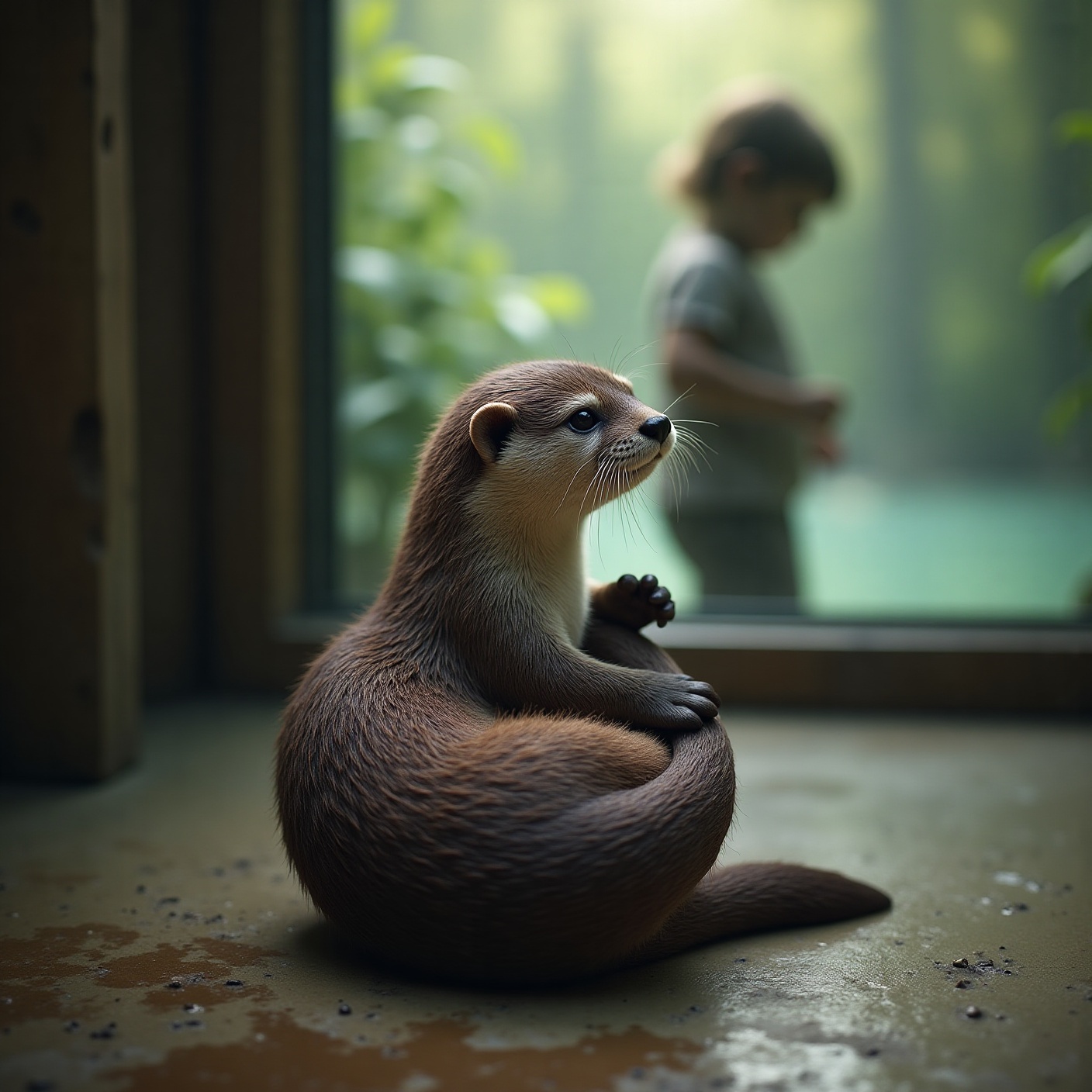
Ivy stopped. On the other side of the glass, in the far corner, was a small brown creature curled into itself, not moving. And Ivy — who hadn’t said much of anything to anyone in weeks — sat right down on the cold floor, pressed her palm flat against the glass, and stayed there.
“She’s sad,” Ivy said softly to her dad. “She misses somebody too.”
The keeper watching nearby felt something catch in her throat.
Ivy didn’t tap the glass or call out the way kids usually do. She just sat, quiet and patient, her hand on the glass, and after a while she started to talk — a low, murmuring, six-year-old kind of talk, telling the otter about her grandma, about how it felt, about how it was okay to be sad but you couldn’t stay in the corner forever because people who loved you wanted you to come out.
And then, slowly, Willow uncurled.
The otter that hadn’t moved in days lifted her head. She crept, inch by inch, across the enclosure — and pressed her own small paw against the glass, right against Ivy’s hand, with nothing but that thin pane between them.
The keeper actually gasped out loud.
Ivy’s dad brought her back the next day. And the next. Willow started eating again the first week — visibly perking up whenever the small familiar figure appeared at the glass. Within a month, the otter was sliding and chattering and being a proper nuisance, the way a healthy otter should.
But here’s the part the keepers still talk about: Ivy came back to life, too. The little girl who had gone silent started talking again, first to the otter, then to everyone. It was as if the two of them had made a quiet deal that neither would stay in the corner alone.
The center eventually gave Ivy an honorary title — “Junior Keeper” — and a little laminated badge she wears with enormous seriousness. And on the plaque outside Willow’s enclosure, they added one line, because they felt the world ought to know:
“Sometimes the one who saves you is the one who needed saving too.”