It was a Tuesday, the slow kind that still manages to wear you down. Dana had promised herself she’d get in and out of the store in ten minutes. Bread, milk, peanut butter, the little pouches of applesauce her two-year-old would actually eat. A box of the fruit snacks Mia had been asking for all week, because Mia was five and had learned to ask for things in that hopeful, careful way that costs a mother more than the fruit snacks ever would.
She’d done the math in the parking lot. She always did the math in the parking lot now.
Payday was Friday. The rent had gone up in March, the daycare in May, and the two hadn’t asked her permission. She’d moved her WIC benefits around, put back the coffee she wanted, put back the good cheese, kept the fruit snacks because some things you just keep. In her head the total sat right under forty dollars. She had forty-one on the card. Close, but she’d made close work before.
Eli was riding in the cart seat, kicking his heels against the metal, happy about nothing in particular. Mia walked beside her with one hand curled into the hem of Dana’s jacket, the way she did in crowded places.
The line was long. It was always long at that hour, everybody stopping for the one thing they forgot. Dana loaded the belt, bagged as the cashier scanned, kept half an eye on Mia and half on the little red number climbing on the display.
Thirty-eight. Thirty-nine forty. Forty-two ten.
Her stomach dropped a quarter inch. The fruit snacks. The applesauce four-pack that rang up as two.
“That’ll be forty-two ten,” the cashier said, not unkindly. A tired young woman with a lanyard and chipped blue polish.
Dana slid the card. Tapped it. Slid it again, slower, like slowing it down might change what the machine already knew.
Declined.
There is a particular heat that climbs up the back of your neck in that moment. Dana felt it. She felt the line behind her, the length of it, the eyes she was sure were on her even if they weren’t. Mia looked up.
“Mommy, is it broke?”
“It’s fine, baby. Just a second.” Her voice came out steady. She was proud of that, later, that it came out steady. “Can you,” she said to the cashier, quieter now, “can you take off the fruit snacks. And the applesauce. And — the bread, actually, take off the bread.”
The cashier’s hand hovered over the screen. Behind Dana, a cart nudged forward and stopped. She started unbagging, cheeks burning, doing the ugly arithmetic of which of her children’s small things to put back.
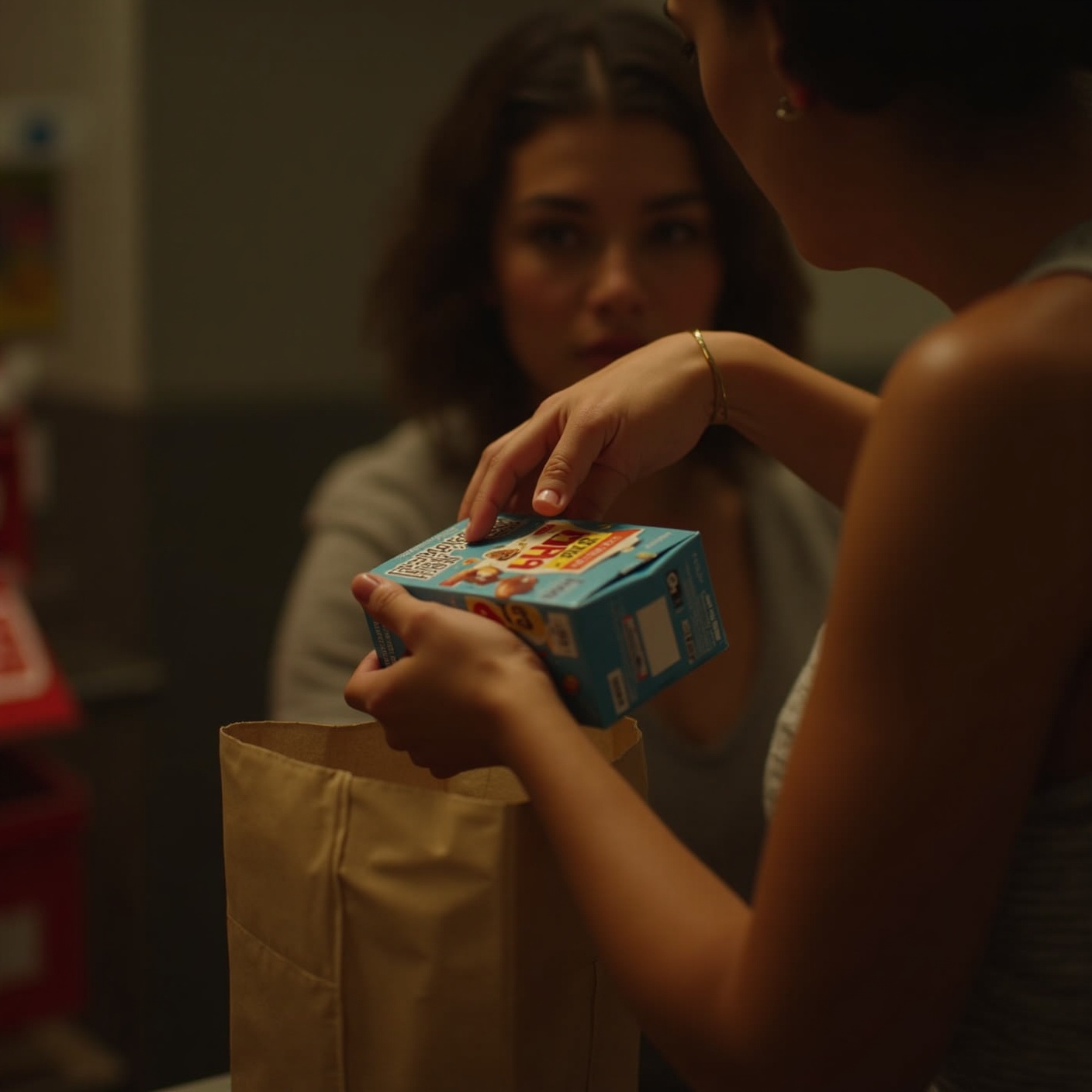
“Leave it.”
The voice came from directly behind her. A man, maybe sixty, in a canvas work jacket that had seen a lot of Tuesdays of its own. Gray at the temples, a paper carton of eggs in one hand and a bag of oranges in the other, which he set down on the belt without ceremony.
“Leave it all in the bags,” he said to the cashier. He was already reaching for his wallet. “Run mine on top of hers.”
“Oh — no.” Dana turned, shaking her head, both hands up. “No, that’s okay, I’ve got it, I’m just gonna put a couple things back, it’s really—”
“I know you’ve got it.” He said it plainly, looking at her, not through her. “I’m not saying you don’t got it. I’m saying today it’s on me.” He handed his card to the cashier. “Don’t worry about it. It’s gonna be fine.”
Six words. It’s gonna be fine. Dana would think about those six words for a long time.
She didn’t cry in the store. She wanted it on the record that she did not cry in the store. She got as far as “I can’t let you—” and the man cut her off with a small wave, like he was shooing a fly, like the whole thing embarrassed him more than it embarrassed her.
“You’re not letting me. I already did it.” He glanced at Mia, who was watching him with enormous, uncertain eyes. “Get the kid her snacks.”
The total came to seventy-something with his eggs and oranges. He tapped the machine, took his receipt, and picked up his two bags like a man who had somewhere to be.
“Thank you,” Dana managed. It came out cracked down the middle. “I don’t — thank you. Can I at least — do you have a way I can pay you—”
“Nope.” He was already turning. Then he stopped, and looked back, and for the first time something moved across his face that wasn’t gruffness. “Somebody did it for me once. Long time ago. Rougher spot than this one.” He shrugged one shoulder. “You just do it for somebody else down the road. When you can. That’s the whole thing.”
And he walked out into the parking lot, and that should have been the end of it. A nice story. A stranger, a Tuesday, six words.
Except the young woman who’d been behind him in line had heard all of it. She was in her twenties, a college backpack on one shoulder, a hand basket with ramen and a spiral notebook and a single frozen dinner. And when she got to the front, she set her basket down and nodded toward the mother of the family now unloading behind her, a harried dad with a toddler and a gallon of milk.
“His too,” she said to the cashier. “Whatever his comes to. Put it on mine.”
The dad started to protest. The cashier, who had worked that register for six years and had never once seen this happen, felt her throat tighten. “Ma’am, you sure? You’ve got — you’ve got ramen.”
“I’m sure,” the young woman said, and laughed, wiping her eyes with the back of her wrist. “I’ve got ramen and student loans and I’m doing it anyway. Ring him up.”
The dad paid it forward to the elderly man behind him. The elderly man covered a nurse in scrubs who’d stopped in on her way to a night shift. The nurse got the mom with the twins. Six people. Then seven. A line at a grocery store on a slow Tuesday, strangers who would never know each other’s last names, quietly passing the same small mercy backward down the belt like a bucket in an old fire brigade.
Dana stood off to the side with her bags and her two kids and watched it happen. Watched the thing the man in the canvas jacket had started keep moving without him, the way a match doesn’t care that it’s already out once the fire’s caught.
Mia tugged her jacket. “Mommy, why is everybody buying everybody’s stuff?”
Dana crouched down, right there on the scuffed floor by the gum and the phone chargers, and pulled both her children in close enough to feel their hearts going.
“Because sometimes,” she said, “people remember they’re not supposed to do it alone.”
That night, after the baths and the fruit snacks and the third glass of water Mia definitely did not need, Dana sat at her kitchen table with the receipt from the store in her hand. Seventy-four dollars and change. A stranger’s name she didn’t have on a total she couldn’t repay.
She thought about the way he’d shrugged. You just do it for somebody else down the road.
Payday was Friday. She still had to make close work again. But she took a sticky note and wrote on it, in the careful print she used for Mia’s lunchbox, four words, and stuck it to the inside of the cabinet where she’d see it every morning: When you can. Somebody.
It takes a village, people say, so easily that the words go soft from use. Dana had heard it her whole life and never once, until a Tuesday in a checkout line, understood that the village isn’t a place you’re born into. It’s a thing that gets built, one stranger at a time, by people who decide the person in front of them counts.
Three weeks later, a man two registers over set down a phone and a charging cable and heard the card behind him decline. A kid, nineteen maybe, red to the ears.
Dana didn’t even think about it. “Leave it,” she said. “Run mine on top of his.”
She’d been waiting, if she was honest, for the chance.