
Here is a strange thing about one of the most photographed structures on Earth: the Eiffel Tower is never quite the same height twice. Measure it on a freezing January morning, then measure it again on a blazing July afternoon, and the second number will be bigger. On the hottest days of the year the tower can stand up to 15 centimeters — roughly six inches — taller than it does in the depths of a Paris winter. It grows in the heat and it shrinks in the cold, over and over, year after year, and it has been doing this quietly since 1889.
The cause is a plain piece of physics called thermal expansion. Almost every metal expands when it warms up and contracts when it cools down, because heat makes the atoms inside vibrate harder and push each other a little farther apart. The Eiffel Tower is a perfect machine for showing this off. It is built from puddled iron — a wrought iron made in the 1800s — and it is not one solid block but more than 18,000 separate pieces, held together by around 2.5 million rivets. Every one of those pieces of iron reacts to the temperature. Warm them and they lengthen. Cool them and they draw back in.
You can do the rough math yourself. Puddled iron expands by about 12 millionths of its length for every degree Celsius it warms. Paris can swing from below freezing in winter to around 40°C on a heatwave day, and in direct sun the dark iron surface climbs even higher — 60 to 70°C is normal for metal baking in July light. Take a plain 100-meter iron bar through a 100-degree temperature change and it would stretch about 12 centimeters. The tower is roughly three times that tall, so a simple bar would predict something like 36 centimeters. The real figure is smaller — 12 to 15 centimeters — because the tower is not a straight bar. It is a lattice of beams pointing in every direction, and their pushes and pulls partly cancel out. Still, the change is real, and it is big enough to measure.
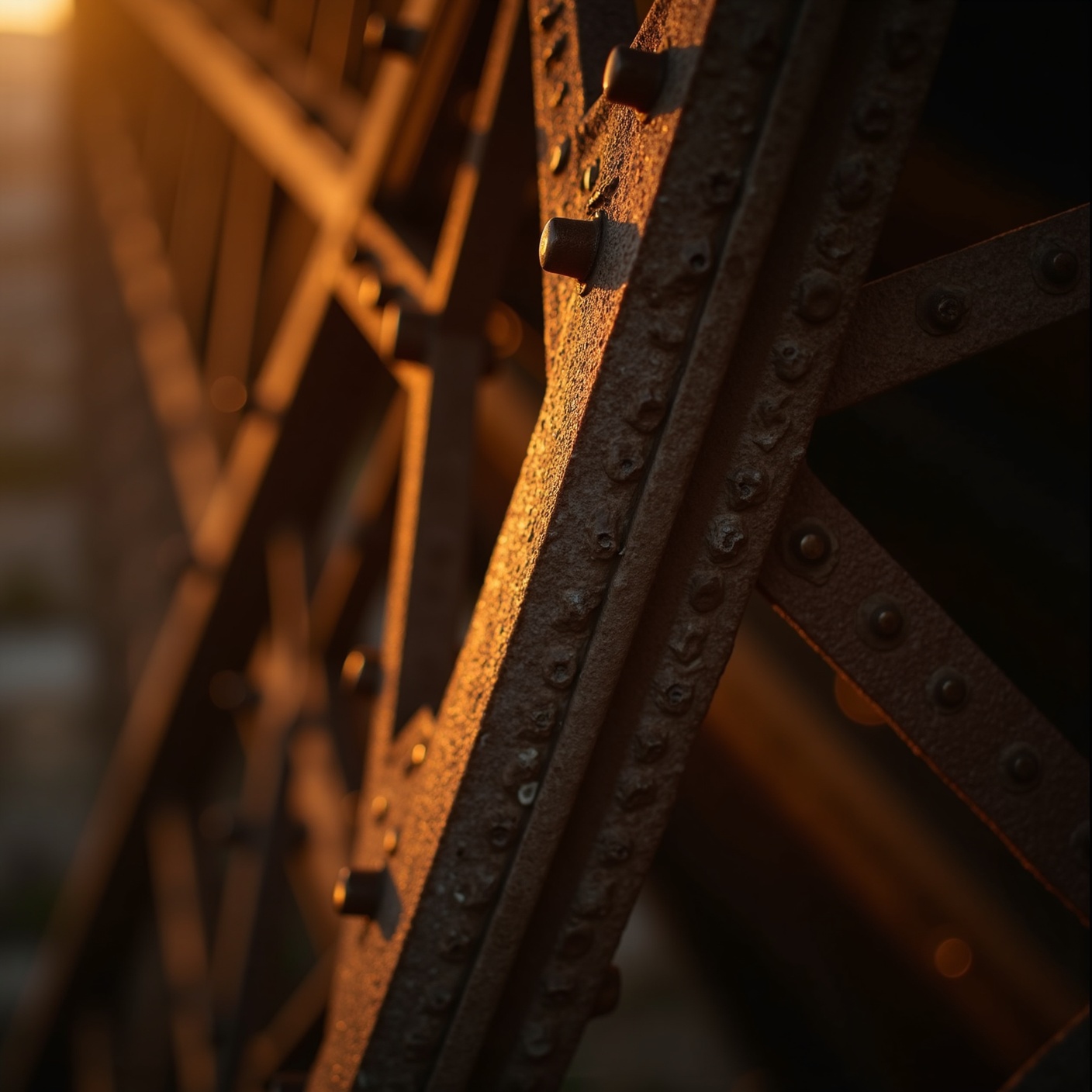
Then there is the second secret, the one that even a lot of Paris locals have never heard. The sun only ever shines on one face of the tower at a time. The lit side gets hot and expands more than the shaded side, and because one side is now slightly longer than the other, the whole structure leans — very gently — away from the sun. As the sun travels across the sky from morning to evening, the warm side keeps moving, and the top of the tower follows it in slow motion. Over the course of a clear day the tip drifts around in a small circle roughly six inches wide, always tilting away from the brightest heat. It is a 10,000-ton iron giant doing a slow, invisible daily sway, and not one of the millions of visitors below ever feels a thing.
None of this is a flaw. It is exactly what a good engineer plans for. Gustave Eiffel and his team knew that any large metal structure has to be allowed to move — a rigid tower that could not flex would crack itself apart as the seasons turned. Modern skyscrapers and long steel bridges are designed the same way, with expansion gaps and joints built in so they can breathe with the weather. The Eiffel Tower just happens to be the most famous example, standing right out in the open for anyone to notice, if only they knew to look.
So the next time you see a postcard claiming the Eiffel Tower is one exact height, you will know the fuller truth. On a cold, grey day it stands a touch shorter and perfectly upright. On a hot, sunny one it rises a few inches and leans away from the light, stretching and swaying like something almost alive — a monument that measures the temperature of Paris with its own iron body, and always has.