Picture a desert. You’re picturing the wrong thing.
The biggest desert on Earth has no sand dunes, no camels, no blistering heat. It’s white, it’s frozen, and it’s at the bottom of the world. The largest desert on the planet is Antarctica — and once you understand why, you’ll never look at the word “desert” the same way again.
Here’s the twist the whole thing turns on: a desert is not defined by heat. It’s defined by dryness. The rule is precipitation, not temperature. If a region gets less than about 250 millimeters — roughly ten inches — of rain or snow in a year, it qualifies as a desert. That’s the entire definition. Nobody said anything about sand, and nobody said anything about being warm.
By that measure, Antarctica isn’t just a desert. It’s the champion.
The frozen continent covers around 14.2 million square kilometers of desert. The Sahara, the one everybody pictures, covers about 9.2 million. That makes Antarctica nearly one and a half times the size of the Sahara. The Sahara holds a real title, but it’s a narrower one than most people think: it’s the largest hot desert. Antarctica is the largest desert, full stop. Cold ones count too, and the coldest one is also the biggest.
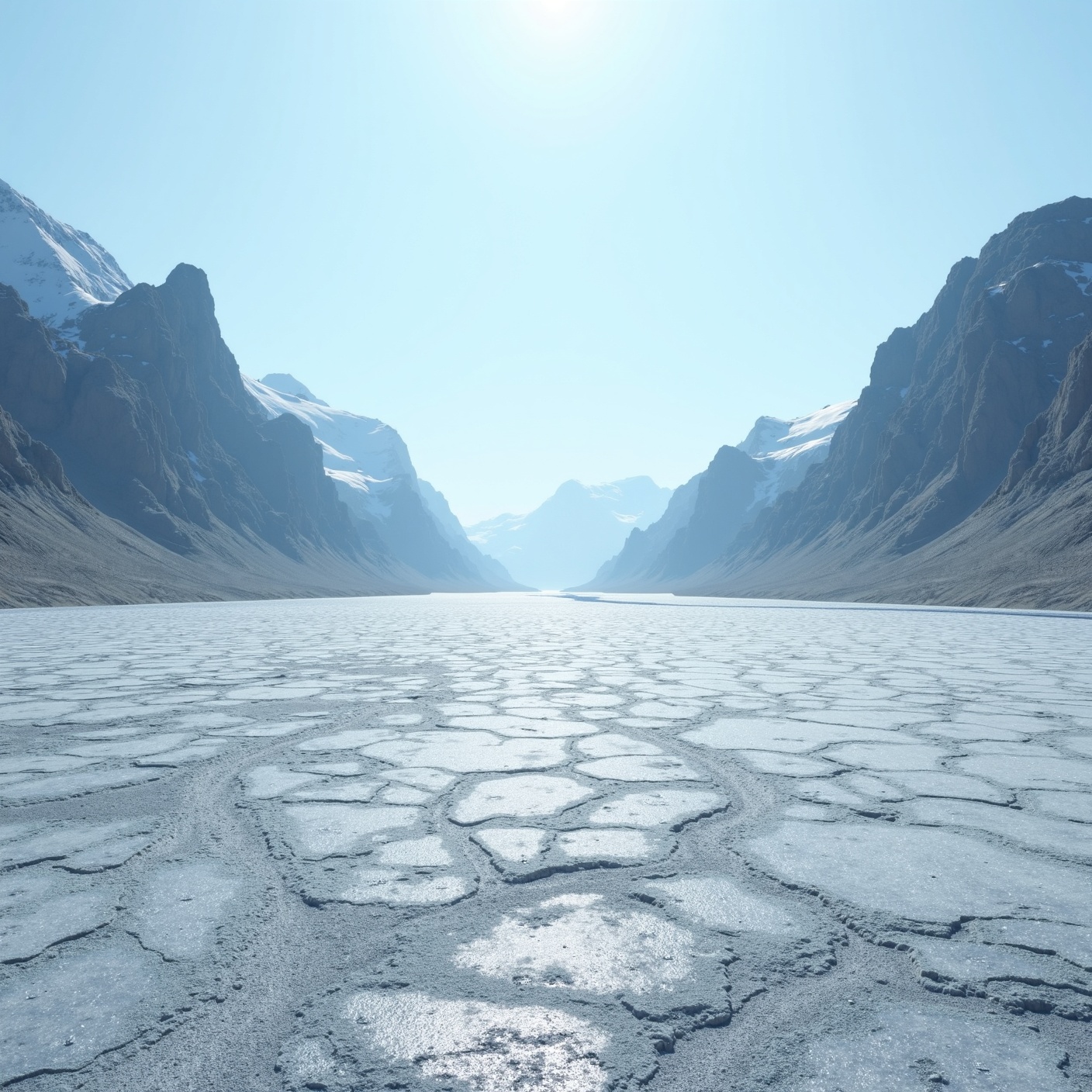
And if you want to see just how strange this frozen desert can get, go to a place called the McMurdo Dry Valleys.
They are exactly what the name says: valleys in Antarctica with almost no ice at all. In parts of them, it has barely snowed or rained for something like two million years. Two million years of essentially nothing falling from the sky. It is one of the driest places anywhere on Earth, and it sits on the wettest-looking continent imaginable, ringed by a mile of ice in every direction.
How does a valley stay bone-dry in the middle of all that frozen water? Two forces team up to keep it that way.
The first is a wall. The Transantarctic Mountains stand between the valleys and the sea, and they block the moist ocean air from ever reaching them. The moisture rides up against the mountains and never makes it over the top.
The second is the wind, and it’s a spectacular one. High up on the polar plateau, the air gets brutally cold and dense — and dense air sinks. It comes pouring down the slopes toward the valleys, gathering speed as it falls, in what scientists call katabatic winds. By the time this freezing, ferociously dry air reaches the valley floor, it does something remarkable: it evaporates whatever tiny bit of moisture is left. It doesn’t just fail to bring water. It actively takes water away.
So you’d expect the Dry Valleys to be utterly, completely barren. And here’s the last surprise: they’re not empty at all. Scattered across this driest of places are more than six thousand lakes and ponds. Water that can’t fall from the sky still finds a way to pool on the ground, fed by glacial melt, sealed under and over with ice, some of it saltier than the ocean.
The Dry Valleys are the largest ice-free area on the whole continent — and yet even they make up only about three-hundredths of one percent of Antarctica. That’s how thoroughly the rest of it is buried in ice.
The terrain out there is so raw, so cold, so scoured and alien, that NASA has used it as a stand-in for another planet entirely. Engineers have taken Mars-rover technology down to the Dry Valleys to test it, because the ground there — dry, frozen, wind-blasted, nearly lifeless — is about as close to the surface of Mars as anything you can walk to on Earth.
So the next time someone says “desert” and you picture endless golden dunes shimmering in the heat, remember the real record-holder. It’s white. It’s silent. It’s colder than anywhere you’ve ever been, drier in places than the Sahara, older in its dryness than the human species, and so otherworldly that we practice going to Mars there.
The biggest desert on Earth is made of ice.