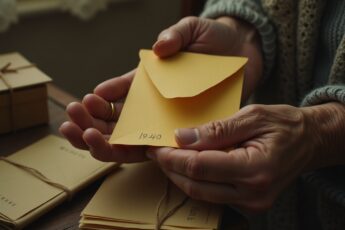
I drove two hours to buy a used fishing boat, cash folded in my jacket and a number in my head I planned to talk him down from. I came home without the number, and without a scrap of the hurry I’d arrived with.
The ad had been four plain lines. A 1979 hull, twenty-one feet, single inboard, “runs good, must sell.” The price was low enough that I’d already decided something had to be wrong with it. My plan was the same plan any buyer drives up with. Find the rot, point it out, knock off a few hundred more. That was the whole of it.
The house sat at the end of a gravel road that smelled of salt and fresh-cut grass. The boat was in the side yard on a trailer, under a canvas cover gone soft and grey with the years. And a man came out to meet me so slowly that I’d crossed half the drive before he had made it down his own porch steps.
His name was Walter. Walt, he told me, before I could call him mister anything. He was somewhere in his seventies, thin in the way that isn’t about eating, wearing a wool cardigan though the afternoon was warm enough for shirtsleeves. His handshake was all knuckle and no strength left in it. But the moment he let go of my hand, his eyes went past me to the boat under its cover, and they stayed there.
He pulled the cover back himself and waved my hands away when I reached to help. Underneath, the hull was old but cared for, the kind of cared-for that takes decades to put on a thing. The wood oiled. The brass gone soft gold. The name across the transom hand-lettered in white paint. Ruthie.
“After my wife,” he said, before I asked. “She’ll tell you the first R came out crooked. I painted her three times before it would stand up straight.”
I started in on my buyer’s routine anyway, out of plain habit. Rapped the hull with a knuckle. Crouched at the transom. Reached for the soft patch of decking near the stern, the flaw I’d driven all this way hoping to find.
“You don’t have to do all that,” Walt said, not unkindly. He lowered himself onto the trailer fender with care. “I’ll tell you true what’s wrong with her. Everything a boat picks up in forty years, she’s got some of it.” He was quiet a moment, looking at the water past the grass. “I’m selling because the doctors have run clean out of ideas, son. It’s months now, not years. And I won’t have her sitting under a tarp, watching me not use her. She was never built to sit.”
I didn’t tell him I was sorry. Something in his face said he’d had a bellyful of people being sorry. I looked at the boat, and I looked at the way he was looking at the boat, and the whole business of haggling just went out of me all at once, the way a held breath goes.
So I put the folded cash back in my pocket. I found an overturned bucket by the trailer, turned it right side up, and sat down on it.
“Walt,” I said. “Before any of that. Tell me about her. All of it.”
He looked at me like he wasn’t sure he’d heard it right. “You’ve got somewhere to be,” he said.
“No,” I said. “I’ve got right here.”
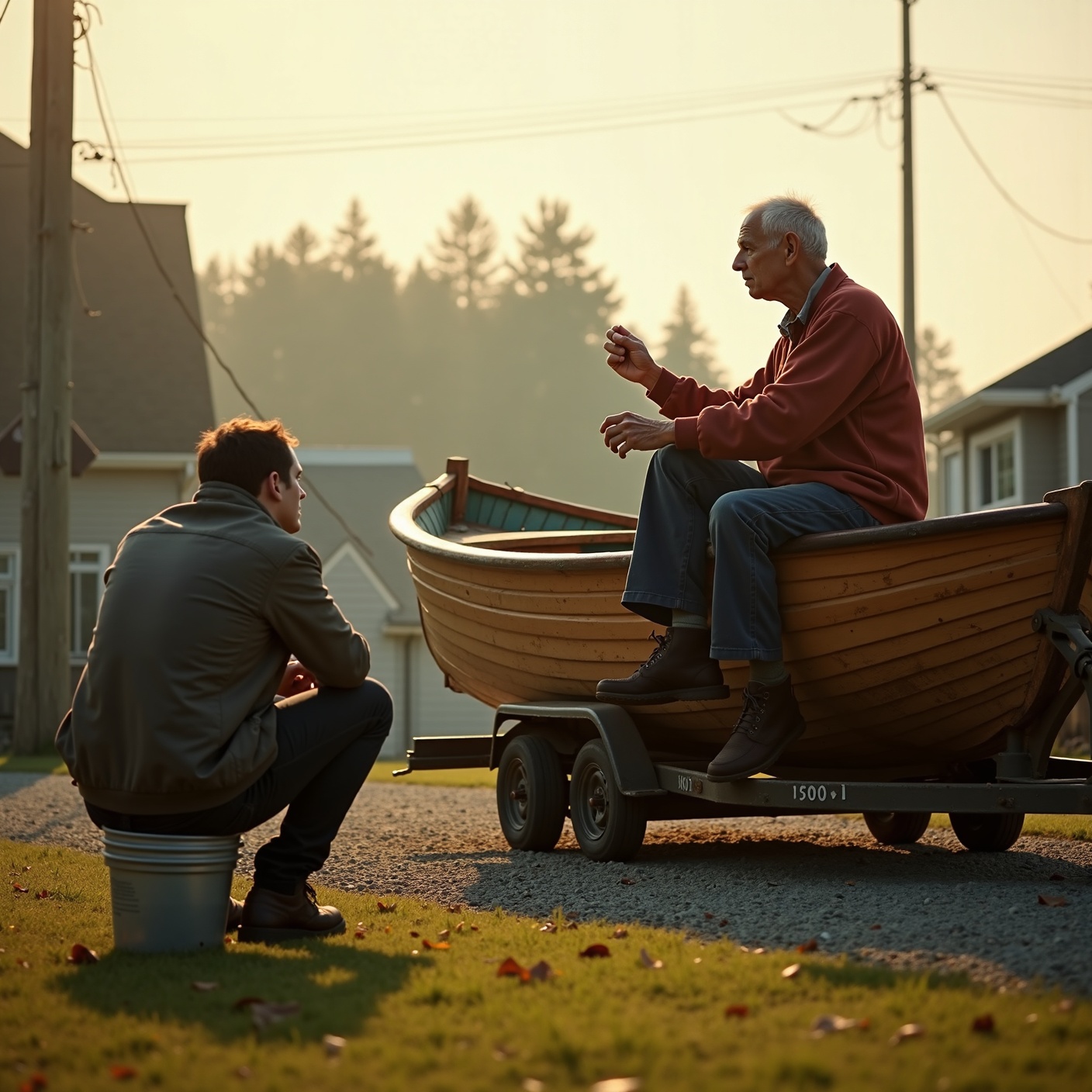
And something happened to Walter then. He laid one hand flat on the gunwale, the way you’d lay a hand on the shoulder of an old friend, and he started to talk. And the frail man who had come down off the porch went somewhere else entirely.
He told me about the storm off the point in the fall of ’88, the one the radio never called for, when the sky went the color of a bruise and the swells stood up taller than the wheelhouse. How the Ruthie took every one of them and set him back down on his own dock at two in the morning, with half the town’s porch lights burning along the shore, waiting on him. “She never once put her rail under,” he said, and his chest came up as he said it. “Not one time. I’ve since been in newer boats that would have rolled us over sure. She brought me home.”
He told me about the engine he’d pulled and rebuilt on his own kitchen table, three separate times, Ruth laying newspaper down first and pretending to be furious about the grease. He showed me a cleat on the port rail he’d bent hauling a man off a foundered sailboat one October, and never straightened after, because “a straight cleat wouldn’t remember the fella.” He walked me around to the patch on the transom and told me about the striper his grandson had fought for forty minutes off that stern, a fish near as long as the boy was tall, and how the kid had cried when they let it go and then asked, wiping his face, to do the whole thing over again.
Two hours. I want to be honest about the number, because it sounds like a small thing to say out loud and it was not a small thing to sit inside. Two hours I stayed on that bucket while the light went gold and then amber across the yard, and Walter got taller in front of me. His voice found its bottom again. His hands drew the shapes of waves and winches and a boy’s first fish in the air between us. He was not a sick man in a cardigan any longer. He was a captain. He knew a hundred things I did not, and for two hours he was the one teaching them, and I was the one lucky enough to get to learn.
That, I understood somewhere in the second hour, was the thing I had actually come for, though I couldn’t have named it pulling into the drive. Not the boat at all. This. A man getting to be, one more time, the world’s leading expert on the best thing he had ever done.
When he finally wound down, the yard near dark, he cleared his throat and turned businesslike, almost embarrassed. “Now. That soft spot in the decking. I’ll come down two hundred for it, that’s only fair.”
“You’ll do no such thing,” I told him. “I’m paying what you asked. I’d pay you more if you’d let me, and you won’t, so we’ll leave it right where it is.”
He didn’t argue. I think we both understood we had stopped talking about the deck a good while back.
He walked me to my truck, slower even than before, and gripped my hand at the door with everything he had left to grip with. “You’ll take her out?” he said. “You won’t let her sit?”
“Every chance I get,” I said. “I promise you that much.”
“Good.” He nodded, satisfied, like a man signing his name to something. “She hates a garage.”
Ruth came out at the very last and pressed a coffee can into my hands, heavy, full of lures he had tied himself over the years, each one wrapped in its own twist of wax paper. “He wanted you to have his,” she said. “He said you’d actually use them.”
Six weeks later my phone rang from a number I didn’t know.
“This is Ruth,” the voice said. “Walt’s wife. I’m calling because I promised him I would.” She told me he had passed that Tuesday morning, easy, at home, with the window open to the water. And then she told me the part I have never once managed to repeat out loud without having to stop in the middle of it.
“These last weeks, every single person who came to sit with him, he told them the same story,” Ruth said. “About the young man who drove all that way to buy the Ruthie and stayed two whole hours just to hear about her. He told it to the nurses. He told it to the minister. He said you were the only buyer who ever understood what he was really selling.” She went quiet, and then she laughed a little, the way people do when it’s that or the other thing. “He talked about that boat right up to the end. Right up to the very last of it, he was still the one who knew everything about her.”
I take the Ruthie out every chance I get, exactly the way I said I would. And when the fog burns off the point and the water goes flat and gold, sometimes I cut the engine and just let her drift a while before I ever wet a line.
I tell her the stories back. The storm in ’88. The grandson’s striper. The first R that wouldn’t stand up straight no matter what he did. I say them out loud to an empty boat, and I don’t feel the least bit foolish doing it, because a boat that was loved hard for forty years ought to know she still is.
And so should the man who loved her. I gave Walter two hours on an overturned bucket. He has given me every quiet gold morning I’ve had on the water since.