When Viktor thought about fear, it always tasted like lukewarm tap water and cheap medicine.
He’d grown up in a small, shabby house with his parents, short on money but rich in warmth. That changed the day his father died in a sudden car accident. At seven, Viktor watched policemen at the door, his mother trying to stay upright as her world fell apart.
Without her husband’s income, Mara did everything she could to survive. She took extra shifts, skipped meals, and smiled at her son even when her eyes were red from crying. But three years later, her body gave out. First came the cough, then the fevers, then the days she couldn’t leave the bed.
At ten years old, Viktor became the adult in the house — cooking, shopping, helping her stand, pretending not to notice when she cried from pain.

One awful day, their only water pipe burst. When Viktor turned the faucet, nothing came out. His mother’s pills sat on the nightstand.
“She needs water,” he whispered, panic squeezing his chest.
From the window, he could see the huge mansion down the road — perfect lawn, clean walls, a world away from his crumbling home. Rich people lived there. Rich people always had water.
Hands shaking, Viktor walked up to the gate and rang the bell.
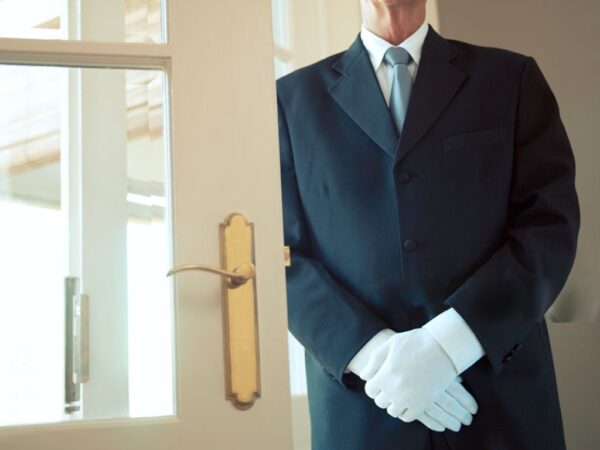
A well-dressed man opened the door. His suit was sharp, his shoes shining. Viktor suddenly felt very small in his worn clothes.
“Please, sir,” Viktor said. “Our pipe broke. My mom is very sick and needs water for her medicine. Could I have just a bottle?”
The man looked him up and down with cold eyes.
“That’s not my problem,” he said.
“Just a little water,” Viktor begged. “My dad died. My mom… I don’t know what to do.”
The man sneered. He accused Viktor’s family of laziness, said that at his age he had already been earning money, and threatened to call the police if the boy didn’t leave. Then he slammed the door.
Humiliated, Viktor ran home. He found a small emergency jug in the basement and tried to stretch it as far as he could, but it wasn’t enough. That night, there was a knock at their door — a social worker and a police officer. Someone had reported their “unsafe living conditions.”
In minutes, strange adults were inspecting the broken pipe, the empty fridge, and Mara’s frail body. No matter how she begged or how Viktor cried, the decision had already been made. He was taken away that same night, watching his mother collapse on the porch as the car pulled off.
Three months later, he was told she had died. He was eleven. Completely alone.
For years, two images lived side by side in his mind: his mother reaching for him through the car window — and the rich man’s face, refusing a simple glass of water.
The next decade was rough. Viktor moved through foster homes, never quite belonging. But he clung to school. Books, especially science, became his refuge. He promised himself he’d spend his life helping people, not turning them away.
His hard work paid off: he earned a full scholarship to medical school. In his second year, he met Sofia in anatomy class. She had an easy laugh and a kind way of pulling him out of his shell.
“Do you ever relax?” she teased once, closing his textbook.

He surprised himself by telling her about watching old black-and-white movies with his mom. From there, their relationship grew slowly and steadily. She was patient with his quietness, and he let her see parts of his past he usually kept locked away.
Two years later, Sofia brought it up over dinner:
“I want you to meet my parents.”
The idea terrified him, but he agreed. On Saturday, as they drove through wealthy neighborhoods, Viktor felt his stomach twist. When the car stopped in front of a massive house behind iron gates, his hands started to shake.
“Don’t let the house scare you,” Sofia said gently. “They’re good people.”
They walked up the path. The door opened.
Viktor froze.
It was him.
Older, with gray in his hair, but unmistakable — the same man who’d sent him away with insults and a slammed door when he was just a boy begging for water.
“Sofia, sweetheart!” the man said, hugging his daughter. Then he turned to Viktor with a bright smile. “You must be Viktor. I’ve heard so much about you. Come in, son, come in.”
He didn’t recognize him at all.
Viktor moved like he was underwater — shaking the man’s hand, sitting at the polished table, answering polite questions from Sofia’s mother about his studies and scholarship. The man, whose name was Adrian, talked proudly about building his business “from nothing” and toasted Viktor’s achievements.
Inside, Viktor was shaking.
When the moment felt right, he reached for his glass and quietly said, “Could I have some water, please?”
“Of course!” Adrian jumped up, cheerful and generous now. He filled Viktor’s glass himself and set it down with a smile.
Viktor stared at the water.
“That’s exactly what I asked you for ten years ago,” he said quietly. “Do you remember?”
The table went silent.

He told the story — the burst pipe, his sick mother, the long walk up the driveway, the insults, the threat to call the police, the slammed door, and how child services arrived soon after. How his mother died alone. How he never got to say goodbye.
Sofia’s face went pale. Adrian’s went gray.
Before anyone could respond, Adrian suddenly clutched his throat. His face turned red, then purple. He was choking.
“Dad!” Sofia screamed.
Elena, his wife, panicked. “Viktor, please, help him!”
For one long second, Viktor just watched. This was the man who had destroyed his childhood. A part of him whispered that this was justice.
Then he saw Sofia’s terrified eyes.
Training took over. He jumped up, wrapped his arms around Adrian from behind, and performed the Heimlich maneuver: one, two, three sharp thrusts. A piece of meat flew out. Adrian collapsed to the floor, coughing and breathing again.
Viktor stood over him, shaking.
“I refuse to become the man you were,” he said softly.
He left the house and ended up at the cemetery where his mother was buried. Kneeling by her grave, he broke down.
“Mom, I saved him,” he choked out. “After everything he did to us. I don’t know if I did the right thing.”
He wiped his eyes and noticed some graffiti sprayed on the old fence nearby. Someone had written: “You’re right.” The rough letters felt like an answer he’d been waiting years to hear.
Behind him, he heard his name.
Adrian stood there, eyes swollen from crying. He sank to his knees in the grass.
“I’m so sorry,” he said, voice breaking. “What I did to you… to your mother… There’s no excuse. I don’t expect forgiveness. But I will spend whatever time I have left trying to make amends, if you let me.”
Viktor looked at the man — no longer powerful and untouchable, but broken and human.
“I hated you for a very long time,” he admitted. “And maybe a part of me always will. But my mother didn’t raise me to live on hate.”
He reached out a hand. “I can’t promise I’ll forget. But I won’t let what you did turn me into you.”
Adrian gripped his hand and pulled himself up, then pulled Viktor into a desperate hug. Years of guilt and anger poured out.
When they stepped back, Sofia and her mother were watching from the cemetery gate. Sofia ran to Viktor and wrapped her arms around him.
“You did nothing wrong,” she whispered.
As Viktor held her, he glanced back at the rough writing on the fence. You’re right.
In that moment, he understood: kindness isn’t weakness. Showing mercy doesn’t mean surrender. Choosing to save the life of someone who once destroyed you doesn’t make you a victim — it makes you stronger than the pain.
Viktor had become what he always dreamed of being: a doctor, a healer. And by saving the man who had once refused him a glass of water, he had finally begun to heal himself too.