
Donald Trump isn’t just making big promises on the campaign trail anymore – he’s doing it from the White House as well.
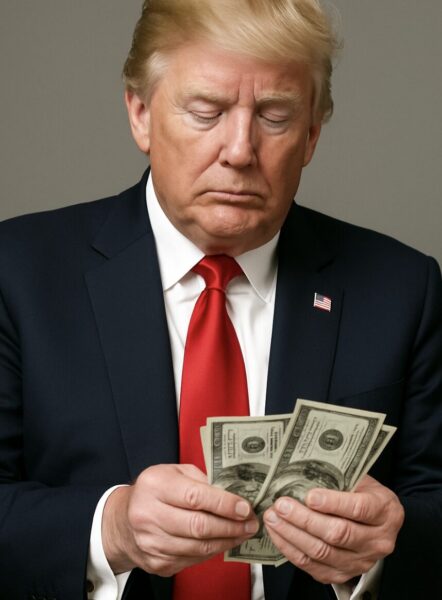
Nearly a year into his second term, the 79-year-old president has floated one of his boldest ideas yet: a $2,000 payment for almost every American, supposedly funded by money the U.S. has collected from tariffs.
He’s described the payout as a kind of “dividend” – a refund check that would go back to citizens after years of tariff revenue building up in federal coffers.
What exactly did Trump promise?
At a Cabinet meeting on December 2, Trump claimed that the U.S. has taken in “trillions of dollars” from tariffs. He said that a portion of that money would be returned to the public.
“We’ve taken in hundreds of millions of dollars in tariff money,” he said. “We’re going to be issuing dividends later on… of thousands of dollars for individuals of moderate income, middle income.”
He also suggested that tariff money could be used to:
Reduce or even eliminate income taxes, saying Americans might “not be paying income taxes” in the future, or at least pay “much lower” rates than today.
Help bring down the U.S. national debt, which he said stands at around $37 trillion, with the remaining funds then distributed as dividend checks.
On top of that, Trump has repeatedly described himself as using tariffs to shift the tax burden away from U.S. workers and toward foreign producers.
When would people actually get the $2,000?
That’s still unclear – but one thing has been confirmed: it won’t be in 2025.
Asked recently whether the checks could arrive before the end of this year, Trump answered bluntly:
“No, no. Not for this year. It’ll be next year sometime.”
So far, there has been:
No official announcement from Congress
No program details from the IRS
No signed law that actually authorizes $2,000 payments on a national scale
For now, the “tariff dividend” is a proposal and a promise, not a guaranteed benefit.
Do the numbers add up?
Economists are openly questioning whether the math behind Trump’s idea works at all.
Policy analyst Erica York of the Tax Foundation used a rough example: if the cutoff for receiving a check is an income of $100,000 or less, then about 150 million adults could qualify. At $2,000 each, that would cost close to $300 billion.
Her point: new tariffs have brought in around $120 billion so far – far below what would be needed to pay for such a large program.
In other words, even if every dollar in new tariff revenue went straight into checks, there still wouldn’t be enough money to cover what Trump is promising.
This isn’t the first time big “dividends” have been floated
Trump’s $2,000 idea also isn’t his first attempt at offering eye-catching payouts tied to government savings or tariffs.
Earlier in 2025, he talked about:
A $5,000 “DOGE dividend” – a proposed one-time payment supposedly funded by efficiency savings identified by Elon Musk’s Department of Government Efficiency (DOGE). To date, there’s no public evidence that any such checks were ever sent.
Tariff rebate checks under the American Worker Rebate Act, introduced in Congress by Senator Josh Hawley. That plan mentioned potential payments from $600 to $2,400 per family, but the bill still hasn’t passed.
Those earlier ideas show a pattern: big promises, lots of headlines, but no realized, nationwide payouts so far.
Should Americans plan around the $2,000?
With inflation and the cost of living still a major concern for many households, it’s understandable that people are eager for any extra help.
But experts and commentators are warning citizens not to count on this money until there is:
A formal law passed by Congress
A clearly defined program with eligibility rules
Concrete details from the IRS or Treasury on how and when payments would be made
Until that happens, the $2,000 “tariff dividend” remains a political promise, not a guaranteed check.
If you’re tempted to mentally spend that money already, it might be wiser to wait until it actually shows up in your bank account – if it ever does.