
Weddings are expensive, and every empty chair at the reception can feel like money thrown away.
According to one survey of over 800 engaged couples in the U.S., the average wedding in 2018 cost around $44,000, with guest lists hovering at about 167 people. Most invitees who RSVP “yes” actually show up — but not all.
Recently, one couple decided they’d had enough of last-minute no-shows and took a very unconventional step:
they sent an invoice to a guest who had confirmed their attendance but never appeared at the reception.

The bill, shared online by journalist Philip Lewis, listed a charge of $240 for two uneaten reception dinners, describing it as a fee for failing to attend after confirming. The note explained that the amount reflected what the couple had already paid for those seats and that they had received no cancellation or warning.
Once the image hit social media, the argument practically wrote itself.
Why would a couple invoice a guest?
To understand the thinking behind such a move we asked the owner of Lavender Crown Events, a wedding planning company in California.
She explained that guest lists are usually built in layers:
Family
Friends
Coworkers
Within those, couples often create A, B, and C lists:
A-list – the closest people (immediate family, best friends) who must be there
B-list – people who might be offended if not invited (extended relatives, old friends)
C-list – more distant connections, like coworkers or family friends you rarely see
Ranking guests helps couples adjust numbers when venues have strict capacities or when they’re working with a tight budget.
Lew added that true “no-shows” — people who RSVP yes and then simply don’t come — are usually from that looser C-list group. It doesn’t happen a lot, she said, typically one or two people out of a hundred, but it does happen. And because caterers and venues need a final headcount about a week before the big day, those no-shows are fully paid for.
Of course, there are legitimate last-minute emergencies — illness, medical issues, or urgent family problems. In those cases, Lew noted, most guests at least try to inform the couple, even if it’s on the day of the wedding.
Destination-wedding planner Lisa Burton (known as The Bridal Consultant) said she sees fewer no-shows when a wedding is held abroad, because traveling guests usually plan carefully. Ironically, she finds unexpected “surprise” arrivals more stressful: extra guests who show up at the last minute might sound romantic, but they can completely disrupt seating charts, catering numbers, and transport plans.
Social media reacts: tacky or totally fair?
Once the invoice went viral, people rushed to pick sides.
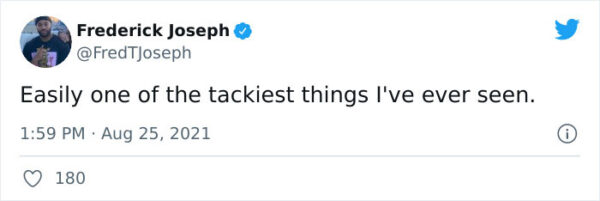
Some commenters thought the couple’s move was petty, embarrassing, or “tacky”, joking about how absurd it looked to send an official bill over a missed dinner. They argued that if a friend doesn’t show up, the mature response is a conversation — not an itemized invoice.
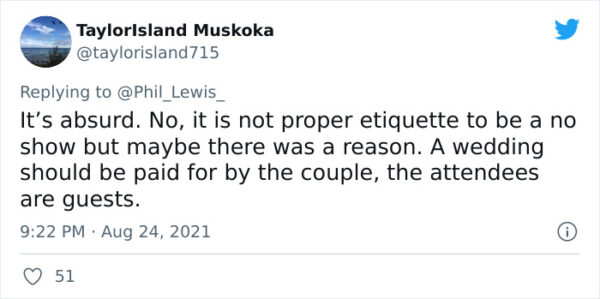
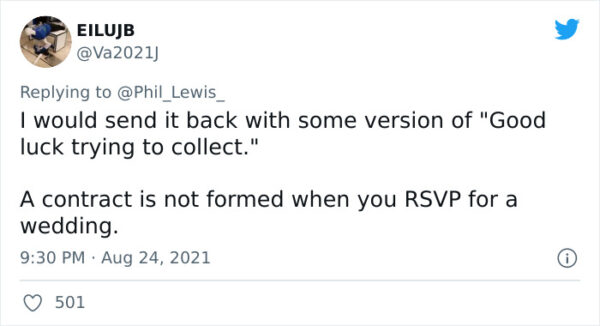
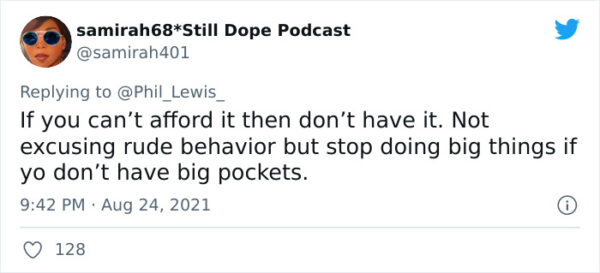
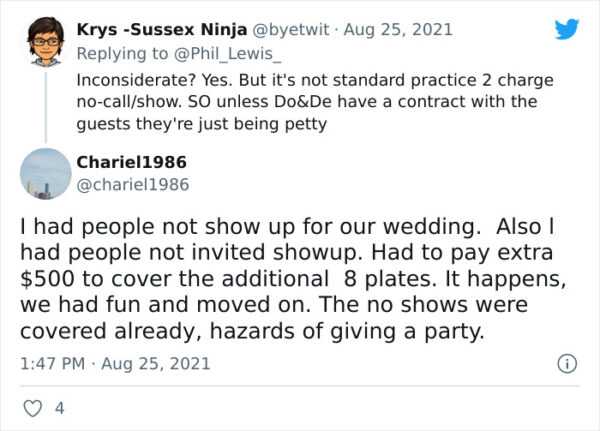
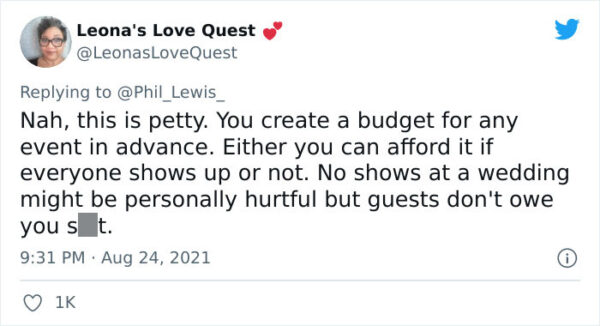
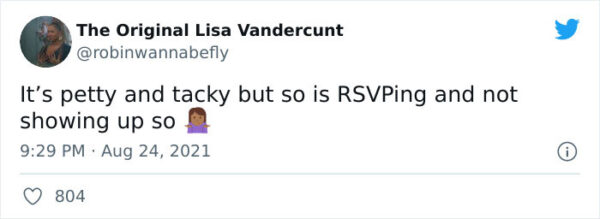
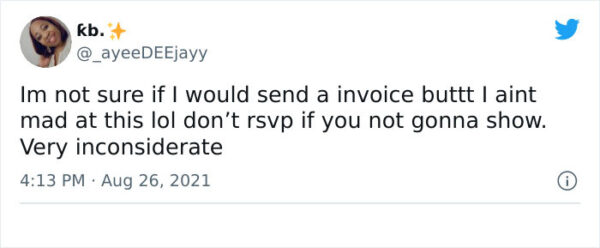
Others strongly defended the newlyweds, pointing out that:
the guest said yes
the couple paid per person for catering
the no-show didn’t even send a warning
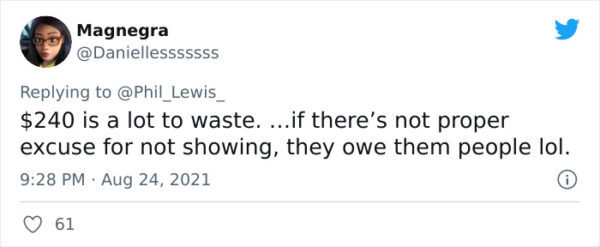
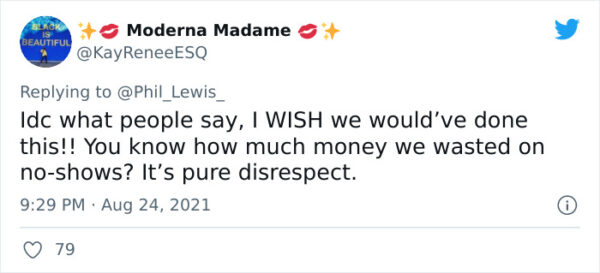
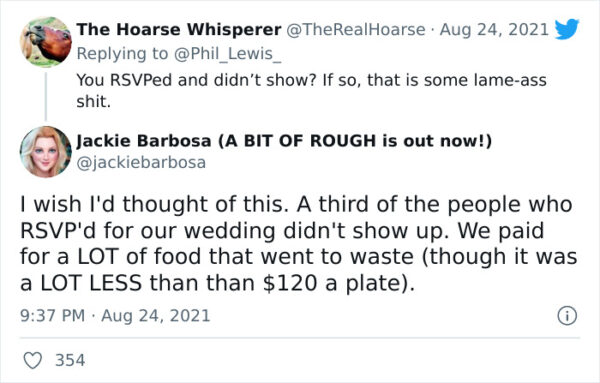
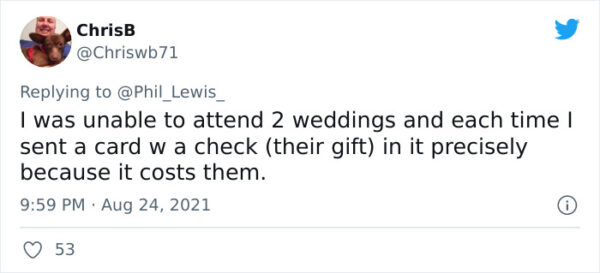
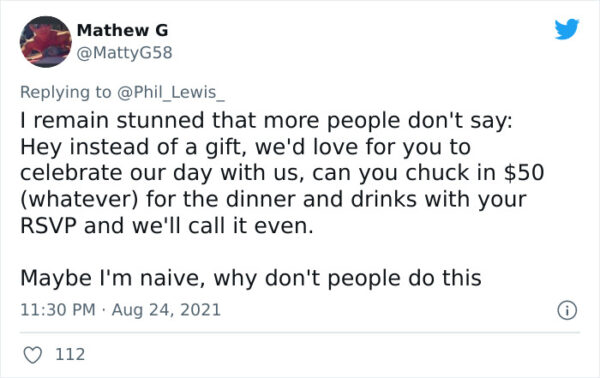
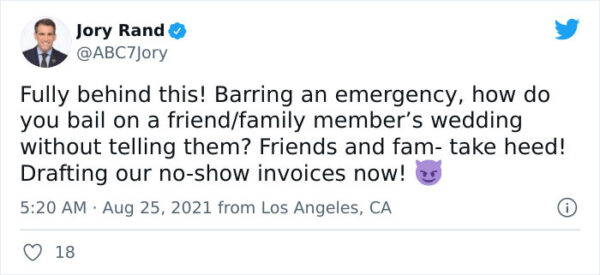
To them, it was simple courtesy: if you know you can’t attend, you tell the couple, especially when your seat has a real price tag attached. Some said the invoice, while dramatic, sent a clear message about respecting other people’s time and money.
The debate quickly widened into a broader conversation about modern weddings — how expensive they’ve become and who actually pays.
One study mentioned in the article found that in 2018:
only 27% of couples paid for their entire wedding themselves
about 42% said their parents covered the full cost
overall, just 58% contributed anything to the bill at all
With budgets stretched this far, some people felt it’s understandable that couples are extra sensitive about wasted seats. Others insisted that even so, invoicing guests crosses a line.
What do the experts say?
Despite understanding why couples get upset, planner Michelle Lew still thinks sending a bill is overkill.
She calls no-shows annoying but not catastrophic:
yes, money is lost on those unused plates
but the couple still has all their closest loved ones with them
the extra food and drink can simply be enjoyed by other guests
Her advice to newlyweds is to focus on what did go right:
the people who did show up
the fact that the day went ahead
the memories they’re taking home
A calm conversation later — if the relationship matters — will usually do more good than a sharply worded invoice.
In the end, the viral bill turned into a kind of social-etiquette test:
Team Couple: “If you RSVP and then ghost, you should pay up or at least apologize.”
Team Guest: “Life happens — sending a bill over a missed wedding is beyond rude.”
What most people seem to agree on is this:
a little communication and empathy on both sides would probably have cost less than $240 — and caused a lot less drama.