
The whole plan came down to one sentence Hannah had been practicing in the mirror for a week. “Grandma, get your coat. We’re going for a drive.”
Ruth loves a drive. Always has. So she didn’t ask a single question. She just found her good shoes, the tan ones, and waited by the door like a kid on the first warm morning of spring.
Hannah didn’t tell her where they were going. She couldn’t. If she had said it out loud, she would have started crying, and the whole thing would have come apart before they backed out of the driveway.
To understand any of this, you have to understand the house.
Ruth’s husband, Walter, built it himself in 1961. Not “hired a crew and supervised.” Built it. He poured the foundation, framed the walls, hung every door on its own hinges. Their daughter took her first steps in that front room. So did Hannah, twenty-some years later. Every single grandchild in that family learned to walk on the same wide floorboards.
Ruth and Walter lived in it for fifty years. Christmas mornings. Summer storms drumming on the porch roof. The pencil marks on the kitchen doorframe where he tracked every one of them getting taller. That house held all of it.
And then, eight years ago, it was gone.
Walter had been dead two years by then. The medical bills from his last long winter didn’t disappear when he did. They sat on the kitchen table in a pile that kept growing, and one gray afternoon Ruth sat down at that same table and quietly signed the house away. It was the only thing left that was worth enough. She was 79.
She never complained about it. Not once. But she never stopped talking about it, either.
“Your grandfather sanded that banister by hand,” she would say, out of nowhere, in her little apartment across town. “Twice. He said once wasn’t smooth enough for children’s hands.” Then she would go quiet and look at something nobody else in the room could see.
Hannah was the oldest grandchild. Somewhere in the middle of one of those quiet spells, she made up her mind. She was going to get the house back. She didn’t tell a soul. She just started working.
She kept her regular job and picked up two more. Weekends waiting tables, weeknights cleaning offices after everyone had gone home. For three years she funneled almost everything she earned into one account she refused to touch. In her own head, she called it “the porch.”
She checked the listings for that address the way other people check the weather. Then one gray Tuesday in March, there it was. For sale again. The family who had bought it was moving south.
She called the number before she finished reading the page.
The rest happened faster than three years of saving had any right to. The offer. The inspection. The paperwork, with her hand shaking over the last signature. She did all of it in secret. Nobody in the family knew. Ruth least of all.
Which brings us back to the drive.
Ruth talked the whole way there, about the weather and a woman from church and whether Hannah was eating enough. Hannah said “mm-hmm” a lot and watched the streets turn familiar. Then more familiar. Ruth’s street. Her old block. Hannah saw the exact second it started to reach her.
Ruth stopped mid-sentence.
They rolled up in front of the little white house with the deep front porch. Hannah put the car in park, and for a long moment her grandmother didn’t say anything at all. She just stared at the porch. Her hand came up to her mouth.
“Whose surprise is this?” Hannah asked, and her voice barely held together. “It’s yours, Grandma. Welcome home.”
Ruth broke. Sixty years of that woman’s whole life came pouring out of her at once, right there in the passenger seat, and Hannah held her hand across the console and let it.
But the house had one more thing to give them, and neither of them knew about it yet.
When Hannah had told the seller the story, why she was buying it and who she was buying it for, something in him shifted. He knocked thousands off the price without being asked. His own kids had grown up in those rooms, he said. “But it was never really ours, was it,” he told her. “It should go home.” And then he mentioned he had left something for them up in the attic.
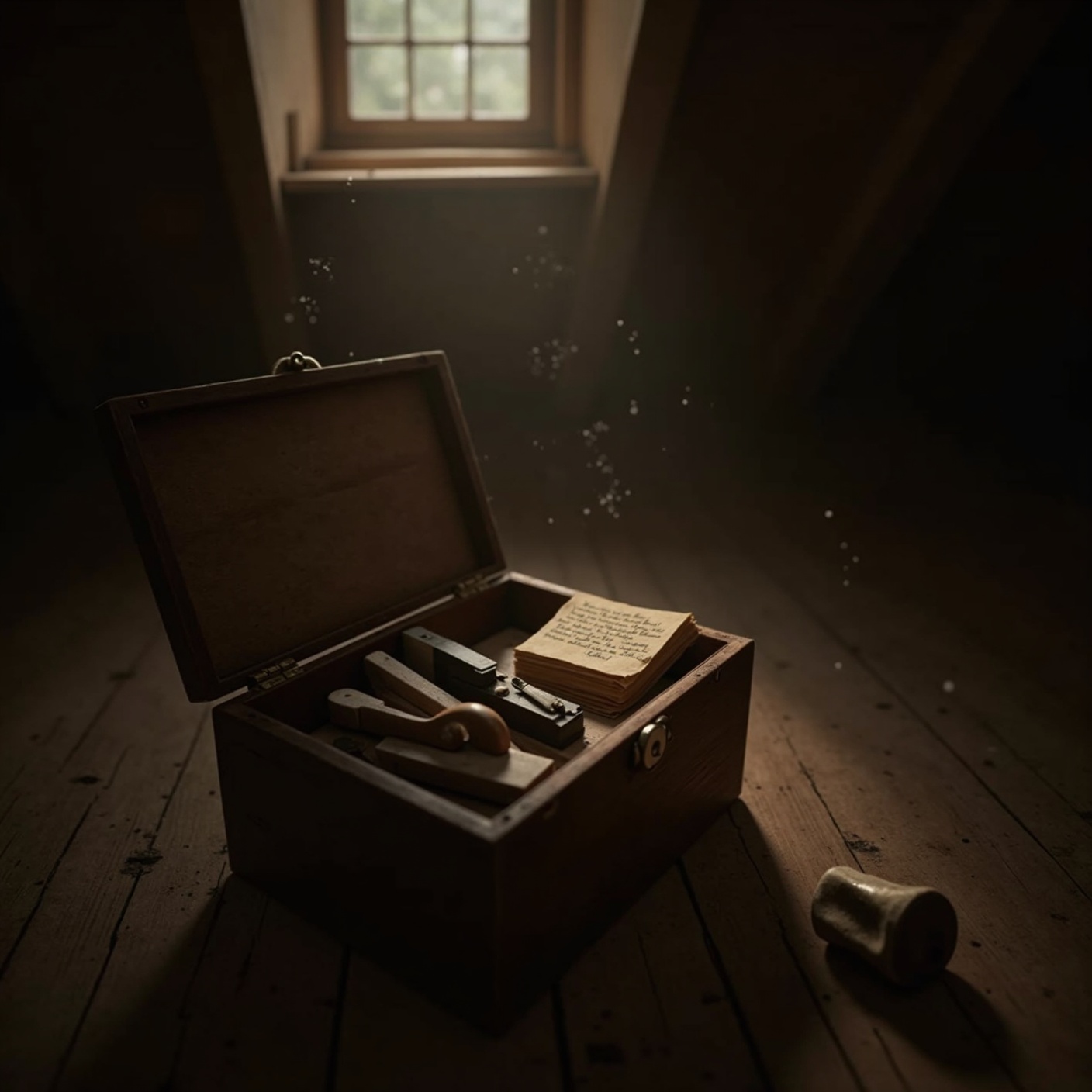
Under the roof, in the far corner where Walter always kept them, sat a wooden box nobody in the family had thought about in years. In the chaos of the move eight years ago, in all that grief and paperwork, it had simply been forgotten. Inside were his tools. The hand plane. The chisels. The very sanding blocks he had worked that banister with. And folded on top, a short note in his blocky handwriting, the kind of thing a practical man leaves for whoever comes next, about which board still squeaks and how to bleed the radiator when the cold sets in.
Ruth read it on the porch steps with her coat still buttoned up.
The house didn’t come back to her empty. It came back with him still inside it.
She lives there now. The banister is still smooth. And every so often, when Hannah visits, she catches her grandmother running a hand along it, twice, the way Walter always said you had to.