Denise printed it out. That’s the detail Jenna keeps going back to. She came to Sunday dinner at their father’s house with a sheet of paper she’d run off at the library, and she set it down between the green beans and the rolls and slid it toward the three of them the way a waitress drops a check.
CONTRIBUTION, it said across the top, in bold. Under that, their names in a column. Jenna. Cole. Mark. And beside each name the same number: $3,000.
“It’s not a gift,” Denise said, before anybody could pick it up. “I want to be clear about that. It’s a contribution. Blended families do this all the time now.”
Cole is twenty-one. He works nights at a warehouse and he has never once in his life wanted anybody at a table to be uncomfortable, so he laughed like it was a joke, and then stopped when he saw nobody else had started.
Mark is nineteen. He looked at his sister.
Jenna is twenty-four, the oldest, and she’s been the one who picks up the paper since their mother got sick. So she picked it up.
“A hundred and forty people,” Denise said, watching her read. “Do you have any idea what a hundred and forty people costs? The venue alone has a nine-thousand-dollar minimum before anybody eats a thing.”
Nine thousand. Three of them. The math takes about a second.
Their father sat at the head of his own table buttering a roll and not looking up. Ray Whitaker, fifty-three, twenty-six years at the same plant, a man who has never in his life raised his voice and has also never once stepped in front of anything.
“Dad,” Jenna said.
“It’s a lot of people, Jen,” he said, to the roll.
That was the whole defense. So she put the paper back down on the table and turned it around so it faced Denise.
“I’m not paying for your wedding,” she said. “I’ll come. I’ll be glad for you both. I’m not paying three thousand dollars for it.”
Denise smiled and said, “Okay.”
The “okay” was pleasant. It was the most pleasant thing she said all night.
Cole transferred his three thousand two days later, out of the account he’d been building toward a truck, because Cole would rather set money on fire than have somebody mad at him. Mark had nine hundred dollars to his name and got a pass on account of being nineteen and broke.
Two weeks after that dinner Jenna went to fill out an apartment application. First place of her own. They wanted two months in reserves shown on a statement, so she opened the credit union app in the parking lot outside the leasing office.
Balance: $0.00.
She thought it was a glitch. She closed the app and opened it again, which is a thing your hands do while your brain catches up. Then she drove to the branch on Fourth Street and had a teller print her the history.
One transfer. Twenty-eight hundred dollars, out. Dated three days after Sunday dinner. Three days.
That twenty-eight hundred was the last of her mother’s life insurance. Ellen died four years ago. The money came in that fall and got split three ways, and Jenna’s went to community college tuition, then a transmission, then four months of rent after she lost the job at the clinic. Twenty-eight hundred was what was left, and she’d been sitting on it like an egg for two years because it was the last of her mother and she wanted it to turn into a front door.
“Ma’am,” the teller said, “the account shows a joint owner. Ray Whitaker. He’s been on it since it was opened.”
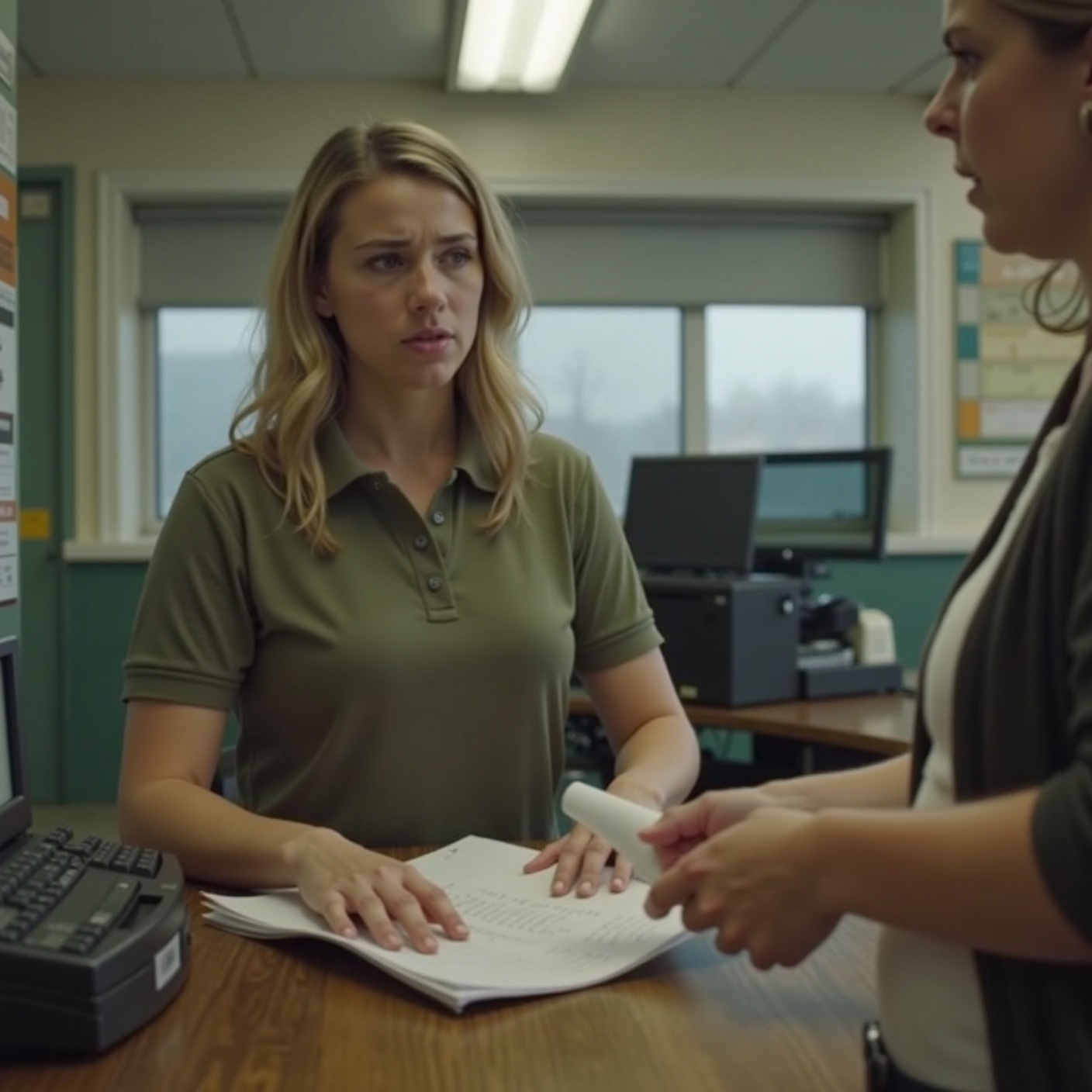
She called her father from her kitchen table with the printed slip in front of her and the phone lying face-up on the wood.
“Dad, the account’s empty.”
“Which account?” he said. Road noise. He was in the truck.
“Mine. At the credit union. There’s twenty-eight hundred gone and the transfer’s got your name on it.”
There was a pause with the engine in it. Then the phone moved, and it was Denise, closer, in that warm voice she uses at other people’s kitchen tables.
“Jenna. Honey.”
“Put my dad back on.”
“Your father is a joint owner on that account. Legally, honey, nothing happened. Now — are you giving a toast, or do we tell everyone why you’re not coming?”
Jenna paid a lawyer two hundred and fifty dollars to tell her Denise was right. Forty minutes, and he was kind about it, which somehow made it worse. Joint ownership means either owner can withdraw the entire balance without the other’s permission. Not theft. Not fraud. Nothing to file.
“It’s been legally his money since 1998,” he said. “I’m sorry. There’s no lever here.”
Her father drove over that night and stood in her doorway with his hat in his hands like a man at a viewing.
“I signed something,” he said. “There was a stack of them on the counter. Transfers, she said. Moving things around for the deposit. The ballgame was on and I signed six papers and I didn’t read one of them.”
“Dad.”
“I know,” he said.
The venue deposit was sixty-four hundred dollars and it was already paid and it was not refundable. Denise had put down the deposit the same week she cashed out Ellen’s last money, and she had a binder for it, and tabs in the binder.
He went home that night and started looking for the credit union paperwork, and instead he found his wife’s accordion file in the bottom of the bedroom closet. The brown one with the elastic band around it. Everything in that file is labeled in her handwriting, because Ellen was the kind of person who built the shelf before she bought the dishes.
Three membership cards. One opened in 1998, the year they got married, before there was anybody on this earth to open it for. One in 2001. One in 2003. Three accounts for three kids she hadn’t had yet.
And on the first card, on the printed line that says PURPOSE OF ACCOUNT, in Ellen’s round careful hand:
for Jenna’s first apartment
The ink is darker than the rest of the card. She wrote the names in later, after the kids showed up.
Ray sat in his truck outside his daughter’s building for a while before he came in. She saw the headlights from the window and let him have the time. When he finally knocked he had the card in a sandwich bag, the way you carry something you’re afraid of the rain getting to.
“I never saw this,” he said. “Twenty-some years and I never once opened that file.”
Two days later he called the venue and canceled. He ate the sixty-four hundred. There is no version of that story where he gets any of it back, and he knew that when he dialed.
Then he put twenty-eight hundred dollars into Jenna’s account out of his own savings, and three thousand into Cole’s, and he drove down to the credit union on a Thursday with all three cards in the sandwich bag and took his own name off every one of them. All three accounts, the kids’ names alone.
He did not call off the wedding. That deserves saying plainly, because it matters. He told Denise they’d do it at the courthouse in September and put the ring on her hand in a hallway with three folding chairs, and he meant it.
He told Jenna later how that evening went.
Denise’s first question was not about the venue and it was not about the hundred and forty people. It was, “All three accounts?”
Then, when he said yes, all three: “So there’s nothing.”
He put the card on the counter and turned it so she could read it. She looked at it about as long as it takes to read a gas receipt.
“Ray,” she said. “It’s a piece of cardboard. She’s been dead four years.”
And then she asked about the accounts twice more before midnight, and once in the morning, and never once in any of it did she ask him how his daughter was.
He noticed. That’s the thing. Two years of Cole going quiet at dinner and Mark finding reasons not to come and Jenna saying the careful version of it in the driveway, and none of that ever landed, and then one woman asked about a savings account four times in one night and it landed all at once.
The wedding didn’t happen. He didn’t make a speech about it, either. He just came by on a Sunday about three weeks later with a bag of groceries and a drill, and he hung the curtain rods in Jenna’s new apartment, which is on the second floor with a window over the parking lot and rent she can just barely cover.
The card is taped inside the cabinet door over the sink, where the coffee is, so she sees it every single morning.
Ellen opened that account in 1998. Before she had a daughter, before there was any Jenna at all to open it for. Then one day, years later, she pulled the file out of the closet, uncapped a darker pen, and wrote the name into the blank she’d been holding open the whole time.