She was 30 years old, sitting in the Santa Monica Civic Auditorium on the night of April 9, 1962, fully expecting the award to go to Judy Garland.
When her name was read for Best Supporting Actress, she froze. Then she walked up, held the statue, and gave what is still one of the shortest acceptance speeches in Academy history: “I can’t believe it. Good Lord! I leave you with that.” Eleven words. She turned and left the stage.
With those eleven words, Rita Moreno became the first Latina to win an Academy Award. Anita, from West Side Story, had done it.
She had wanted that part with a hunger that scared her. “I was absolutely delirious when I got the part, because I wanted it so badly,” she said years later. She was 28 at the audition, one of a crowd of dark-haired, dark-eyed young women all sent up for the same role, and she was sure she had no chance.
So she won. The highest prize in her business, before she turned 31.
And then Hollywood handed her the same script it always had.
The seven years nobody puts on the highlight reel
After the Oscar, the offers came in. Every one of them was a version of a part she had already outgrown. Another gang girl. Another servant. Another “exotic” bit player with a thick accent written by someone who had never met a woman like her.
She had just been handed the industry’s top honor for playing a fully alive, furious, grieving woman. And the response was to ask her to shrink back into a stereotype.
“All the Latina roles in films were so perfunctory,” she said. “And I said, ‘I’m not going to do that stuff anymore with the accents.'”
So she said no. To all of it. For seven years she did not make a single Hollywood film.
Her own agent told her the Oscar had become a liability. One producer, the story goes, passed on her for a role that had “no nationality,” as if the award itself had made her too specific to cast. Think about that. The proof of what she could do had somehow become the reason to shut the door.
She did not sit still. She worked on stage, where nobody could reduce her to a costume. But the movie years, the ones a young Oscar winner is supposed to spend cashing in, she spent turning work down.
She came back to film in 1968, in The Night of the Following Day. It took seven years to find the road back on her own terms.
Then she went and won all four
Here is what those seven years bought her: the right to be more than one thing.
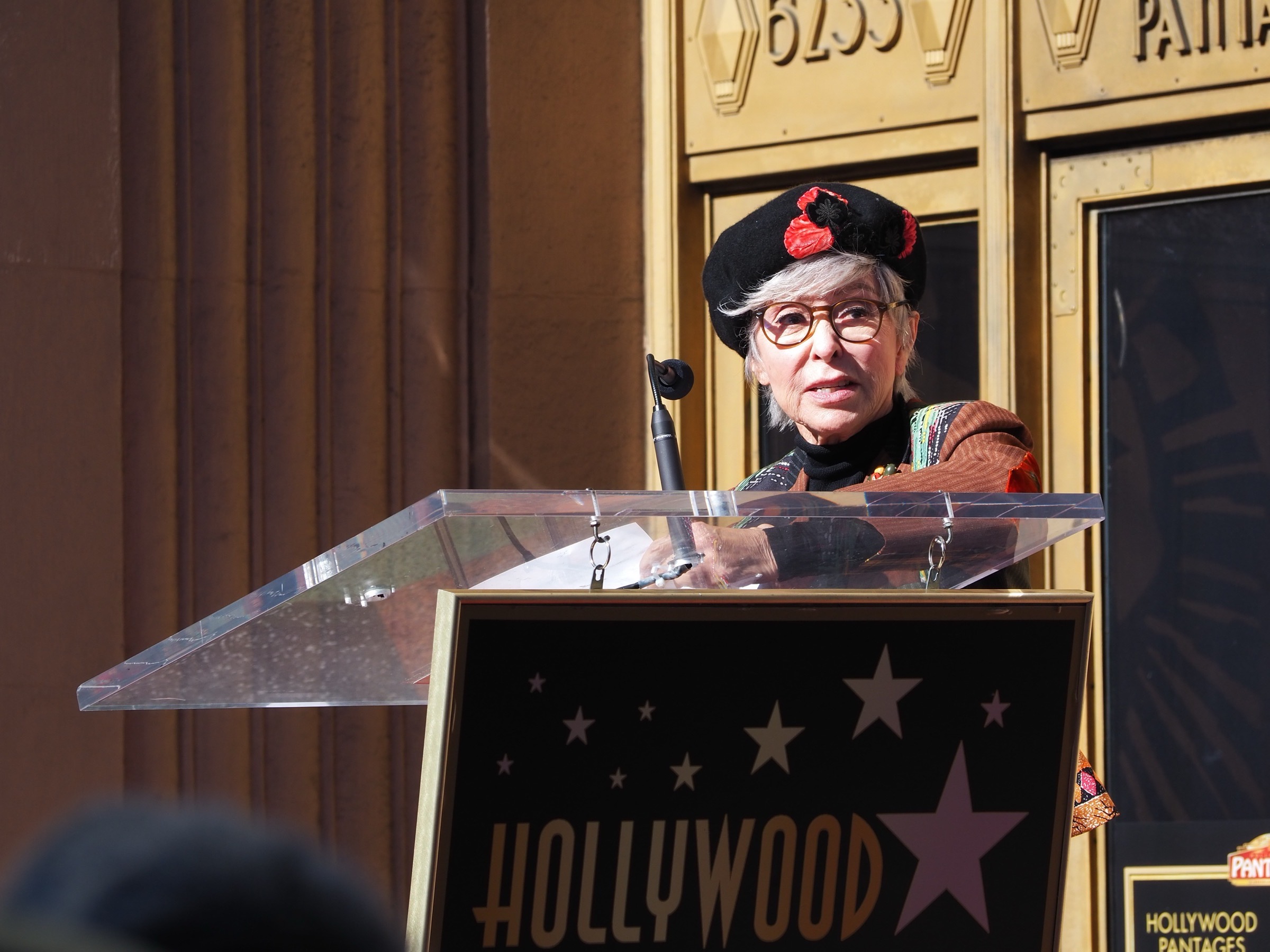
The Oscar was 1962. A Grammy followed in 1972, for the soundtrack of The Electric Company, the children’s show where a generation of kids first learned her voice. A Tony came in 1975 for The Ritz. Then two Emmys, back to back, in 1977 and 1978.
Oscar, Grammy, Tony, Emmy. She is one of the small handful of performers who have taken all four, the grand slam of American entertainment, and she got there by refusing to be pinned to the roles that first made her famous.
There is a photograph from the 2018 Oscars that says the whole thing in one frame. She arrived in a black-and-gold gown, and the fashion press slowly realized why it looked so timeless. It was the same dress. The one she had worn to accept her Oscar in 1962, kept for fifty-six years, restitched at the bodice and worn again on purpose. The fabric is obi, the sash from a Japanese kimono. She wore her own history down the carpet and called it sustainable fashion.
The circle closed on West Side Story
In 2021, Steven Spielberg remade the film that started all of it. He did not put Rita Moreno in as a cameo or a courtesy.
She was an executive producer on the new West Side Story. She played Valentina, a character written into the story for her. And she sang “Somewhere,” the ballad about a place where two people are finally allowed to belong. Sixty years after Anita, she was standing inside the same story, on the other side of it, helping shape how it got told.
The woman who was once asked to play smaller had become one of the people deciding what the film would say.
Ninety-four, and still on the calendar
She turned 94 this year, and her schedule reads like someone half her age.
In January 2026 she was the honorary chair of the San Francisco Ballet’s opening-night gala. This July she is back at the Plaza Classic Film Festival in El Paso, sitting with audiences for screenings of Singin’ in the Rain and the 2021 West Side Story. Last October she stood on a stage and handed Bad Bunny an award for top Latin artist of the century, and she used the moment to talk about the long climb it took to have a career at all.
There is even a high-school theater awards program that carries her name, the Rita Moreno Awards, handing trophies to teenagers chasing the same thing she chased at 28.
She has been open about why she keeps telling the story. “I love to share with the audience or with my fans, because there are many things they don’t know,” she said. “They don’t know the struggles that I lived.”
That is the part worth holding onto. The Oscar is easy to remember. The eleven-word speech is a fun piece of trivia. The dress makes a nice photo.
But the real spine of it is the seven years she gave up on purpose, the roles she turned down when turning them down cost her the most, so that when the Grammy and the Tony and the Emmys came, she had earned them as herself. At 94, that is what she is still doing. Standing in her own story, and singing “Somewhere” like she means it.