It was an ordinary unloading day in Oakdale, Minnesota, in June of last year. A shipping container had come in off the long haul from overseas, and someone was working through it the way you work through any container, pallet by pallet, box by box. Then something moved. Down low, back in the dark, under one of the wooden pallets, there was a small shape that had no business being there.
It was a cat. A little calico, and she was in a bad way. Thin past thin. She didn’t bolt and she didn’t fight. She just looked up at the person standing over her, the way an animal looks when it has run out of everything except the last of its luck.
Nobody could figure out how she’d gotten in. Then somebody worked backward through the paperwork, and the answer stopped the room cold. That container hadn’t been packed down the road. It had been sealed shut in China.
Sealed there. Loaded onto a ship. Sent across the Pacific Ocean and more than 6,000 miles of open water, and then trucked to a dock in Minnesota, where a steel door finally rolled open on daylight for the first time in about three weeks.
Three weeks. Do the arithmetic on that and your stomach turns over. A locked box, no food going in, no water going in, no way out. A grown person wouldn’t last that crossing. Somehow this scrap of a cat did.
The best guess anyone has is condensation. A metal container heats and cools as it crosses the ocean, and moisture beads on the inside walls and drips down. She likely spent three weeks licking water off cold steel to stay alive. That was the whole menu. That was all there was.
At first they just called her Stowaway, because what else do you call a cat who turns up ten thousand miles from where she started with no ticket and no explanation.
She was handed over to Pet Haven Inc., a rescue in St. Paul, and the people there took one look and understood exactly how narrow this had been.
“Deathly thin and very ill,” is how Kerry D’Amato, who directs Pet Haven, put it. Not a cat you fuss over and send home in a week. A cat you sit up with.
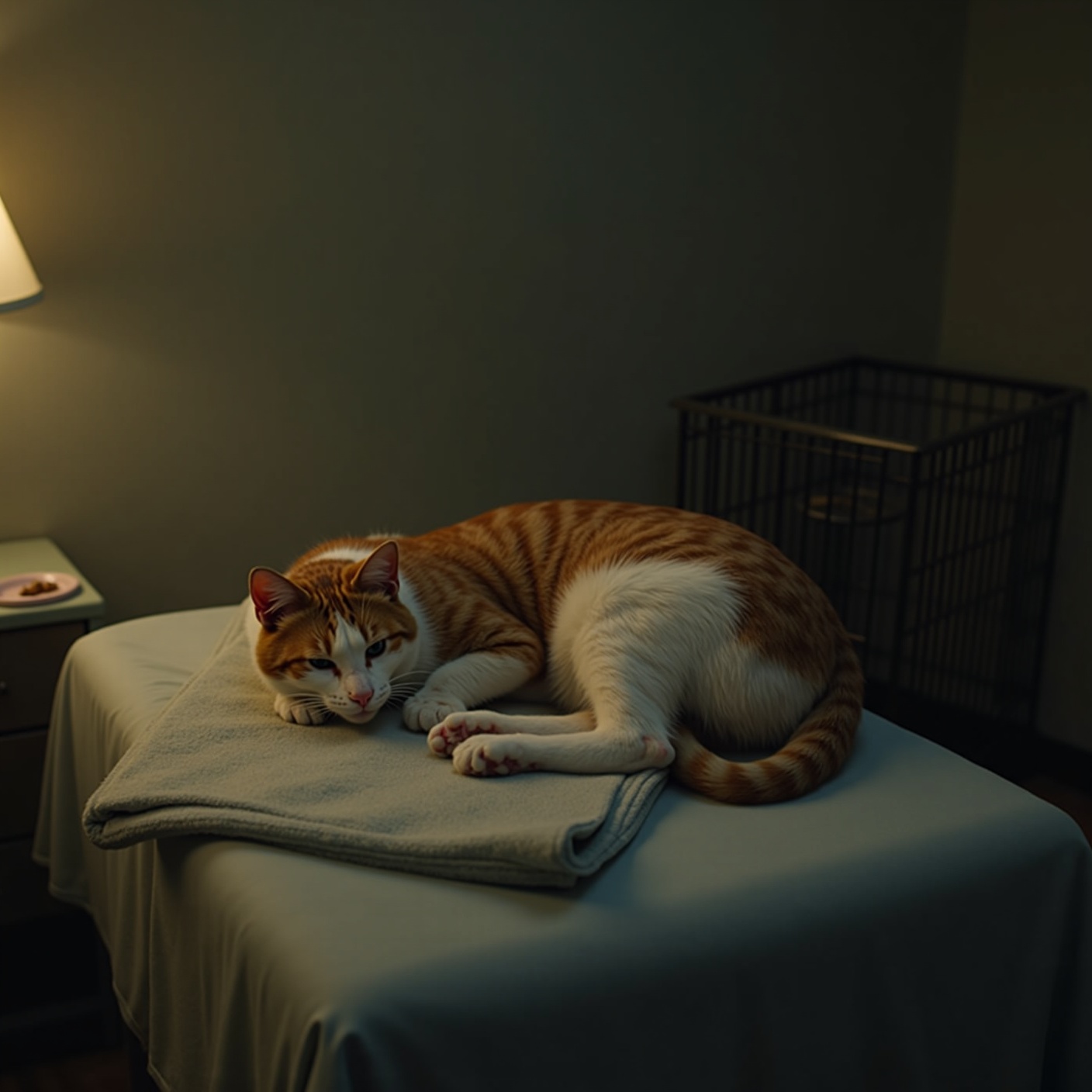
They ran her recovery through something Pet Haven calls the Wallflowers program. It’s built for the ones who come in shut down and frightened, the animals that flinch at a hand and press themselves into the far corner of the crate. You don’t rush a Wallflower. You feed her small and often. You keep the room quiet and the light low. You let her decide, on her own clock, that the world isn’t going to hurt her again.
And she came back. First the weight, the slow ordinary miracle of a cat that eats and keeps eating. Then something better than weight. Curiosity. The day a cat like that lifts her head at a sound instead of shrinking from it, you know she’s decided to stay.
Somewhere in there she got a new name. They started calling her Xiǎo māo, which is Mandarin for “kitten,” a small quiet nod to the country she’d left in the dark hold of a ship without ever meaning to.
Then came the part nobody scripts. In the shelter she found another cat, a fellow named Prince, and the two of them took to each other completely. Not tolerating. Not sharing a room. Genuinely a pair, the way some animals just fit.
So the shelter made a decision that tells you everything about the people in this story. After all of that ocean, after three weeks of licking water off steel to stay alive, this little calico was not going to be split up from the first friend she made on dry land. Xiǎo māo and Prince are being adopted out together, as a set, to one home.
She crossed an entire ocean alone in the dark. She isn’t going anywhere else by herself.