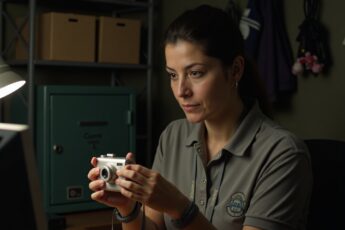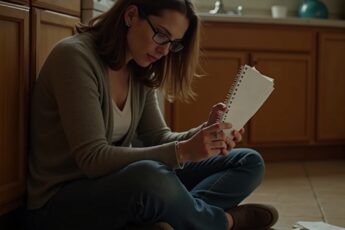
Kayla got to the restaurant twenty minutes early because she’d spent a year telling herself she wouldn’t come, and she wanted to be sitting down before her nerve had a chance to change its mind.
It was a small Italian place on a corner, the kind with a striped awning and a chalkboard out front and a window fogged from the inside. She stood on the sidewalk for a second in the cold, holding the address on a folded scrap of paper she did not need anymore, because she had read it enough times over the past twelve months to have it printed on the back of her eyes.
A year ago she hadn’t known this restaurant existed. A year ago she hadn’t known Daniel existed either.
They’d met the way people don’t meet anymore, which is by accident, with no phones involved. It was the second week of a bad November, and a storm had come up the coast and put every flight in the airport on the same long list of the doomed. Kayla’s connection went from delayed to delayed to a color of red she’d never seen an airline use before. She’d found the last open seat at a gate-side table, a wobbly two-top by a shuttered coffee stand, and set her bag down on the second chair like a wall.
“Is anyone sitting there,” a voice said. Not really a question. A man about her age, tired eyes, a paperback sticking out of his coat pocket, nodding at the chair with her bag on it. There was not one other free seat in the whole terminal.
She moved the bag.
That was the beginning of six hours.
They talked the way you can only talk to a stranger you’re certain you’ll never see again — which is to say, honestly. There was no version of either of them to protect. He told her about the job he was quitting and hadn’t told his family yet. She told him about the engagement that had ended in the spring, and how the worst part hadn’t been the crying, it had been giving back a dog she loved more than she’d loved the man. They ate terrible pretzels. They split a warm four-dollar water. Somewhere around hour four the overhead lights dimmed to their nighttime setting and neither of them noticed.
His name was Daniel. She learned that early and learned almost nothing else that would help her find him later, and she would come to understand that this was on purpose.
Because near the end, when the board finally started flipping letters and the terminal began to stir like something waking up, Kayla did the normal thing. She reached for her phone. “Okay,” she said, “give me your number, this was —”
“No,” Daniel said.
She looked up.
“Hear me out,” he said, and he leaned forward with his elbows on the wobbly table. “If I put you in my phone, you know exactly what happens. We text twice. I hearts a photo of your lunch. In three weeks we’re two names we don’t delete but never open. I’ve done it. You’ve done it. Everybody’s done it.”
“So we just — nothing?”
“No.” He took the paperback out of his pocket, tore the blank back page loose along the spine, and clicked a pen. “One year from tonight. This restaurant. I’ll write down the address. Same date, one table, eight o’clock. No numbers, no last names, no socials, nothing in between. If you think about me at all in the next twelve months, you’ll have to actually think about me. Not scroll me.”
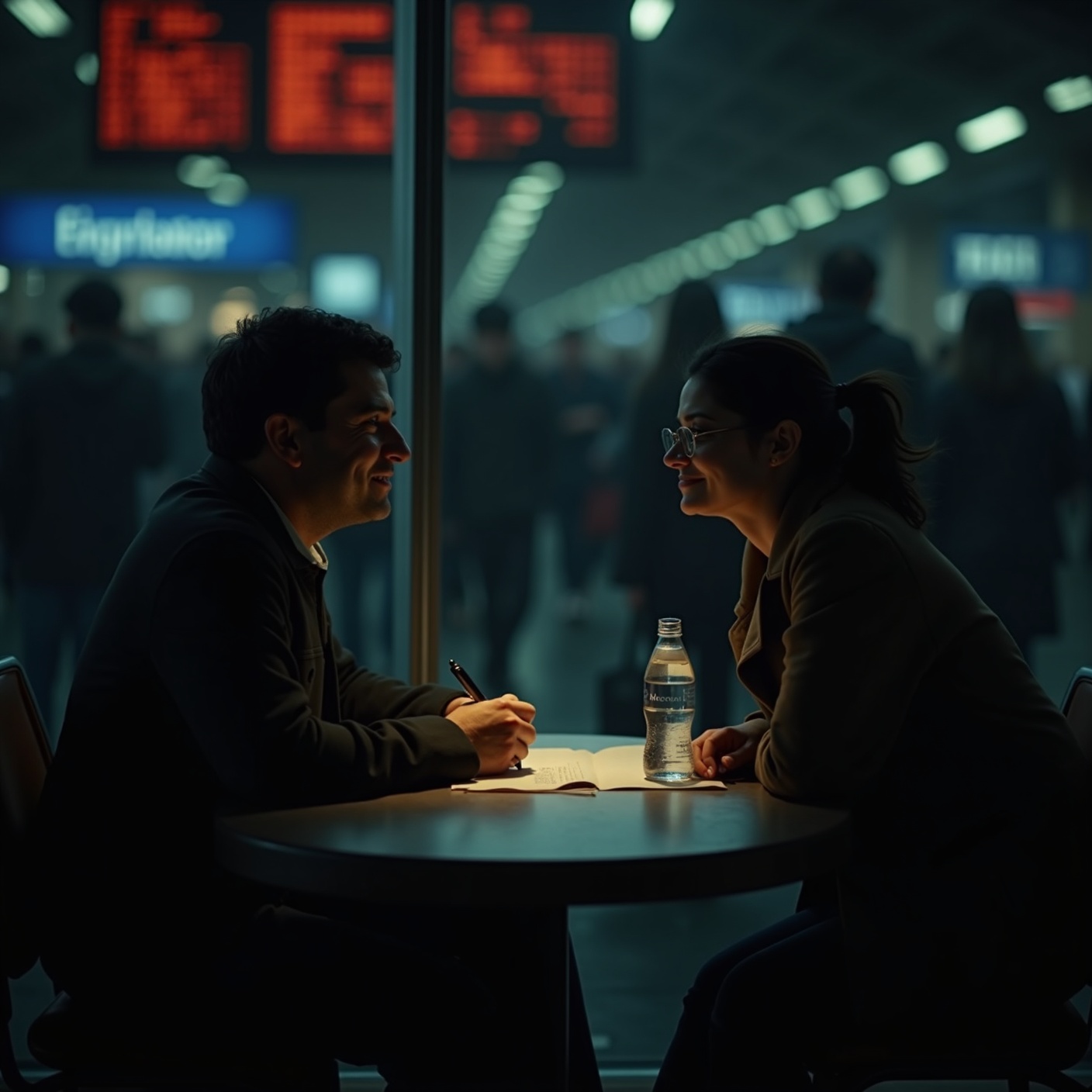
She told him it was insane. She told him people don’t do this. She told him a hundred things could happen in a year, and he said yes, a hundred things could, and that was sort of the whole point. Then he slid the torn page across the table, and his flight was boarding, and he was gone into the river of people with a paperback that was now missing its last page.
She kept the paper. She told herself she kept it as a funny story.
For a long time that was even true. She’d find it in a coat pocket in February and laugh and put it back. But somewhere in the spring the laughing stopped, and the folded scrap moved from the coat to her wallet, and the date at the top of it started to have a weight the other dates on the calendar didn’t have. She didn’t plan. She half-planned. She’d catch herself, in June, wondering what she’d wear in November, and then feel ridiculous, and then wonder anyway.
Twice she almost threw it out. Both times she smoothed it back flat.
And now here she was, twenty minutes early, pushing open a door she’d only ever seen in her own imagining.
The hostess asked if she had a reservation, and Kayla started to say no, that she was meeting someone, that it was complicated — and the young woman was already running her finger down the book.
“Party of two,” the hostess said. “Right this way.”
Kayla followed her, not understanding, and the woman stopped at a table near the back. A small table for two, against the exposed brick, under a low warm light. It was already set. Two places, two glasses, a single candle lit and waiting, a small folded card standing in the center where the salt should be.
There was no one in either chair.
“He said you might get here first,” the hostess said gently, and left her with it.
Kayla sat down slowly. The chair across from her was empty. She looked at the door. She looked at her hands. She’d braced herself for the whole car ride against every version of this except the one where she arrived and he simply wasn’t there — and her chest did a thing she wasn’t ready for, a quick cold drop, before she made herself breathe.
That was when the waiter came, an older man, unhurried, and set a cream-colored envelope on the tablecloth in front of her. Her first name was on the front in blue pen. She would have known the handwriting anywhere. It was the same hand that had torn a page out of a paperback a year ago and written an address on the back of it.
“He asked me to hold this for you,” the waiter said. “It’s been here since last month. And the reservation, if you’re wondering.” He smiled at something. “That’s been on the book eleven months. Paid in full the day he made it.”
Eleven months.
She had spent a year deciding whether she’d come. He had spent a year certain that she would.
Kayla opened the envelope. Inside was a single photograph, an old one, the colors gone slightly warm and orange the way pictures did in the nineties. It showed this restaurant — the same brick, the same low light, unmistakably this room — and this exact table by the wall. Sitting at it were two people she’d never seen. A young man, maybe twenty-five, with Daniel’s exact jaw and Daniel’s exact tired, laughing eyes. And a young woman leaning into him, mid-laugh, one hand flat on the table.
On the back, in a different pen, older ink, was a date. It was thirty-one years ago, almost to the week. And under it, four words in that same younger version of a hand she almost recognized: It works. Come back.
She turned it over and looked at the young man’s face again. The jaw. The eyes. And she understood, all at once, the way you understand the last line of a good story a half-second before you read it.
His parents. The airport, the pact, the year of silence, the table by the brick. It hadn’t been Daniel’s idea at all. It had been his father’s, thirty-one years ago, made to a stranger who became his mother — and it had worked, and they’d raised a son on the story of it, and the son had grown up and torn a page out of a book at a gate-side table and made the same wild promise to a woman he refused to trade phone numbers with.
Kayla was still holding the photograph when the door opened and the cold November air came in with it.
She heard him before she saw him, a little out of breath, apologizing to the hostess for being three minutes late. And then his voice, closer, saying her name like it wasn’t a gamble at all, like he’d never once doubted the chair would be full.
“Sorry,” Daniel said. “I had to help my mom out of the car.”
Kayla looked past him. Through the fogged front window, at the curb, an older woman was standing beside a parked sedan, not coming in yet, just watching the two of them through the glass with both hands pressed to her mouth.
She had asked to be there. She’d wanted to see it happen a second time.