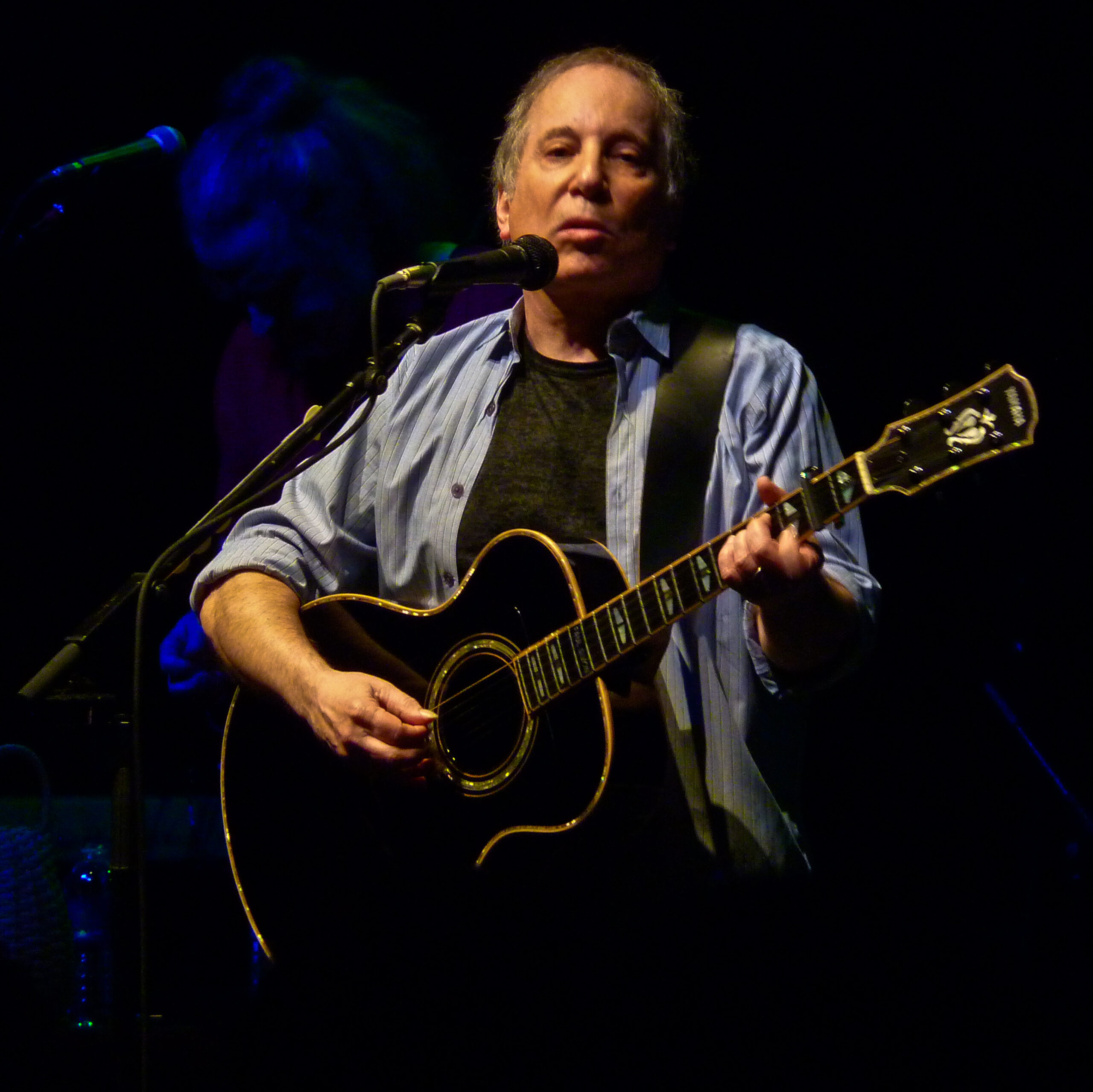
The hearing went while he was making a record. That’s the part that stops you. Not a concert, not a loud job on a factory floor, not decades of standing next to cymbals. It happened during the quiet, careful work of building Seven Psalms in 2023, the one thing Paul Simon has done nearly every day of his life since he was a kid in Queens harmonizing with Art Garfunkel on a street corner.
It didn’t creep up the way hearing loss usually does. It dropped. Fast, and mostly in the left ear, and by the time it settled there was almost nothing left on that side. About six percent of the hearing in that ear survived. He was in his early eighties when it happened. He is 84 now.
And this year he is on tour.
Why that sentence is bigger than it looks
You can lose an ear and still live a full life. You can hear a friend across a table, hear a car coming, hear your grandchild. What you cannot easily do, once one ear stops holding its end up, is the specific and strange thing a musician does on a stage: fold your own voice into a band in real time, monitor pitch, sit inside the mix and steer it. Two ears is how you locate sound in space. Simon builds his living out of exactly that.
So for a stretch after the diagnosis, the honest answer to “will there be more shows” was that nobody knew, including him. He had not toured since 2018. He had, in fact, more or less said his touring days were behind him. Losing the ear looked less like a plot twist and more like the last word on the subject.
The kid who never really stopped
It helps to remember how far back this goes. Simon is from a generation of American music that has mostly left the building. He and Garfunkel came out of the early sixties folk scene and turned into one of the defining duos of the century, “The Sound of Silence,” “Bridge Over Troubled Water,” the whole catalog that gets played at graduations and funerals because it fits both.
Then he did the harder thing, which was leave the duo at its peak and build a solo life that got bigger than the partnership. “Still Crazy After All These Years.” “Graceland,” in 1986, which is the kind of record artists spend a whole career trying to make once. He is a man who has been famous for sixty years and never coasted on it, always chasing the next sound instead of replaying the old ones.
Seven Psalms, in 2023, was supposed to be that same instinct in old age: a single, unbroken, thirty-three-minute meditation, no singles, no hits, a man in his eighties writing about God and mortality on his own terms. It was during the making of it that his body picked that exact moment to take the ear.
What actually changed
Here is where the story turns, and here is where it would be easy to lie about it, so let’s not.
Simon was not cured. He’ll say so himself. There is no headline here where a doctor waved a wand and gave the ear back. Two quieter things happened instead, and together they were enough.
The first was partial and unearned, the way these things sometimes go: in 2024, some of the hearing came back. Not all of it, not close to all of it, but enough of a return that the math started to look different. Bodies are unpredictable. His moved a little in the right direction.
The second thing was engineering. Working with the Stanford Initiative to Cure Hearing Loss, a team helped develop special in-ear monitors built for exactly his situation, a way to feed him the stage he can no longer fully hear on his own. Not a cure. A workaround. A pair of very smart earpieces that let a man with one badly damaged ear stand in front of a band and know where he is.
Neither of those is the fairy tale. Put them together, though, and you get a door that was closed sitting open again. What he did next is the whole point of the story: he walked through it.
Forty-one nights, on purpose
The tour is called A Quiet Celebration, and the name is almost too on the nose. It’s built for the way he hears now, smaller and more careful rooms, nothing designed to blow the doors off. It is his first tour in eight years.
It could have been a short, sentimental victory lap. It wasn’t. When the first run started selling out, he didn’t take the win and go home. On the third of February this year he announced an extension, and the road map now runs to 41 shows stretching from April into July of 2026. That is not the schedule of a man saying goodbye. That is a work schedule.
When he came through Atlanta this summer, the local critic writing it up for the paper didn’t reach for a sad angle, because there wasn’t one to reach for. It read like a man playing because he still wants to, and can, and has figured out how.
Where he is now
There’s a version of this decade for Paul Simon that would have been completely reasonable, and no one would have blinked. He is 84. He has made his masterpiece, several of them. He nearly lost the sense his whole life is built around. He was already retired from the road once. Staying retired would have been the sane, safe, obvious call.
He made the other call.
He didn’t announce it as courage, and he hasn’t dressed it up as a comeback for the ages. He got some hearing back, he got some help with the rest, and then, instead of pointing at the difficulty, he booked the shows. First one leg. Then a second. Forty-one nights, because apparently there was still work to do.
The man can barely hear out of one ear. He’s spending the spring and summer of 2026 singing to rooms full of people anyway. That’s the story. He didn’t wait to be whole to go back to work.