Eighteen miles out of San Francisco, on a cold December morning, a crab fisherman found a whale that could not get under the water.
It was December 11th, 2005, around half past eight. Out past the Golden Gate, east of the Farallon Islands, where the shelf falls away and the wind comes at you flat off the open Pacific with nothing standing in front of it.
Anyone who has worked that water in winter knows the feel of it before the sun is properly up. Grey swell running long and slow under the hull. Spray coming over the bow in sheets that find the gap at your collar. Diesel, salt, wet rope. The engine thudding away underneath everything so steadily that you stop hearing it, and only notice it again when it changes.
The fisherman was working his crab gear, which is what December is out there. Pots on the bottom, buoys on the surface, lines joining the two, laid out across the grounds mile after mile.
And in the middle of all that, a humpback whale was sitting on top of the water.
Not swimming anywhere. Not going down. Just there, on the surface, held.
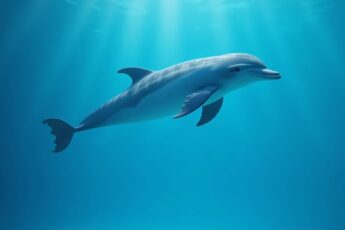
She was a female, roughly fifty tons. Fifty tons is not a number anybody can really picture, so take it this way: about ten full-grown elephants, in one animal, with a tail as wide as a family car is long.
She had come into the crab gear somewhere out there in the dark, and the gear had come with her. Around two dozen lines, each of them over two hundred feet long, wrapped and knotted around her. The lines held her in place. She could not get under the water.
The fisherman got on the radio.
Four men and a rope problem
The Marine Mammal Center in Sausalito took the call and started making calls of its own.
A rescue team went out to her, ran a slow circle around the whale, and looked hard at how the gear was sitting. Then they arrived at the answer nobody at sea ever wants.
There was no clever way to do this.
No winch. No cutting arm on a long pole. Nothing that could be worked from the safety of a deck, at a distance, by a man in dry boots. The lines had to be cut by hand, one at a time, in the water, right up beside her.
Four divers went in.
The ocean off the Farallones in December sits somewhere around fifty degrees. Cold enough that it finds the seams of a wetsuit inside a minute and starts working on your fingers, which are the exact part of you the job depends on. The swell that looks like slow scenery from the boat becomes something else entirely once you are down in it, lifting you and dropping you and turning the horizon into a wall of green.
They carried curved knives. Hooked blades, made for one purpose, which is to catch a rope and pull through it. Rope tools. That is the whole of what they are for.
James Moskito was the first man in the water.
And then, for about an hour, four grown men worked at arm’s length from the biggest living thing any of them had ever been near.
Here is the part that people who dive with whales understand and the rest of us underestimate. A humpback’s tail is not dangerous the way a shark is dangerous. It doesn’t have to intend anything at all. One casual stroke, the kind she would make without thinking about it, and a man in the water beside her goes to hospital. Nobody down there was under any illusion about that. They were working inside the arc of it, over and over, for an hour.
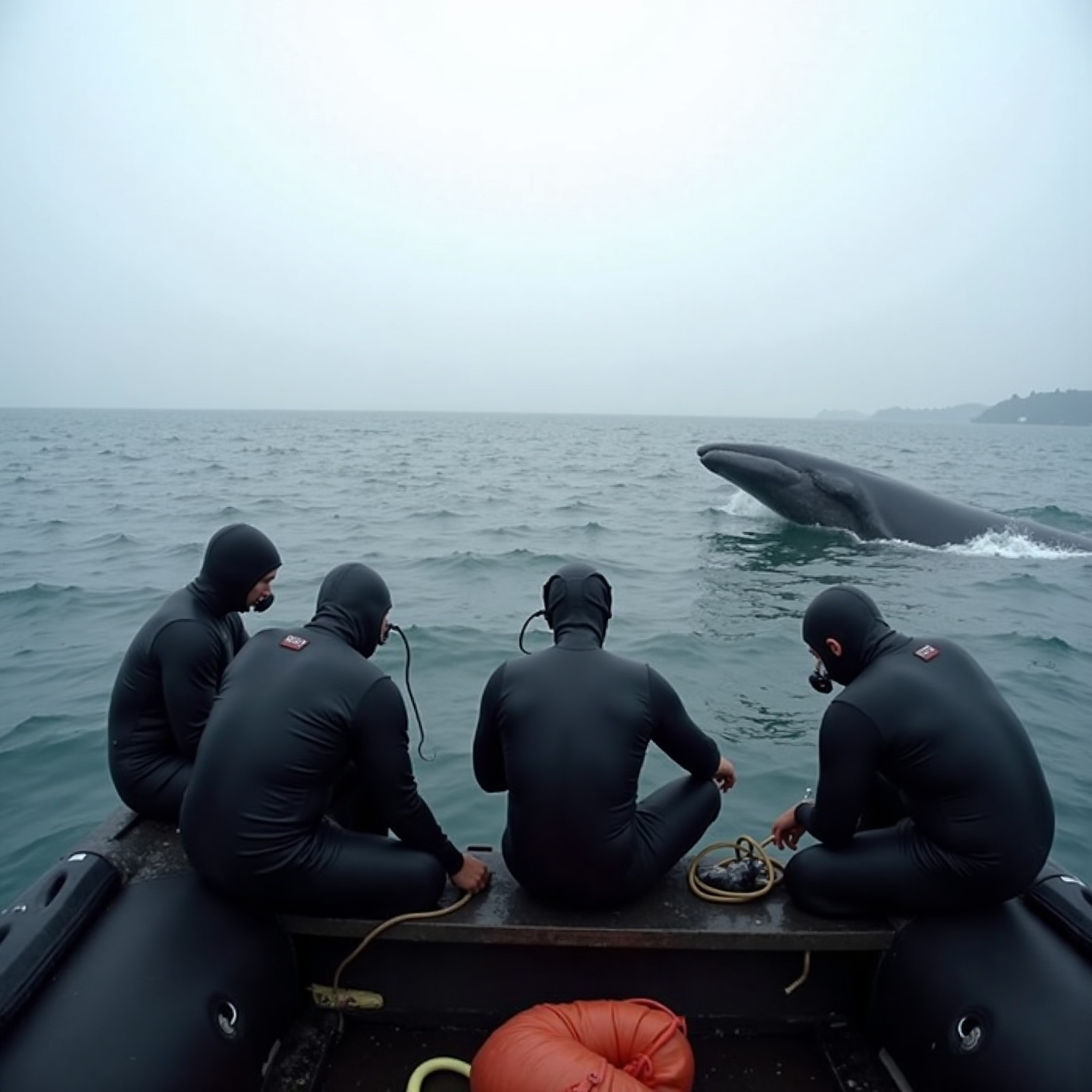
She never moved.
Fifty tons of wild animal, surrounded on all sides by strangers she had every reason to fear, and she stayed still. Line after line. Hands on her. Bubbles in her face. An hour of it.
Moskito said afterward that it did not feel like an animal frozen in fright. It felt to him like she understood what was going on, and was holding herself steady on purpose so they could get on with it.
Believe as much of that as you want to believe. What is not in dispute is the behavior. She held.
The last line
One by one, the lines came away and drifted off into the green.
Then there was one left. Somebody cut it, and the whole weight of the gear let go of her at once, and she felt it.
She went down.
That is the ending the divers expected, because it is the only ending they had ever seen. You cut a wild animal loose and it leaves. It doesn’t look back. It goes.
The four of them turned for the surface.
And then somebody saw her coming back.
She had turned around, deep under them, and she was climbing.
What happened next took a few minutes and has been argued about ever since.
She came up to the first diver, put her nose against him, and pushed. Not hard. A nudge, the way a dog leans into your leg. Then she moved off him and went to the next one and did the same thing. Then the third. Then the fourth. Each man in turn, one after another, until she had been to all of them.
Moskito was one of them. He said she stopped about a foot away from him, pushed him around a little, and seemed to be enjoying herself.
“It felt to me like it was thanking us, knowing that it was free and that we had helped it,” he told the San Francisco Chronicle a few days later.
Then she was finished with them. She turned, and the shape of her went down and away into the blue toward open water, and that was the last any of them saw of her.
The Chronicle ran the story on December 14th. Marine biologists lined up afterward to say the careful thing, which is that nobody can read gratitude in a whale, and that what looks like thanks to a human might be something else entirely, and they are right to say it.
But nobody has yet offered a better explanation for why an animal that had just been handed the whole open Pacific turned around and spent her first free minutes touching four particular men, one at a time, and then left.
It was the first time anyone had successfully cut a humpback free from that kind of gear anywhere on the West Coast. Four men, four knives, one hour, and a whale that decided to hold still.
And then came back to say something on her way out.