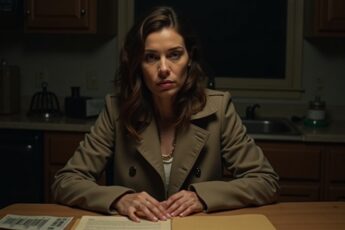
Kayla was seven the summer her father remarried, and she can still tell you what the invitation smelled like. Ink and hot cardstock. It came in the mail addressed to her mother’s house, and it listed the names of the flower girls, and hers was not among them.
Robert married Denise in a backyard in Knoxville with a rented tent and forty people. Denise came with two kids of her own, Marcus and Tara, aged nine and six, and by the following spring there was Emily, the baby, the one everyone in that house called “ours” without ever quite hearing themselves do it.
Kayla was the other one. Every other weekend, and two weeks in July.
Nobody was cruel to her. That’s the thing people always want to hear, and it isn’t the story. There was no wicked stepmother, no locked door, no shouting. Denise set a place for her at the table and bought her a toothbrush with a cartoon on it that stayed in the drawer for eleven years. There was just a family in that house, running like a family runs, with its own jokes and its own rhythm and its own school calendar, and Kayla arrived every other Friday with a duffel bag and knocked on the door of a house where she had a bed.
She knocked. That detail stayed with her longer than any of it. She had a bed in that house and she still knocked.
The one exception was the lake house.
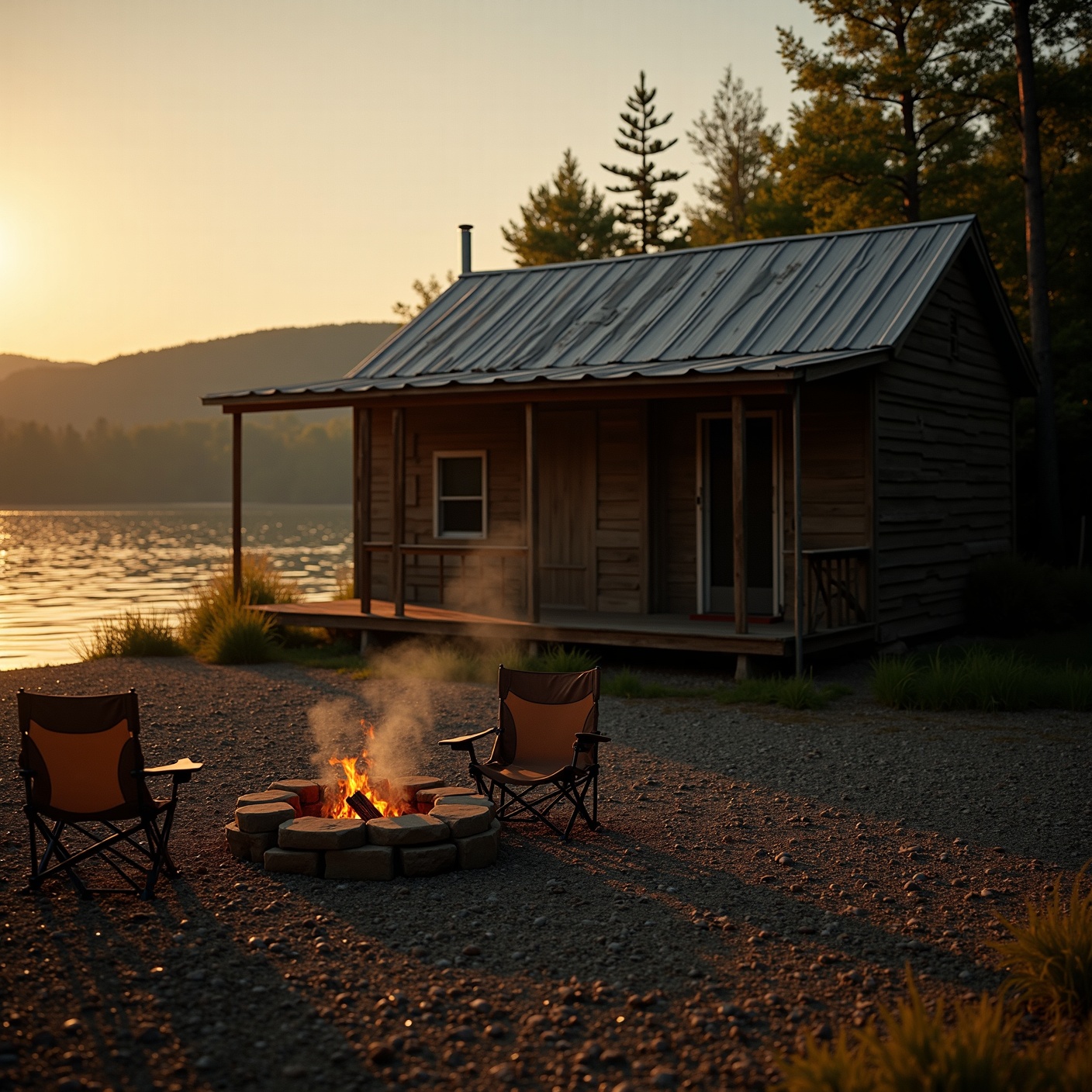
Robert’s father had built it in 1961 on a scrubby cove up on Norris Lake, two hours out, one room and a screened porch that leaned. It was too small and the water was too cold and Denise hated it, so nobody went. The hardware store took up all of Robert’s daylight anyway. The place just sat there, closed up, mildewing, a set of keys on a nail in the garage.
But when Kayla was nine, on a July weekend when Denise had taken the little ones to a cousin’s christening, her father looked at her over a bowl of cereal and said, “You want to go see something?”
They drove up with the windows down. He aired the place out, swore at a wasp nest, made a fire in a stone ring, and burned two hot dogs black while telling her about his own father, a man Kayla had never met, who apparently could not sing but did anyway. She fell asleep on the porch in a sleeping bag that smelled like a basement. Somewhere around eleven she heard him get up and check that she was covered.
That was the whole event. That was it.
And on the way home, at a gas station outside Lafollette, Kayla asked him a question she asked exactly once in her life and never again.
“Can we come back?”
He looked at her for a second. Then he said, “Yeah. We’ll come back.”
They came back. Not often. Maybe eleven or twelve times over the next decade, always just the two of them, always on the weekends when the house in Knoxville was busy with something that wasn’t her. He never called it a tradition. He never announced it. He’d just say, “Got a free Saturday?” and she’d say yes before he finished.
The other kids were invited, plenty of times. Marcus thought it was boring. Tara got eaten alive by mosquitoes at eleven and refused to ever go back. Emily went once as a teenager and spent the whole afternoon looking for a signal.
Nobody ever asked to return. Only Kayla.
Robert died in February, at seventy-eight, in the way he probably would have chosen, which is to say in his own chair, with the game on, three weeks after he finally sold the hardware store to a man he’d trained in 1998.
The will reading was in a small conference room downtown with bad carpet and a jug of water nobody touched. Kayla almost didn’t go. She’d gone back and forth about it for a week, and in the end she went because she thought she should hear his name said out loud one more time by someone official.
She sat by the door.
Marcus took the head of the table. He was fifty-three now, in a good jacket, and he’d been running numbers all week, and he wasn’t wrong to. Everyone in that room knew what was on the list. There was the house in Knoxville. There was the hardware store money. There was the lake place, which had gone from a joke to a piece of land people at church now described, with a whistle, as “on the water.”
Tara had already told her husband the lake property should go to Emily, since Emily had the young kids, and everybody would use it, and they’d make it a whole family thing at last.
Emily had already looked up what an acre on that cove was worth. She hadn’t told anyone she’d looked it up.
The lawyer’s name was Dale Whitaker, and he’d known Robert for thirty years, and he had a manila folder and two sealed cream envelopes squared up on top of it. He put on his glasses.
“There’s a specific bequest,” Dale said, “and then there are two letters. Robert was very clear about the order.”
He read the specific bequest first.
The lake house on Norris Lake, the cove, the boat, and the full proceeds of the sale of Denton Hardware, which after debts came to a number that made Tara’s husband sit forward in his chair, went to one person.
Kayla.
The room did not explode. That’s the thing about rooms like that. The room got extremely quiet, and Marcus said “I’m sorry, say that again,” in a voice that was still polite, and Dale said it again, exactly the same way, and then read the sentence Robert had put after the bequest, which was one line long and which Dale delivered without any particular emphasis, the way lawyers do.
“‘She is the only one who ever asked to come back.'”
Kayla did not move. Her ears were ringing. Someone said her name.
Dale slid the two cream envelopes across the table, one to Marcus, one to Tara, and he set his hands flat on the folder and waited.
“What is this,” Marcus said.
“He asked that you open them here,” Dale said.
Marcus turned his over. Tara held hers with both hands, like it might be hot. And for a long moment nobody opened anything at all, and Kayla sat by the door in a room full of her father’s family and understood, for the first time in forty years, that she had not been the one on the outside.
Marcus opened his first.
Inside was no letter. No lawyer’s language, no explanation, no money. There was one photograph, four by six, faded at the top the way drugstore prints go, and Marcus looked at it for about five seconds before he set it down on the table and pressed his knuckles against his mouth.
It was a little girl, maybe nine, standing barefoot on the gravel outside the lake house. Sunburned nose. Blue shorts. Alone, because whoever was holding the camera was the only other person there.
On the back, in Robert’s blocky capitals, the same handwriting that had priced every wrench in that store for fifty years:
SHE ASKED.
Tara opened hers. Same photograph. Same three words.
And Emily, who hadn’t gotten an envelope at all, who had gotten a fair third of a house in Knoxville and nothing else, whispered, “Wait, who took the picture?”
Nobody answered her. Kayla was looking at her hands.
She’d never seen the photo. She hadn’t known there was a camera. She’d been standing there waiting for him to unlock the door, that’s all, on a Saturday in July, in a pair of shorts her mother bought her at a Kmart in Powell, and her father had stopped and turned around and taken a picture of a nine-year-old kid who had asked to come back.
Then he’d carried it in a drawer for thirty-eight years and set it aside for the two people who never did.
Marcus was the one who broke. He got up, and he came around the table, and Kayla flinched a little because she genuinely did not know what was coming. He put his hand on the back of her chair.
“I never asked,” he said. His voice went out from under him. “He asked me a hundred times, and I never once said yes.”
Tara did not speak to Kayla that day, or for four months after. In June she sent a text with no punctuation that said Emily wants to bring the kids up in August is that alright with you.
Kayla wrote back: Yes. Any weekend. Tell them to bring bug spray, Tara.
They came in August. All of them, three cars, coolers, a boat that wouldn’t start. The porch still leaned. Emily’s kids fell in the water twice. Marcus stood at the stone fire ring for a long while with his hands in his pockets, not saying much.
And the photograph, the four-by-six with the blocky capitals on the back, hangs inside the door of the lake house now, in a cheap frame from the drugstore, where everybody sees it on the way in.
Kayla had it copied so there’d be one for each of them. Nobody asked her to. That’s just how she is.