She walked into Paris Fashion Week with a bare face.
No foundation. No liner. No lashes. Freckles, laugh lines, and a woman in her fifties sitting in the front row of a fashion show in the most photographed city on earth, looking exactly like herself.
Pamela Anderson spent thirty years being the most looked-at woman in the world and almost none of it being taken seriously. She was a punchline before she was a person. The red swimsuit, the slow-motion run down the sand, the jokes on late-night, the tabloid decade that treated her private life as public property. Everyone had an opinion about her. Nobody was casting her.
Then she stopped wearing makeup, and the phone started ringing.
The order of events sounds like a fable, and it isn’t one. It’s simply what happened, and the people who now work with her keep saying the same thing about why.
Start with “Baywatch.” From 1992 to 1997 she played C.J. Parker, and the show became one of the most-watched television programs on the planet, and Pamela Anderson became a global object. That’s the honest word for it. An object. She was on more magazine covers than actresses who were winning awards, and she was offered almost nothing that required her to speak.
The industry decided what she was, and then it moved on, and it left her there for about twenty-five years.
What almost nobody paid attention to is what she did in 2022.
She took the role of Roxie Hart in “Chicago,” on Broadway, for a two-month run. Fifty-five years old. Eight shows a week, live singing, live dancing, in a theater full of people who had bought tickets partly to see whether she could do it at all.
She could.
She has said since that those two months were the hinge of the whole thing. Not because the reviews were kind, though some of them were. Because she had to stand on a stage every night with no retakes and no filter and find out, at fifty-five, in front of strangers, what she was actually capable of. She came off that run different. People who know her say she came off it fearless.
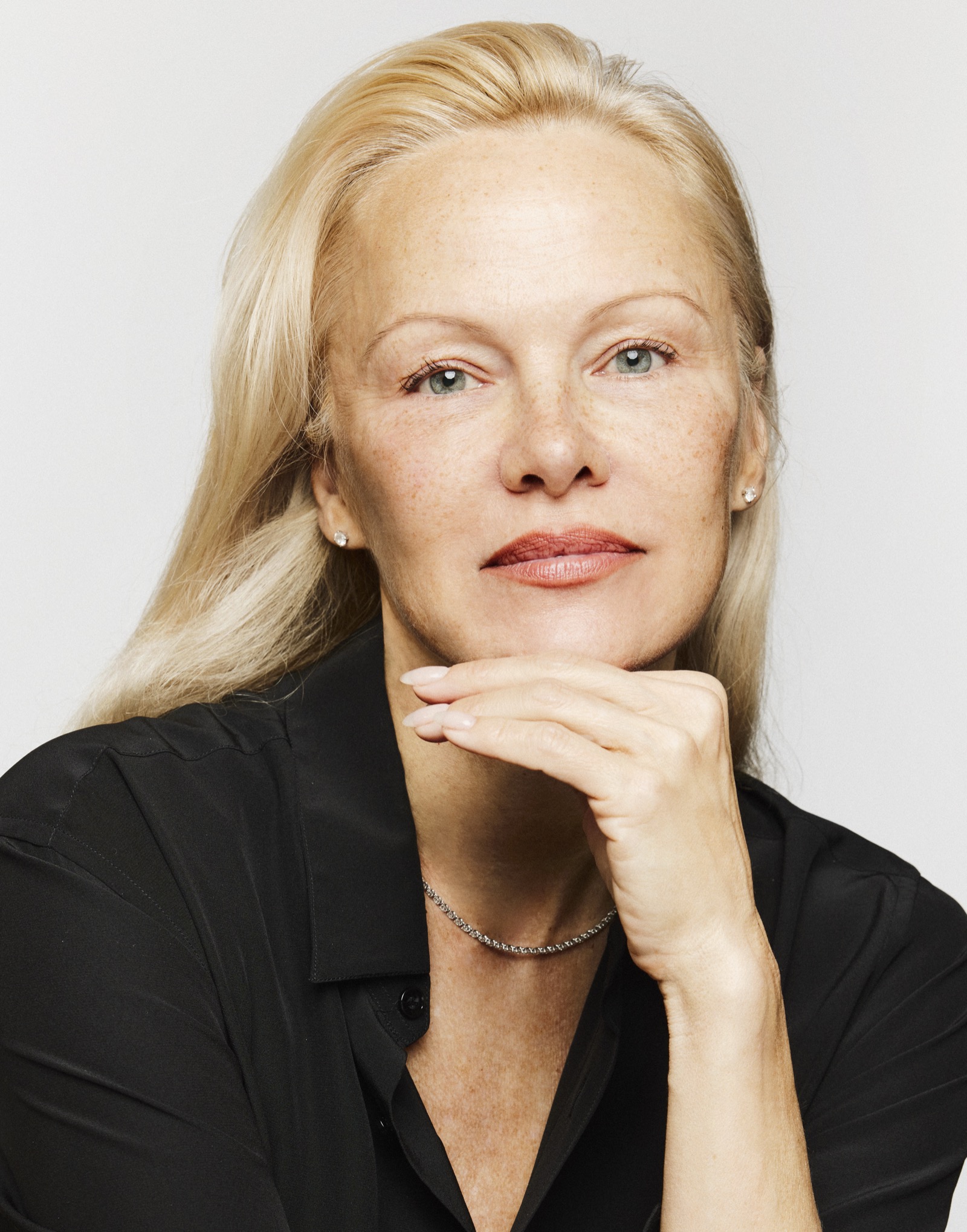
Around that same period she stopped wearing makeup in public. She’d been through a hard stretch personally, she’d lost her longtime makeup artist, and she made a decision that read to the world like a statement and to her, by her own account, was mostly relief. She was tired of maintaining a face. She showed up at Paris Fashion Week in 2023 with nothing on it.
The internet lost its mind, in the good way. And what got said, over and over, in thousands of comments from women who had spent decades being told what they were supposed to look like at fifty, was some version of: oh. You’re allowed to do that.
Then Gia Coppola sent her a script.
“The Last Showgirl” is about a woman named Shelly who has danced in the same Las Vegas revue for thirty years, and the show is closing, and she has to work out what she is when the thing that defined her stops existing. Every casting director in Hollywood can see the joke here. Coppola saw the actress.
The film came out in 2024. Anderson does almost nothing in it, in the way great screen actors do almost nothing. She lets you watch a woman absorb a piece of news. She holds a shot. And the same industry that had spent three decades using her as a punchline sat in the dark and watched her carry a whole movie on her face.
She was nominated for a Golden Globe for Best Actress in a Drama. She was nominated by the Screen Actors Guild, which is to say by other actors, which is the one that tends to matter to the people who do the job.
Thirty-three years into her career, those were her first major nominations. The first.
The Academy passed on her. She didn’t get the Oscar nod, and when she was asked about it, she didn’t pretend it hadn’t stung and she didn’t perform outrage either. She talked about being grateful the film existed at all, and about the work being the point, and then she went back to work.
And here is what “going back to work” now means for a woman Hollywood had written off.
She’s in “Maitreya,” alongside Debbie Harry, directed by Jonathan Krisel, from a script by Samuel D. Hunter, who wrote “The Whale.” She’s in “Somedays,” opposite Billy Bob Thornton and Ariana Greenblatt. She’s in “Alma,” with Dakota Fanning and Lindsay Duncan, directed by Sally Potter. She’s in “Rosebush Pruning” with Riley Keough, Elle Fanning and Callum Turner. She’s in “Place To Be” with Taika Waititi.
Read that list again and notice what it is. It is not a comeback tour of cameos and self-parody, the standard package they hand a former sex symbol who behaves herself. It’s directors’ films. It’s writers’ films. It’s the kind of slate a serious actress builds in her forties, arriving twenty years late for a woman who was never given the chance to build one.
She got there by taking everything off.
There’s a version of this story that’s about beauty and aging and makeup, and it’s the version that will get written a hundred more times, and it’s the shallow one. The real one is simpler and harder. For thirty years, an entire industry looked at Pamela Anderson and saw only what she looked like. Then she stood on a Broadway stage without a net, and walked into Paris with a naked face, and stopped auditioning for their idea of her.
And it turned out that when she stopped, they finally started watching.