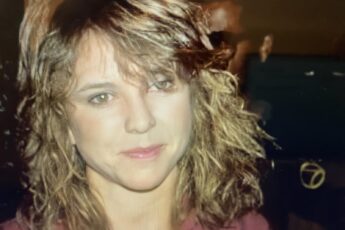
There’s a version of this story everyone expects. A movie star hits the top, loses it, then claws her way back to the screen and gets her standing ovation. Kelly McGillis never told that story. She told a quieter one, and honestly it’s the better one.
She turned 69 last week, on the ninth of July.
If you were anywhere near a movie theater in 1986, you know the face without being told. Aviator shades. Charlotte “Charlie” Blackwood, the civilian flight instructor who walks into a bar full of Navy pilots, gets serenaded by Tom Cruise’s Maverick, and doesn’t blink. “Top Gun” made her one of the most recognizable women in America in roughly the time it takes to release a movie.
The part people forget is that she was already good, and everyone serious already knew it. The year before, she’d played Rachel Lapp, the Amish widow in “Witness,” opposite Harrison Ford. That one brought her a Golden Globe nomination and a BAFTA nomination. Two years after “Top Gun” she was Kathryn Murphy, the prosecutor in “The Accused,” the film that won Jodie Foster her first Oscar.
Then the trail goes quiet. This is the stretch where the internet starts guessing, so let’s stick to what the dates actually support.
She kept working straight through the 1990s. Film after film, most of them smaller than the ones you remember. Her last big studio role was “At First Sight” in 1999, opposite Val Kilmer. After a 2001 television drama called “Morgan’s Ferry,” she stopped for about five years. No farewell interview. No feud. No scandal. She just stopped.
What she was doing instead she has never dressed up: raising her two daughters, and getting sober.
She came back to acting in 2006, and she came back sideways, into the kind of parts that don’t come with a publicist. Independent horror, mostly. “Stake Land.” “The Innkeepers.” “We Are What We Are.” In 2009 she came out publicly as a lesbian, and talked about it as a matter of arithmetic rather than drama: life is “growing and changing, and coming to terms with who and what you are, and loving who and what you are.”
In 2010 she married Melanie Leis. They made a home in Collingswood, New Jersey.
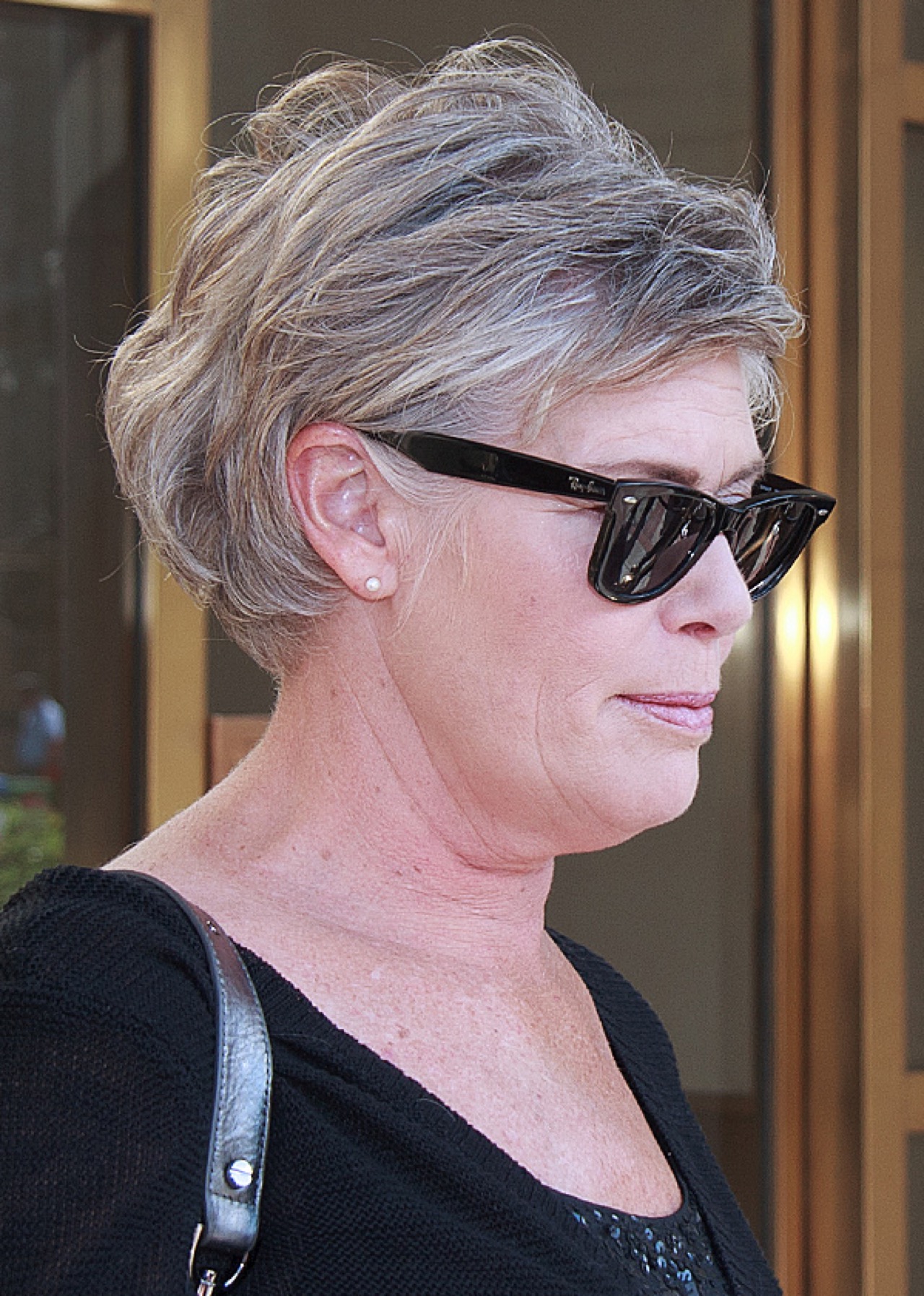
And it’s the New Jersey years that almost every “where is she now” story still gets wrong.
Because for a stretch there, if you’d gone looking for the woman from “Top Gun,” you wouldn’t have found her on a set. You’d have found her in Bridgeton, a small city down in the southern end of the state, at a drug and alcohol treatment center called Seabrook House. She worked there full time.
“I work a five-day, 40-hour week,” she told The Oklahoman.
Forty hours. No trailer. No credit at the end of anything. And mostly, she said, she was in the room with the women.
“I work primarily with the women’s population, and I really love it,” she told the paper. “I find it’s just an amazing gift to see people come in hopeless and to be given some hope and some desire to live and some tools for hopefully changing their lives, their children’s lives.”
To see people come in hopeless. That’s the job she picked.
She was also careful about what that job was, and she corrected people who tried to inflate it into something grander. Asked about it in a 2013 interview with Smashing Interviews Magazine, she pushed back on her own press. “I’m not a counselor, nor was I,” she said. “I don’t know how that got interpreted that way.” What she actually did was simpler, and probably harder: “I just share my own experiences with people who struggle with the disease of addiction.”
Sit with that a second. A woman who had been in that room herself, on the other side of it, sitting down with a stranger on the worst morning of that stranger’s life and saying, in effect: I know. Me too. Here’s mine.
Then, in the same 2013 conversation, she said the thing the recycled headlines keep leaving out.
“No. I’m not doing that anymore since I moved.”
She’d left New Jersey by then. She’d gone south to the mountains, to Hendersonville, North Carolina, where she still lives. And she’d already found the next useful thing to do with herself. “I am teaching acting in Asheville (North Carolina) at a place called the New York Studio for Stage and Screen.”
So that’s the honest answer to “whatever happened to Charlie.” She’s been teaching young actors in a mountain town for more than a decade.
Which brings us to the sequel.
When “Top Gun: Maverick” finally landed in 2022, Charlie wasn’t in it. Jennifer Connelly played Penny Benjamin, a new love interest, and fans immediately wanted to know where McGillis was. The tidy version that goes around is that she chose service over stardom, that she turned Hollywood down. That isn’t what happened either.
Nobody asked her. She said so plainly to Entertainment Tonight in 2019, three years before the film came out. The phone never rang.
And when they pressed her on why, she didn’t perform hurt feelings about it. She said this: “I’m old, and I’m fat, and I look age-appropriate for what my age is, and that is not what that whole scene is about.”
That isn’t self-pity. Read it again and you can hear what it actually is. That’s a woman naming out loud, without flinching, exactly what that industry wants from a woman her age. Which is nothing.
And then she did something generous, which she did not have to do. Asked about Connelly getting the part, McGillis said she was “so glad she got that opportunity.”
Here’s the thing that stays with me.
Charlie never ages. She’s still in that bar in the bomber jacket, still unimpressed, still perfect, and people will be quoting her in fifty years. That’s the woman millions of people think they’re asking about when they type “Kelly McGillis” into a search bar.
The actual woman turned 69 last week. She raised two daughters. She got sober and stayed sober. She spent forty-hour weeks in a treatment center in South Jersey telling women who came in with nothing the truth about her own life, because it might be the thing that got them through to the afternoon. Now she teaches kids how to act, in the mountains, a long way from anyone’s red carpet.
One of those two women is a movie. The other one is a life.