
The animal in question came from a clump of moss. It is about half a millimeter long, which means you could line up two of them across the width of a pencil lead and still have room left over. Under a microscope it looks like a vacuum cleaner bag that grew eight stubby legs and decided to go for a walk.
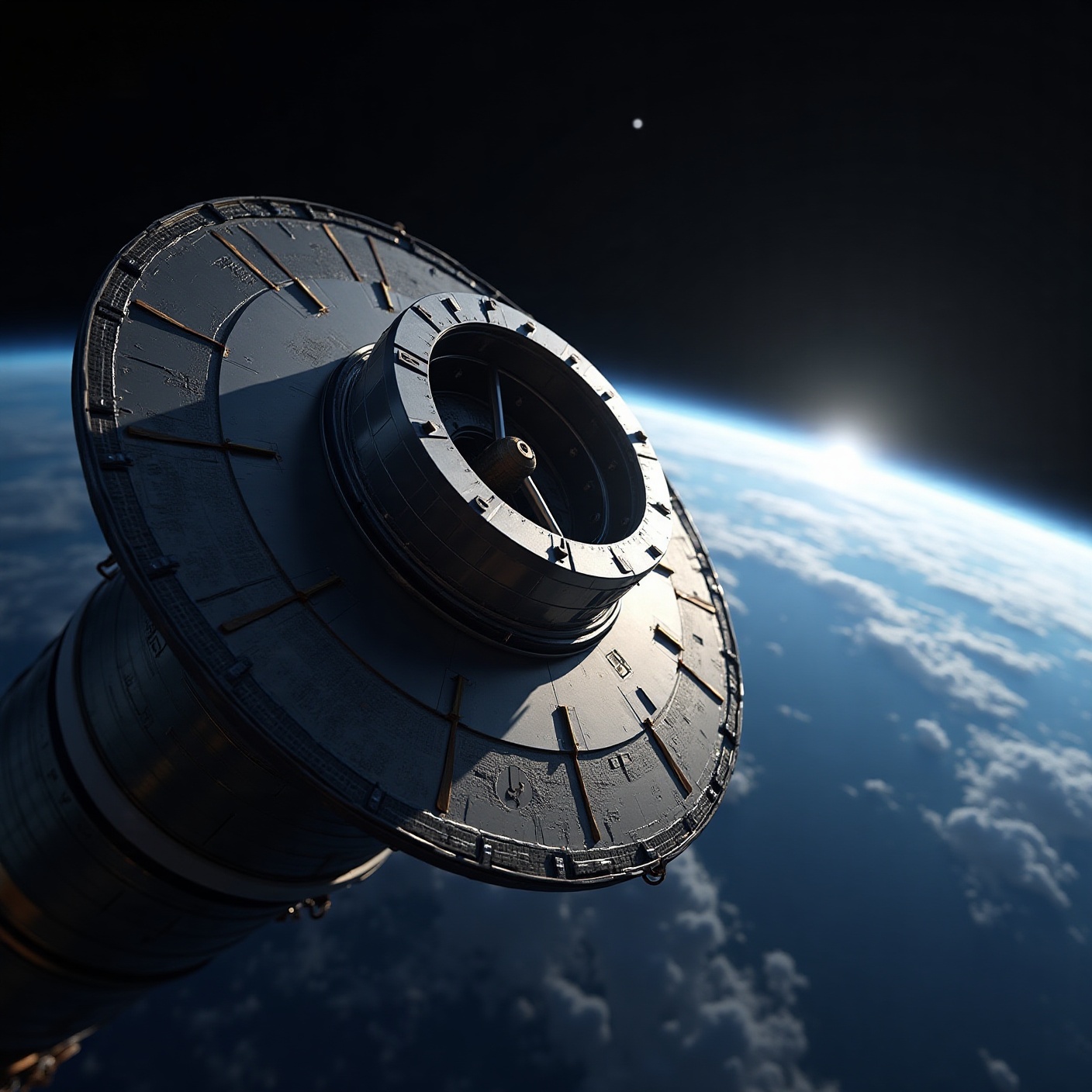
In September 2007 the European Space Agency strapped roughly three thousand of them to the hull of a spacecraft and flew them into orbit. Not inside. On the outside. Then the container opened.
The mission was called FOTON-M3, and the experiment riding on it had the best acronym in the history of science: TARDIS, for Tardigrades In Space. The team was led by Ingemar Jönsson at the University of Kristianstad in Sweden, and the samples sat in an ESA exposure platform called Biopan-6, bolted where nothing living is supposed to be.
For ten days the spacecraft circled between 258 and 281 kilometers above sea level. Up there the animals had no air, no pressure, no shielding. Cosmic radiation went straight through them. In some trays the sun hit them with the full unfiltered ultraviolet spectrum, the wavelengths our atmosphere eats before they ever reach a beach.
To put that in scale: drop an unprotected human into the same conditions and you have roughly fifteen seconds of consciousness. After a couple of minutes there is nothing left to rescue. A NASA technician found this out by accident in a 1965 vacuum chamber test when his suit sprang a leak. He blacked out in fourteen seconds. His last memory was the saliva boiling off his tongue.
The spacecraft came home. The trays came off. The animals were dried-out flakes, indistinguishable from dust.
Then someone added water.
More than 68% of the ones that had been shielded from solar UV were up and walking within thirty minutes. Not “showed signs of life”. Walking. Crawling around the dish looking for something to eat, having spent a week and a half in the naked vacuum of space.
The full-UV trays were rougher, and this is where the story gets honest instead of tidy. Direct unfiltered sunlight in a vacuum is brutal, and it wiped out most of what it touched. But not all. A handful of Milnesium tardigradum came back from that too. A few, out of thousands. And that few was enough, because it was the first time any animal in the history of the planet had been shown to survive space vacuum, cosmic radiation, and direct solar ultraviolet at the same time. Before this, the exclusive list of things that could do that was bacteria, lichens, and some very stubborn seeds. Now it had an animal on it. One with legs and a gut and a brain.
And then the survivors laid eggs. The eggs hatched. Normal babies, going about their business, born to parents who had been dead-ish in orbit. A follow-up study years later went looking for damage passed down to that generation and found none.
So how does a puddle animal beat a vacuum?
Here is the part that flips the whole story around, and it is not the part most people expect.
The tardigrade is not tough. Not in the way we mean when we call something tough. It does not have space armor. It has no clever shielding, no radiation-proof shell, no trick for enduring the void.
What it has is an exit.
When its world dries out, and for a moss tardigrade that happens constantly, because moss is a puddle that keeps evaporating, the animal pulls its legs in, curls up, squeezes the water out of itself, and shrinks into a wrinkled little barrel. Researchers call this shape a tun. Its metabolism drops to something indistinguishable from zero. It is not sleeping. It is not hibernating. Hibernating animals still burn fuel and still keep a heartbeat. The tardigrade stops. The state is called cryptobiosis, from the Greek for hidden life, and hidden is exactly right, because by every measure we have, the animal is not alive while it is in there. It is also not dead. There is no good English word for what it is, which tells you how rarely nature does this.
The reason it survives drying out is that water is not just something a cell contains. Water is the scaffolding a cell is built on. Take the water away and proteins slump, membranes tear, and the whole structure collapses like a tent with the poles pulled. So the tardigrade swaps the water out for something else. It floods itself with special sugars and with a set of proteins that turn glassy as they dry, and that glass sets around every delicate structure in the body and holds it in position. Everything gets held exactly where it was. Nothing can move, so nothing can break.
Now think about what vacuum actually does to you. It rips your water out. That is the mechanism. That is why fifteen seconds is all you get, because a body that is 60% water and built around that water has no answer when the water leaves.
The tardigrade already left. It gave up its water on purpose before the trip, on the lab bench, weeks earlier. Vacuum arrived to steal something that was not there anymore.
That is the whole trick, and it is a strange kind of beautiful. The tardigrade did not win a fight with space. It refused to be in the room.
Why anybody cares
It would be easy to file this under fun trivia and move on. Scientists did not, and for good reason.
If a multicellular animal with a nervous system can lie in orbital vacuum for ten days and then get up and reproduce, then the assumptions we carry about where life can exist need loosening. Not “life on Mars is confirmed”, nothing that cheap. Just this: the possibility that living things can cross hard vacuum and arrive intact stopped being a thought experiment in 2007 and became a measured result with a percentage attached to it.
There is a practical edge too. Whatever those glassy proteins do to hold a drying cell together, they might do for us. Labs are working on the idea of using tardigrade proteins to stabilize vaccines and blood products without refrigeration, so medicine could sit in a dry vial in a hot country and still work on the day it is needed. A creature from a wet patch of moss may end up keeping medicine alive in places that have no power grid.
The paper ran in Current Biology in September 2008 under a title that does not oversell a thing: “Tardigrades survive exposure to space in low Earth orbit.”
Somewhere out there, tonight, there is moss on a rock with tardigrades in it. They are half a millimeter long. They eat algae. They have never done anything remarkable in their lives.
They would survive the sky opening up. They would just have to dry out first.