
Linda came for a few weeks. That was the word she used on the phone, and Kayla remembers repeating it to Daniel afterward, like she was checking the size of a package before signing for it. A few weeks. The condo sale had collapsed at the last minute, the buyer’s loan fell through, and Daniel’s mother needed somewhere to land while her agent found another one.
“It’s my mom,” Daniel said, sliding his phone face down on the counter. “What am I supposed to say?”
“Nothing,” Kayla said. “Say yes. I already did.”
She meant it that night. She was five months pregnant, the guest room was sitting there with nothing in it but a folded exercise bike and a lamp they’d never plugged in, and Linda had always been fine. Not warm. Fine. She sent cards on birthdays. She called Kayla “honey” in a voice that could mean anything.
The first week was easy. Linda cooked twice, folded a load of towels, and stayed out of the way. She had a way of drifting through a room without touching anything, and Kayla thought, alright, this is going to work.
Then came the kitchen.
Kayla came home on a Tuesday and reached for the coffee where the coffee had lived for four years, and her hand closed on air. The mugs weren’t in the mug cabinet. The spices weren’t over the stove. Every single thing in that kitchen had been picked up and put down somewhere else.
“I organized,” Linda said from the table, not looking up from her crossword. “You had your baking sheets in with your cutting boards. Nobody does that.”
“I do that,” Kayla said.
“Well,” said Linda, and filled in a word.
Daniel laughed about it. That was the part Kayla kept turning over later, in the dark, at two in the morning. He laughed. He said his mother had reorganized every kitchen she’d ever been in, including his college apartment, and that it was easier to let her win the small ones.
So Kayla let her win the small ones.
The small ones kept coming. Linda moved the guest room around and then moved the linen closet around. She started answering the door. She started saying “we” about the house, as in, “We’re thinking of doing something about that hedge.”
And then the maternity clothes.
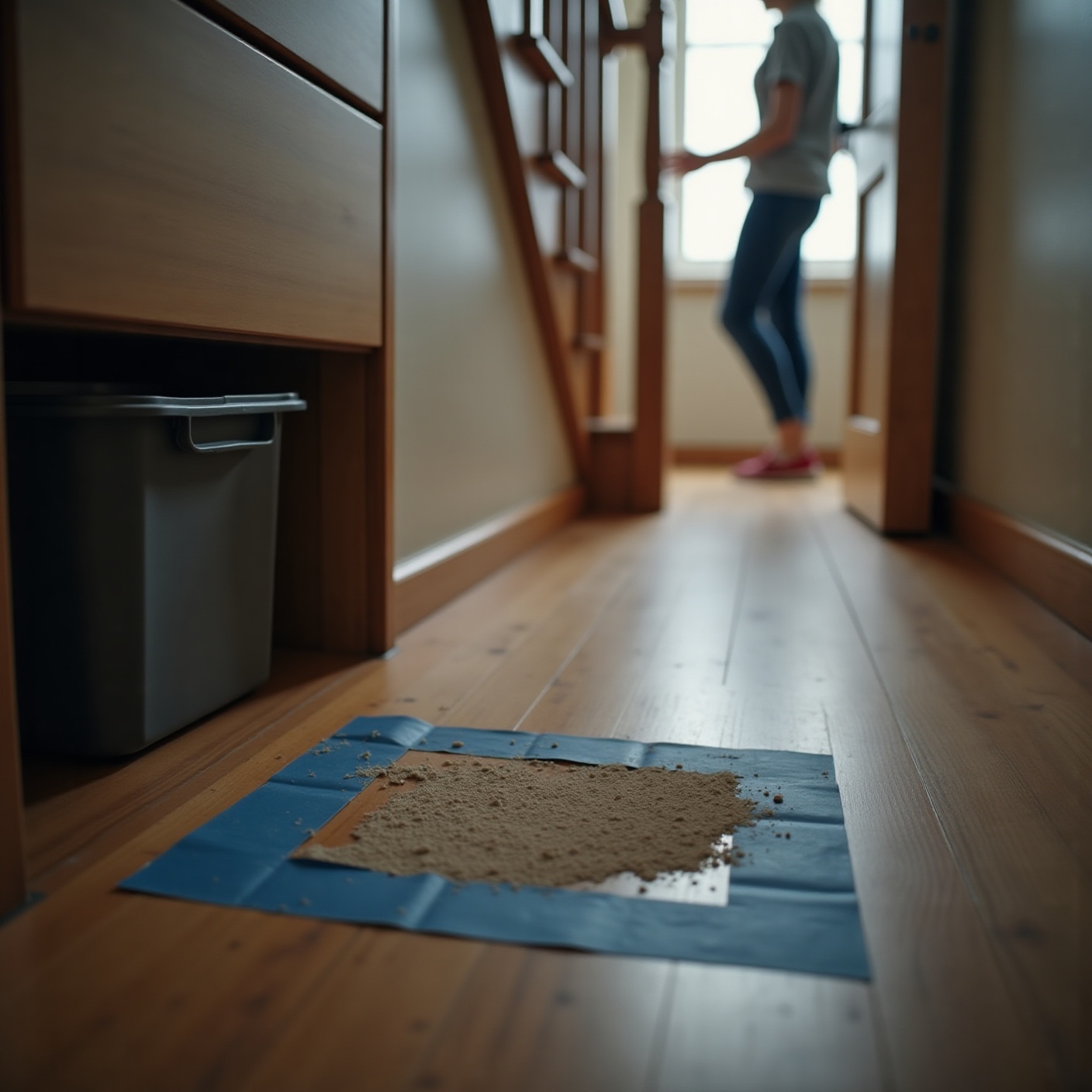
Kayla had a bin. It was under the stairs, and it had a strip of blue painter’s tape on the lid with MATERNITY written on it in Sharpie, and it held the things her sister had shipped down from Ohio, including a gray cardigan their mother wore through two pregnancies and had kept for thirty years because she was the kind of woman who kept things. Kayla went for the bin on a Saturday. The bin was gone.
“Oh, that,” Linda said. “That was taking up so much room. I ran it over to Goodwill on Thursday. Honey, decluttering is the kindest thing you can do for a nursery.”
Kayla stood in the hall with her hand on the banister and felt her heart going somewhere it shouldn’t go, and she made herself count to ten before she said anything.
“That was my mother’s cardigan.”
“It was a cardigan,” Linda said gently, the way you’d correct a child about a dead goldfish. “You can buy a hundred of them.”
Daniel drove to three Goodwill locations that weekend. He found nothing. He came home and sat on the edge of the bed with his elbows on his knees and said he was sorry, he was so sorry, and Kayla asked him the only question that mattered.
“When is she leaving?”
“Soon,” Daniel said. “There’s a place in Brentwood she likes.”
Two weeks after that, Linda asked for a key.
She asked at dinner, in front of both of them, holding her fork in the air like she was pausing a movie. She’d been locked out that morning for twenty minutes waiting on the mail carrier. It was ridiculous, she said, for a grown woman to stand on a porch in her own son’s house.
“You can have mine when I’m at work,” Kayla said.
“I’d like my own.”
“We only have the two.”
“Then make one,” Linda said. “Daniel, tell her.”
He got the key cut on a Wednesday. He told Kayla it was less of a fight than saying no, and she remembers looking at the little brass copy on the counter, still warm from the machine, and thinking: that’s not a key. That’s a vote.
The weekend away was Daniel’s idea. A cabin two hours north, a peace offering, no signal, no Linda. They left Friday afternoon. And on Saturday night, lying awake in a strange bed with the baby moving, Kayla got a feeling she couldn’t name, the low static kind you get when you’ve left the stove on.
“Let’s just go back in the morning,” she said.
“We have the room till Monday.”
“Daniel.”
They drove home Sunday, a full day early, and the first thing Kayla noticed was that the porch light was off and the blinds were open. Linda never opened the blinds. Daniel unlocked the door and the house smelled like someone else’s shampoo. Warm, floral, wrong.
The guest room door was ajar. Inside, on the bed Linda had been sleeping in for two months, sat a hard-shell suitcase in electric blue, with an airline tag looped through the handle and a name on it that Kayla had never seen in her life.
She didn’t scream. She stood there.
Then, from the kitchen, a woman’s voice called out, friendly and completely unbothered: “Hey, is that the owner? The hot tub code isn’t working.”
Linda was not in the house. Linda was in Sedona.
It took Kayla eleven minutes to find out how. The woman in the kitchen, whose name was Priya and who was mortified in the way only a stranger caught in the middle of someone else’s disaster can be, pulled up the listing on her phone and handed it over without being asked. There it was. Their house. Their living room, photographed from an angle Kayla recognized as the spot by the bookshelf. The listing was under a host profile with a smiling stock-photo face and a name that wasn’t Linda’s, and it had four reviews, all glowing, all from the last eight weeks.
Two bookings. Both while Kayla and Daniel had been out of town. Priya had paid twelve hundred dollars for four nights, and she was the second guest.
Twenty-four hundred dollars, total. Almost exactly what a friend of Linda’s had told them, over Easter dinner, that a girls’ trip to Sedona would run. Linda had waved the whole idea off then. She’d said she couldn’t possibly, not this year, not on what she had.
Daniel called his mother from the driveway. She picked up on the fourth ring with wind in the background and a laugh already in her voice, and Kayla could hear the whole thing because he’d hit speaker without thinking.
“You’re back early,” Linda said.
“There’s a woman in our kitchen.”
There was a pause. Not a guilty pause. A calculating one, the sound of a person deciding which version to run with.
“She’s very nice,” Linda said. “She’s a nurse.”
“Mom.”
“It was sitting empty, Daniel. An entire house, sitting empty, while I’m being told I can’t have a key like I’m a stranger.” Her voice climbed. “I cleaned it top to bottom afterward. Nobody was hurt. Nobody would have ever known.”
“You listed our house,” Daniel said. “You took money for our house.”
“I put in two months of work in that house,” Linda said. “Cooking. Cleaning. Organizing that kitchen, which, frankly. And not one thank you. Not one.”
Kayla took the phone out of Daniel’s hand.
“Linda,” she said. “Where’s the money?”
“Excuse me?”
“The twenty-four hundred. Where is it right now?”
And Linda, who had never once in two months answered a question directly, answered that one.
“Spent,” she said. “Obviously.”
Priya got a full refund, on the spot, out of Kayla’s own account, and a very long apology in the driveway while her rideshare idled. She was decent about it. She said she’d had a lovely stay, which somehow made it worse.
The locks were changed by Tuesday.
Linda came back from Sedona on a Thursday and found her things on the porch, boxed, taped, labeled in Kayla’s handwriting. She rang the bell for a while. Then she called Daniel at work, crying, and told him his wife had thrown his mother into the street.
Daniel listened to the whole thing. He didn’t raise his voice. He’d had four days to think about a bin under the stairs with painter’s tape on the lid, and about a gray cardigan that his mother had decided was worth less than the space it took up.
“You gave a stranger the code to our hot tub,” he said. “You sold our home to strangers, Mom, and you’re upset about a porch.”
“I’m your mother.”
“Yeah,” Daniel said. “That’s the part I can’t get over.”
He hung up. He drove home. And that night he sat down on the floor of a half-finished nursery with his pregnant wife and said the sentence Kayla had been waiting two months to hear, which was not “I’m sorry,” although he said that too.
He said: “I should have said no the first time.”
Linda’s condo closed in October. She sends cards on birthdays. She calls the baby “honey,” in a voice that could mean anything, on the phone, at Christmas, from a distance of forty miles and one changed lock.
And the cardigan never turned up. Kayla still checks, sometimes, at thrift stores, the way you check a crowd for a face. She hasn’t found it. But she does have a photo of her mother wearing it in 1994, and it hangs in the nursery now, in a plain black frame, at the exact height of a baby’s eyes.