
Some shows just live in the walls of your childhood house. For a whole generation of Americans, “Family” was one of them.
The ABC drama ran from 1976 to 1980, and it didn’t look like anything else on television at the time. No laugh track, no easy resolutions. Just the Lawrence family of Pasadena, California, working through divorce, illness, growing up, and falling apart in ways that felt uncomfortably real for prime time. Critics loved it. Audiences loved it more.
Back then, families actually gathered around one television set to watch it together, parents and kids in the same room, no channel-surfing, no second screen. A show like “Family” didn’t just entertain a household for an hour, it gave that household something to talk about at breakfast the next morning. That’s part of why the people who watched it still remember it so clearly. It wasn’t background noise. It was appointment viewing in the truest sense, the one hour of the week the whole family actually sat still together.
At the center of it was Buddy Lawrence, the tomboy teenage daughter played by Kristy McNichol. She was twelve years old when the show started, and somehow she carried scenes with actors twice her age like she’d been doing it her whole life. Buddy wasn’t sweet in the way TV daughters were supposed to be sweet. She climbed trees. She talked back. She cried in the ugly, unguarded way real kids cry. McNichol won two Emmy Awards for the role, the second one when she was still a teenager herself, and for a few years she was arguably the most talked-about young actress in America.
Leif Garrett came into the picture as one of Buddy’s early romantic interests, and by the time “Family” was airing, he barely needed the introduction. Garrett was already famous the way only a handful of teenagers ever get to be famous. His face was on lunchboxes and lockers. His records climbed the charts. Teen magazines ran his photo so often that editors joked he was practically on staff. Watching him and McNichol share the screen was, for a certain age of viewer, the closest thing television offered to a real-life fairy tale.
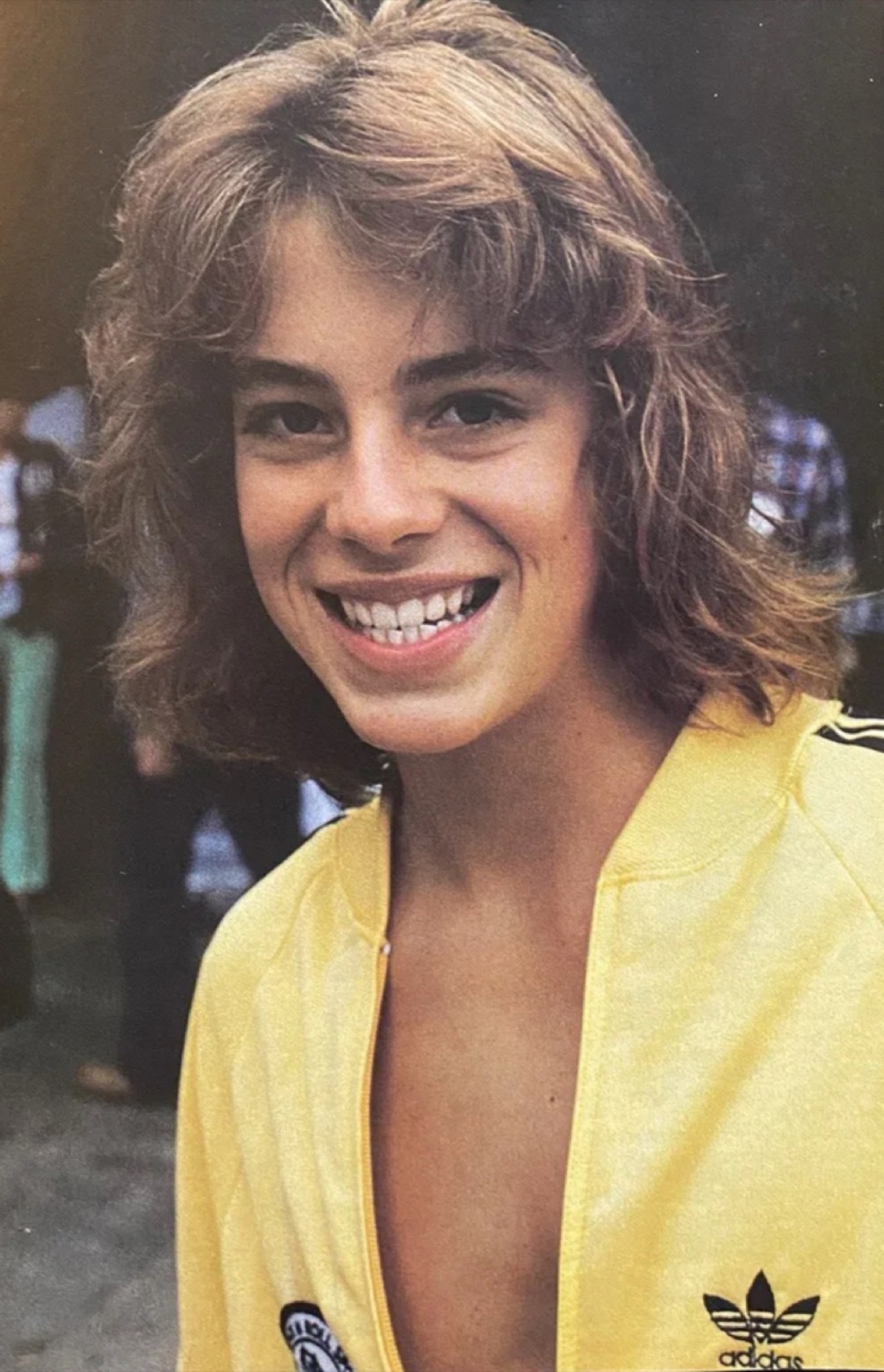
Then the show ended in 1980, the way these things do. The cast scattered into their own decades. McNichol kept acting through the 1980s, “Little Darlings,” “Only When I Laugh,” the sitcom “Empty Nest,” and then, without much fanfare, she stepped back from Hollywood almost entirely. No dramatic farewell tour, no tell-all. She simply stopped showing up at premieres, stopped doing the rounds, and let the industry’s memory of her freeze at the moment she left it. Garrett’s path went a different direction, a string of very public ups and downs that tabloids never tired of revisiting, but underneath the headlines he kept working, kept showing up, kept being the same kid from the magazine covers, just older.
Almost fifty years is a strange length of time. It’s long enough that most of the people who watched “Family” on a Tuesday night in 1977 now have grandchildren of their own. It’s long enough that the show itself, despite the Emmys and the acclaim, slipped out of the constant cable rotation that keeps some 70s series alive in reruns forever. Ask someone under forty about “Family” and you’ll likely get a blank look. Ask someone who was a teenager in 1978, and watch their whole face change.
That’s the gap this gala is stepping into.
On October 25, 2026, the cast of “Family” is gathering to mark the show’s 50th anniversary, and by every account it will be the first time Kristy McNichol and Leif Garrett have been in the same room together since the series ended. Nearly five decades. The event is bringing together the people who made Pasadena and the Lawrence living room feel like somewhere you could actually visit: Gary Frank, who played eldest son Willie, John Rubinstein, who played son-in-law Jeff Maitland, and Elayne Heilveil, who played daughter Nancy in the show’s first season. For longtime fans, seeing that group of names together again is its own kind of event, separate from anything McNichol and Garrett do on the night.
What makes the reunion land harder than a typical nostalgia photo op is exactly how quiet both of their lives became after the cameras stopped rolling. McNichol didn’t just retire from acting, she largely retired from being a public figure at all, which is a much rarer thing in an industry built on staying visible. Garrett, despite being one of the most photographed teenagers of his era, hasn’t shared a stage with his old “Family” co-star in the better part of five decades either. Two people who once stood in for a whole audience’s idea of young love on television, walking back into the same room after a gap that’s almost as long as the show has been off the air.
There’s no confirmation yet of exactly what the evening will look like, whether there will be a formal panel, a screening of old episodes, or simply a room full of people who used to share a soundstage catching up over dinner. What’s confirmed is the date, the guest list, and the fact that two faces a lot of people haven’t seen together since the Carter administration are finally going to be standing in the same photograph again.
For the fans who grew up with “Family” playing in the background of their own adolescence, the appeal here isn’t really about celebrity gossip or where anyone’s career went afterward. It’s simpler than that. It’s the chance to see Buddy and her on-screen sweetheart, older now, further along, but unmistakably themselves, together one more time. Some shows earn that kind of loyalty. Fifty years later, this one still has it.
McNichol’s two Emmys for the role remain a reminder of just how good “Family” was at its best, must-see television built on small, human moments rather than plot twists. Garrett’s run as a teen idol was, in its own way, just as much a product of that same era, when a magazine cover could make a fourteen-year-old into a household name overnight. Both of them were shaped by the same wave of 70s television and pop culture, and both of them, in different ways, spent the decades since stepping quietly out of its spotlight.
It’s worth sitting with what that spotlight actually looked like at the time. There was no cable news cycle chasing teenagers around in 1977, no social media turning every appearance into content. Fame for a young actor or a teen idol back then arrived through a much smaller number of channels, a magazine cover, a network time slot, a poster on a bedroom wall, and it hit just as hard, if not harder, because there was nowhere else for that attention to go. When McNichol and Garrett shared a scene on “Family,” they weren’t just two young performers doing their jobs. For a lot of households, they were the closest thing to royalty a Tuesday night offered.
Whatever happens in the room on October 25, the fact that it’s happening at all says something about how long “Family” has stayed with the people who watched it first. Fifty years is a long time to wait for a reunion. For the fans who never forgot Buddy Lawrence or the boy who used to make her blush, it will have been worth it.