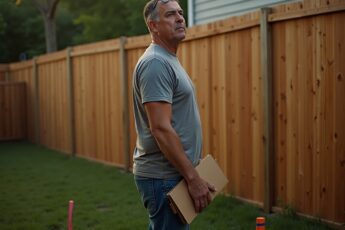
Bell’s Donuts sits on Third Street in Fairvale, Ohio, between a shoe repair place that keeps unpredictable hours and a storefront that has been four different businesses since 2009.
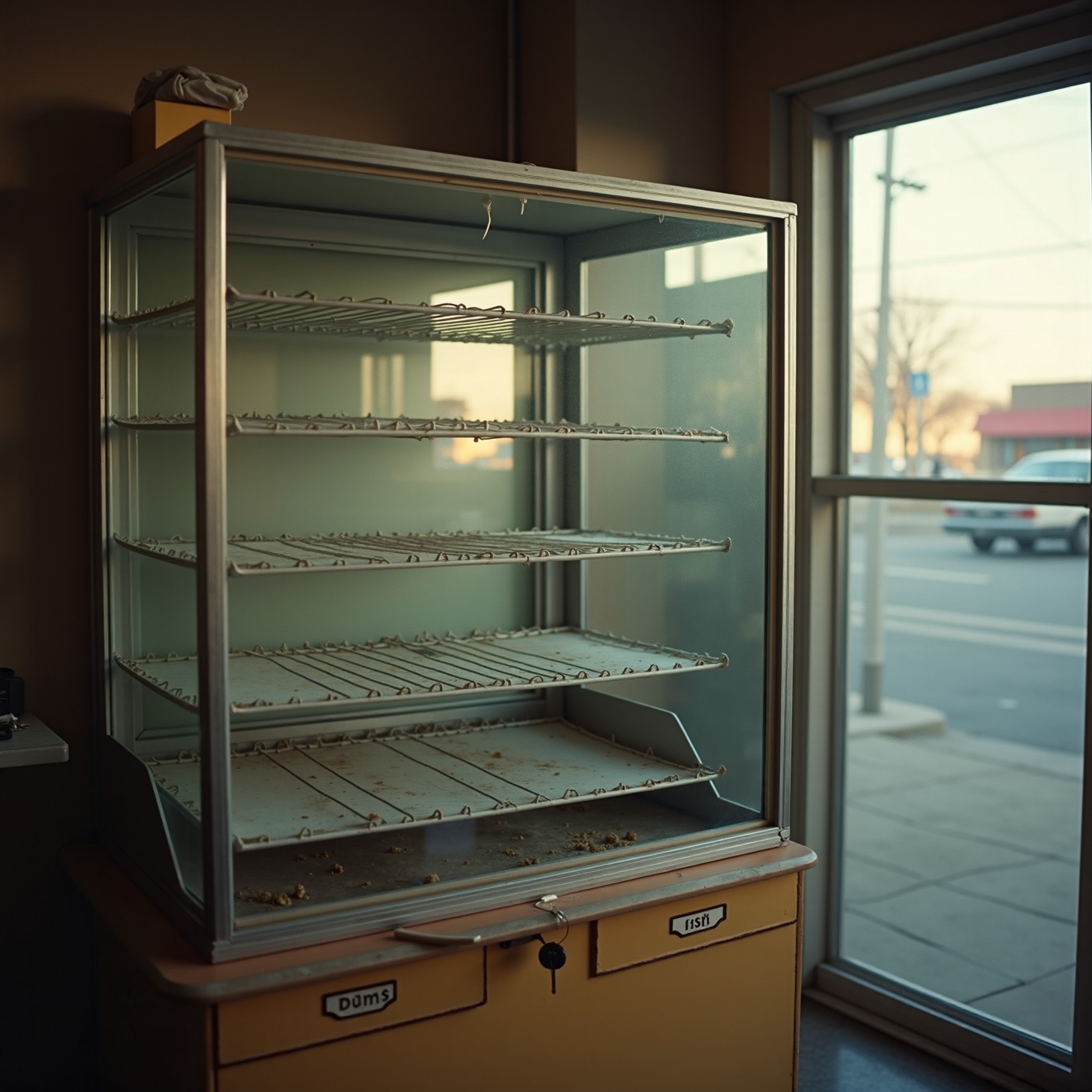
It is not much to look at. Eight stools. A counter with a laminate top that has gone soft at one corner. A glass case, an old one, the kind with sliding doors on the back that stick in humid weather.
Walt Bell has been getting up at three in the morning for thirty years to fill that case.
He is at the fryer by four. That part has never varied, not for weather, not for holidays, not for the year he had the shoulder surgery and worked one-handed with the arm strapped down. Cake donuts first because they hold, then the yeast dough that has been proofing overnight, then the glaze, and by five-thirty the whole block smells like sugar and hot oil and the front door is unlocked whether anyone is out there or not.
And for thirty years, Ruthie Bell was at the register when they came in.
She ran the front the way some people run a small country. She knew the orders. She knew which regular took his coffee black and lied about it to his doctor, and which one had a granddaughter starting at the community college, and she asked, and she remembered the answer, and she asked again the next week. If you came in twice you were a name. If you came in twice a week for a decade you were basically family, and she would tell you when you looked tired.
Denny Whitlock came in at 5:40 every weekday on his way to a job site, and had for eleven years. Marisol Reyes came in around seven, coming off the night shift at the hospital, still in scrubs, and bought one old-fashioned and a coffee and ate standing up. Carl Ovitt, retired, came at nine and stayed for two hours and read the paper front to back at the second stool.
Then one Tuesday in March, Ruthie wasn’t there.
Walt was at the register himself. He was polite and slow about it, ringing people up with flour still on his forearms, and when Denny asked where she was, Walt said she wasn’t feeling great and left it there.
Word came out over the next week, the way word does in a place with eight stools. It was a stroke. It had happened on a Monday night in their kitchen. She was at the hospital first and then at a rehab facility twenty-five minutes north of town, and she was going to be there a long while, and nobody was making promises about what she would get back.
Walt did not close the shop. Not for a day.
He came in at three. He fried at four. He opened at five-thirty and he ran the front and the back both, and he stayed open until seven in the evening, same as always, because that is when Bell’s closes.
Marisol was the one who did the arithmetic first, standing at the counter in her scrubs one morning in April.
“Walt,” she said. “When do you get up there to see her?”
“After I close,” Walt said.
“After you close.”
“I lock up, I clean the fryer, I go.”
Marisol did the math out loud, though not to him. She did it to Denny, three days later, in the parking lot of the hardware store, because it had been sitting in her chest for seventy-two hours.
“He closes at seven,” she said. “Cleanup is an hour if he hurries. It’s twenty-five minutes up there. Visiting ends at eight-thirty.”
Denny looked at her.
“He’s getting half an hour,” Marisol said. “Denny. He’s getting half an hour a day with his wife.”
Here is the thing they both understood without having to say it, and it is the reason this story goes the way it goes instead of the way these stories usually go.
You could not give Walt Bell money.
Somebody had already tried. In the second week, one of the morning regulars had put a folded fifty on the counter and said something kind, and Walt had picked it up and handed it back and said, in a voice nobody had heard him use before, that he was not a charity case, and then he had gone back to the fryer and not spoken for ten minutes.
There would be no jar by the register. There would be no envelope. There would be no page online with a photo of Ruthie on it and a thermometer filling up in red, because if Walt Bell ever found out that people had gone around town collecting for him he would have closed the doors out of shame and none of them would have ever seen him again.
And you could not tell him to close early either. They knew that too. He had explained it once to Carl without meaning to explain anything at all.
“Case has to sell,” Walt had said, scraping the griddle. “Whatever’s in it at seven is money I already spent.”
That was the whole equation. The dough was bought. The oil was bought. The gas that heated the oil was bought, at four in the morning, before a single customer walked in. Every donut still sitting in that case at closing time was a small loss he had already paid for, and thirty years of running a shop on a street like Third had taught him to be ruthless about small losses, because small losses are the only kind that ever actually kill a place like his.
So he stayed until seven. Every day. Because he could not afford to eat the case.
Which is when Marisol said the sentence that turned the whole thing.
“Then the case has to be empty,” she said.
Denny looked at her for a second and then he got it, and something happened to his face.
They started that Thursday, and they did it quietly.
Marisol came in at seven in the morning as always. Instead of one old-fashioned she bought fourteen and carried them into the break room at the hospital and set them on the table with the lid open and said nothing to anyone about why.
Denny bought two dozen at 5:40 and took them to the site, and told his crew they were for the crew, and did it again the next day, and the day after that.
Carl Ovitt, who lived alone and did not particularly need donuts, bought ten a day and walked them down the block. To the shoe repair man. To the women at the insurance office on the corner. To his neighbor with the four kids, who eventually asked him to please stop, and then did not really mean it.
Word spread the way it does in a town of that size, quietly and completely, and it spread with a rule attached to it that nobody ever wrote down. You buy in the morning. You buy more than you want. And you do not say one word to Walt.
Tanya Ostrowski, who taught fourth grade, started coming in on her way to school and buying three dozen for the teachers’ lounge on Fridays. The dispatcher at the towing company started sending a driver. The barber two doors up, who had never once bought a donut in his life because he did not like them, bought half a dozen a day and gave them to whoever was in the chair.
And here is what it looked like from behind the counter.
The case started running low around one in the afternoon.
Then around noon.
Then, by the second week, Walt Bell was standing in front of an empty case at a quarter to two on a Wednesday, holding a rag, looking at it like a man who has found his car parked in a different spot than he left it.
He locked the front door at two. He cleaned the fryer. He was on the road north by twenty after, and he walked into that rehab facility a little before three in the afternoon, and he sat with his wife for five and a half hours.
He did that the next day too.
He did it for four months.
Ruthie later said she could tell something had changed at the shop long before anyone told her anything, because her husband started arriving in daylight. He would come in with the sun still up and his shirt still smelling like the fryer and he would sit in the chair by her bed and talk her through the whole day, and there was suddenly enough day left to talk about.
He told her business had picked up.
He genuinely believed it. That is the part the regulars still laugh about, a little guiltily. Walt Bell spent that entire spring quietly convinced that he was having the best run Bell’s had seen in a decade, and he could not for the life of him figure out what he had changed.
He decided it was the weather. Then he decided it was the new place that opened by the high school pulling foot traffic down Third. He mentioned to Carl once that maybe people were finally getting sick of the drive-thru chains.
“Could be,” Carl said, from the second stool, without looking up from the paper.
Ruthie came home in August.
It took her most of a year after that, and she does not move the way she used to, and she will tell you herself that her left hand still argues with her about certain things. But she is at that register. Same one. She sits on a tall stool now instead of standing, which she complains about, and she still knows which regular takes his coffee black and lies to his doctor.
Denny still comes in at 5:40. Marisol still eats standing up in her scrubs. Carl is still on the second stool at nine.
Nobody ever told Walt.
There are people in Fairvale who know exactly what happened that spring and there are people who have no idea, and the number in the second group is shrinking a little every year, but it has never once included the man it happened to.
He is seventy-one now. He is still at the fryer by four.
And when someone new comes in and gets to talking, and asks him how a place like this survives on a street like this for thirty-some years, Walt Bell wipes his hands on his apron and thinks about it for a second, the way he always does.
“We had a good year in there,” he says. “Right around when Ruthie was sick. Never did work out why.”