
The final whistle had blown, and the number on the scoreboard was cruel and plain: their team was out of the World Cup, sent home a single goal short. All around, tens of thousands of people were already flowing toward the exits — that slow river of tired shoulders, half-finished sodas and folded flags that follows every big match once the noise dies down.
But high up in one corner of the stands, a whole block of fans wasn’t drifting toward the doors at all. They were moving the other way — toward the mess. It was the summer of 2026, the World Cup was rolling across North America, and in a packed stadium near Dallas the supporters of Japan had just watched their side lose. And yet, only minutes after the heartbreak, they were back on their feet, pulling folded blue plastic bags out of their pockets.
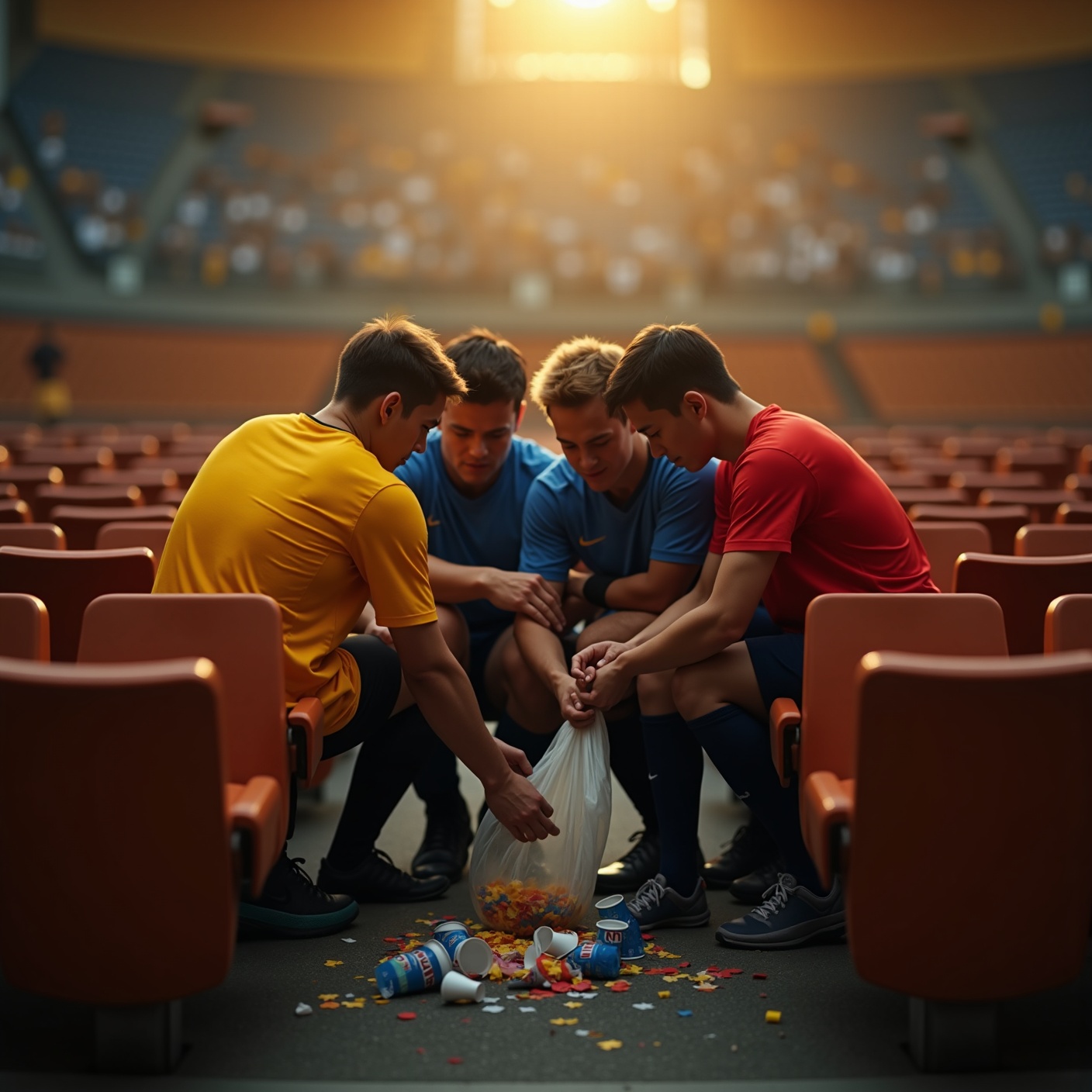
They spread along the rows they’d been singing from all evening. Paper cups, popcorn boxes, crumpled programs, wrappers, even the confetti they themselves had thrown in the happier minutes — all of it went into the bags, seat by seat, row by row. No staff member had asked them to. No camera had prompted them. Some were still wearing the face paint they’d put on for a match that hadn’t gone their way.
To the strangers watching from across the stadium, it looked almost impossible: people with every reason to sulk, choosing instead to be useful. But to the fans themselves, there was nothing remarkable about it at all.
Because in Japan, this isn’t a stunt — it’s a habit older than any of them. Most Japanese schools don’t employ janitors. From the age of six, children spend a few minutes at the end of each day cleaning their own classrooms, hallways and even washrooms, a small daily ritual known as osoji. You learn early that the space you borrow, you hand back better than you found it — and that tidying up side by side is simply what considerate people do. Decades later, that quiet lesson travels with them, all the way to a stadium thousands of miles from home.
And that was when something began to happen in the aisle just above them.
A small knot of Brazil supporters — fans of the very team that had just knocked Japan out — had stopped at the top of the concrete steps on their way to celebrate. For a moment they simply watched the losing side tidying up in silence. Then, without a word passing between them, a few of them turned back, walked down into the Japanese section, and held out their hands for the bags.
And so it went: yellow shirts and blue shirts, winners and the beaten, strangers who couldn’t share more than three words of the same language, crouching shoulder to shoulder between the seats. They were laughing now — pointing out a stray cup here, a forgotten flag there, racing each other down the rows. Twenty minutes earlier they had been roaring against one another across a stadium of ninety thousand voices. Now they were just people cleaning up a room together.
Someone filmed it, of course. Within a day the clip had been watched millions of times, and the comments filled with the same three words over and over: faith in humanity restored. What moved people wasn’t really the tidy rows of empty seats. It was the quiet proof that the thing that had divided the two crowds all night — a single line on a scoreboard — had turned out to be the smallest thing in the whole building.
The truth is the Japanese have been leaving stadiums spotless like this for years; it first swept around the world at the 2022 tournament and has followed them ever since. What changes each time is who decides to join in. One year it was fans of one nation, then another. This time it was the very team that had beaten them, choosing a shared broom over a victory lap.
When the last row was clear, they tied off the bags and set them in a neat little line beside the aisle. Then the two groups did the last thing anyone expects of rivals: they traded a jersey or two, leaned in for a photo, and wandered out into the warm night as if they’d been friends for years. The scoreboard had already gone dark. The part everyone carried home was the part that came after it.