
In a laboratory at MIT, a mouse stood frozen in terror inside a box where nothing had ever hurt it. The fear was real. The danger was not. Scientists had written it into the animal’s brain like a line of code.
In 2013, a team led by Nobel laureate Susumu Tonegawa, at MIT’s Picower Institute for Learning and Memory, did something that until then had lived only in science fiction: they implanted a false memory. Working with researchers Steve Ramirez and Xu Liu, they published the result in the journal Science, and it quietly rewrote what we thought a memory even is.
To understand it, you need one word: engram. For more than a century, scientists suspected that every memory leaves a physical trace in the brain — a specific pattern of neurons that fire together when you recall it. That hypothetical trace had a name, the engram, but no one had ever pinned one down and shown it doing its job. It was the ghost in the machine of the mind.
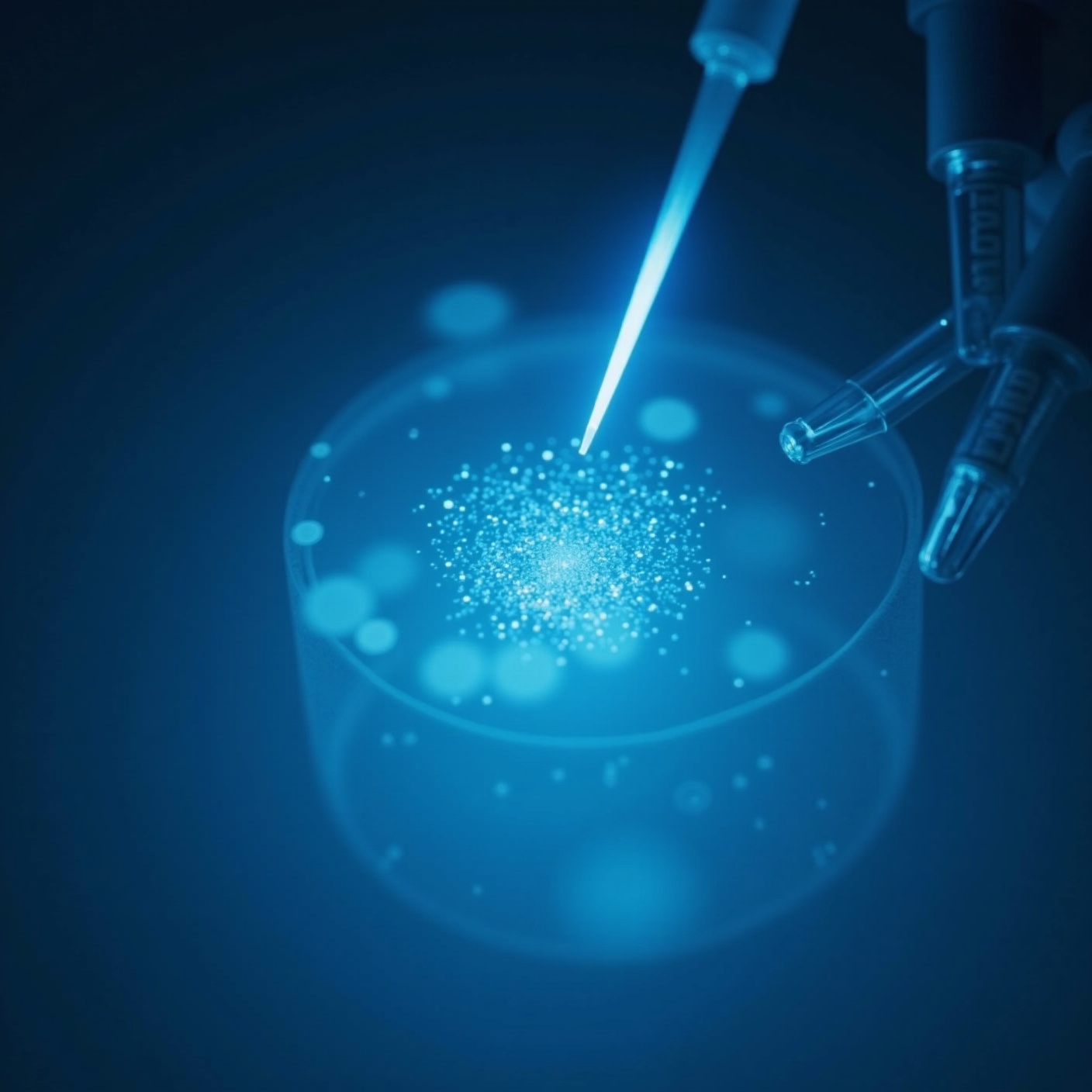
Tonegawa’s team caught the ghost. They used a tool called optogenetics: they genetically engineered certain neurons to produce a light-sensitive protein, so that a thin pulse of light delivered through a fiber could switch those exact cells on — like flipping one specific switch in a room holding millions of them.
Here is what they actually did, step by step. First they let a mouse explore a safe box — call it Room A — and tagged the specific neurons in the hippocampus that lit up while the animal was forming its memory of that room, making those cells respond to light.
Then they carried the mouse to a completely different box, Room B. There they gave it a mild foot shock — and at that very instant, they shone light into its brain to switch Room A’s memory back on. The animal’s brain was now feeling pain and fear while replaying a place it had only ever known as safe.
The test came next. They returned the mouse to Room A — the genuinely safe box, where nothing bad had ever happened. The mouse froze, bracing for a pain that room had never delivered. It was terrified of a memory that was entirely false, stitched together from two real experiences that had never actually met.
What made this more than a clever trick was the proof underneath it. It showed that a memory is not a vapor drifting somewhere in the mind — it is physical, made of identifiable cells, and if it is physical, it can be located, switched on, and even forged. As Tonegawa put it, whether a memory is false or genuine, the brain’s mechanism for recalling it is the same. From the inside, the fake felt exactly like the real thing.
And that is the unsettling part, because it is not only mouse brains that work this way. Human memory is not a recording locked safely in a drawer; it is a reconstruction, rebuilt a little differently each time we summon it. The psychologist Elizabeth Loftus spent decades demonstrating that ordinary people can be led to vividly “remember” events that never happened — a childhood trip that was never taken, a detail at a crime scene that no one actually witnessed.
Now think about what that means inside a courtroom. An eyewitness can point across the room, certain beyond any doubt, voice shaking with conviction — and still be sincerely, completely wrong. Their confidence is genuine. Their memory is not. Tonegawa’s frightened little mouse handed us the physical mechanism behind a mistake that has helped send innocent people to prison.
We tend to trust our memories as if they were photographs. They are closer to stories we retell, edited a little more with every telling, until one day the edits quietly become the truth.
So the next time you are absolutely certain you remember something — the argument, the promise, the face in the crowd — how sure can you really be that some part of your brain didn’t gently write it in for you?