It was an ordinary afternoon in Kingman, Arizona, and Lieutenant Brian Zach expected his radio to hand him one last routine job before he could go home. What it handed him instead was a two-year-old girl he would spend the rest of his life loving.
The call came in as a welfare check — one of those quiet emergencies that never make the evening news. Somewhere across town, someone was worried about a child, and it was Brian’s job to go and make sure she was safe. He had done hundreds of these. He did not know that this one would follow him home and never leave.
Behind the door was a little girl named Kaila. She was tiny, barely past her second birthday, and she had already been through more in those two short years than most people meet in a lifetime. She arrived into that afternoon frightened and hurting, unsure of every grown-up face around her — a small person who had learned far too early that the world was not always gentle. The details of what she had come from stay where they belong: in the past, off-screen, closed. What matters is what happened next.
Because a welfare check is mostly waiting. There are calls to make, forms to fill, social workers on their way, a careful and slow machinery that turns and turns to protect one child. And while all of that ground forward around her, Kaila sat in the middle of it — two years old, overwhelmed, and completely alone in a room full of busy adults.
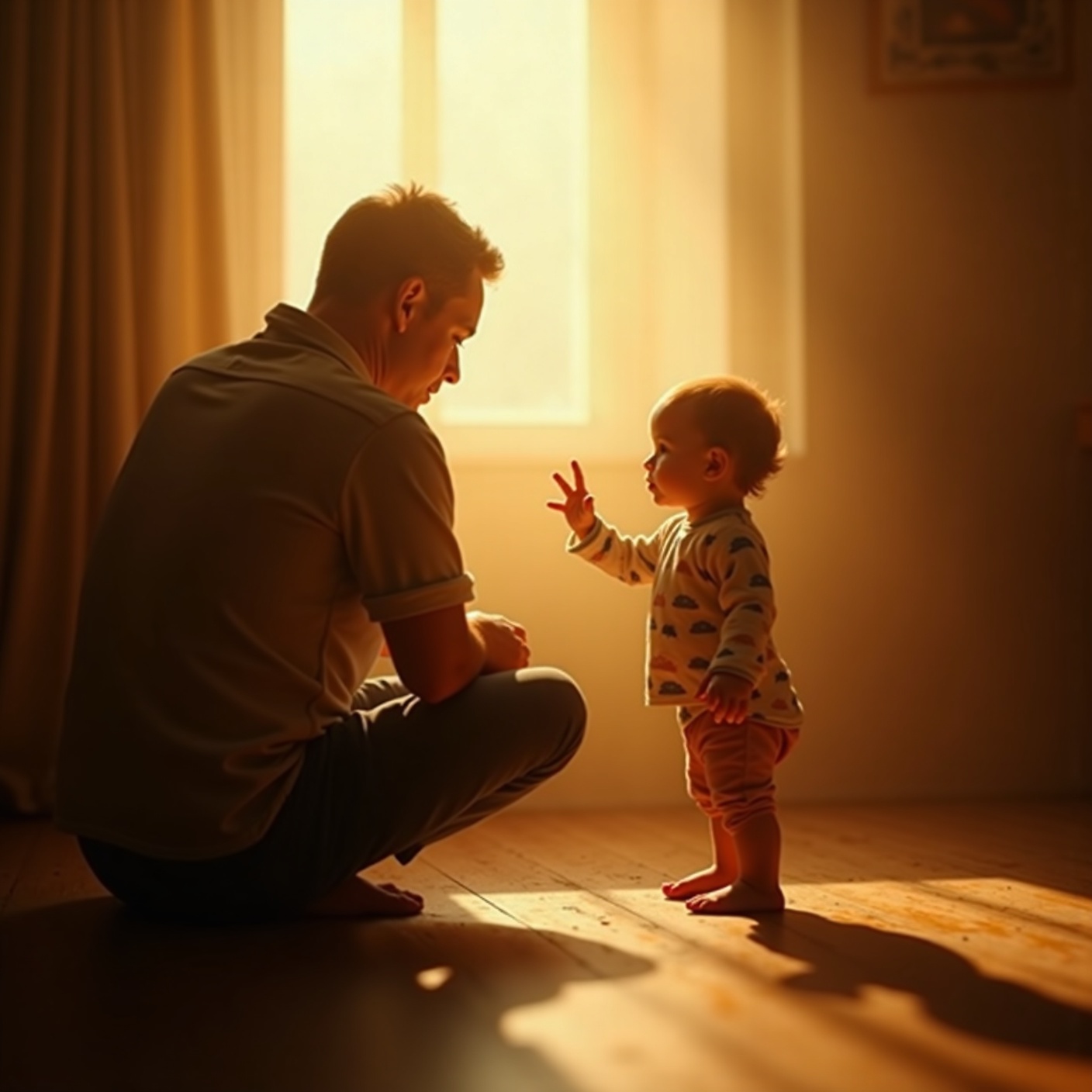
So Brian did the one thing that was on no checklist and in no manual. He stopped being an officer for a minute and simply became a person. He got down onto the floor, level with her. He softened his voice. He pulled faces until the corners of her mouth twitched. He found, somewhere in that hard afternoon, a way to make a scared little girl laugh.
“You could tell she’d had a rough go of it,” is how he’d later describe the moment. But children are astonishing. Give them one safe grown-up and one honest bit of kindness, and something in them reaches back. Kaila reached back. By the time the social workers finally arrived to take her somewhere safe, a small, stubborn thread had been tied between the frightened toddler and the officer who had knelt down to meet her.
Then the paperwork was done and the case moved on, the way cases do. Kaila went off into the care system to be kept safe, and Brian’s shift ended, and he drove home to his wife and their two older children. On paper, his part of the story was over. He had done his job well. Most people would have let the memory fade into the long blur of every other call.
But Brian didn’t. He went home that night and he told his family about the little girl with the big, wary eyes who had, against all odds, laughed for him. He couldn’t stop thinking about her. Neither, it turned out, could the people whose job it was to find her a home.
Weeks later, when social workers began searching for a foster placement for Kaila, someone remembered the officer who had been so gentle with her that first day. A phone rang. The question on the other end was simple and enormous at the same time: “Would you actually consider being a placement home?”
Brian and his wife didn’t need a long conversation. They said yes right away. Their two older children, Raina and Trevin, made room in their lives for a little sister without a second thought. What was offered as a short-term arrangement — a few weeks, maybe a month, just until something more permanent could be sorted out — quietly moved into their home and into the middle of their family.
And then the weeks became months. The family played it the only way you can play something like this: week by week, month by month, court date by court date, never quite knowing how the story would end but choosing, every single day, to love her as though it already had. Kaila learned what a safe house sounds like at night. She learned that dinner comes every evening, that arms open when you cry, that a big brother and a big sister are the best thing a small person can have.
Four years after that first ordinary afternoon, they all stood together in front of a judge. The short-term placement, the temporary solution, the little girl who was only ever supposed to stay a few weeks — she became, officially and forever, a Zach. Brian, who had answered one more call before the end of a shift, signed the papers that made him her dad.
Today Kaila is thriving. She is surrounded by a mom and a dad and a big brother and a big sister who chose her, on purpose, over and over, until the choosing turned into family. The frightened two-year-old who once sat alone in a room full of strangers now has a home full of people who can’t imagine life without her.
“She was meant to be ours,” Brian says. And when you hear how a tired officer knelt down on a hard afternoon and made a scared little girl laugh — and how that one small kindness grew, over four patient years, into a forever family — it’s hard to believe anything else.