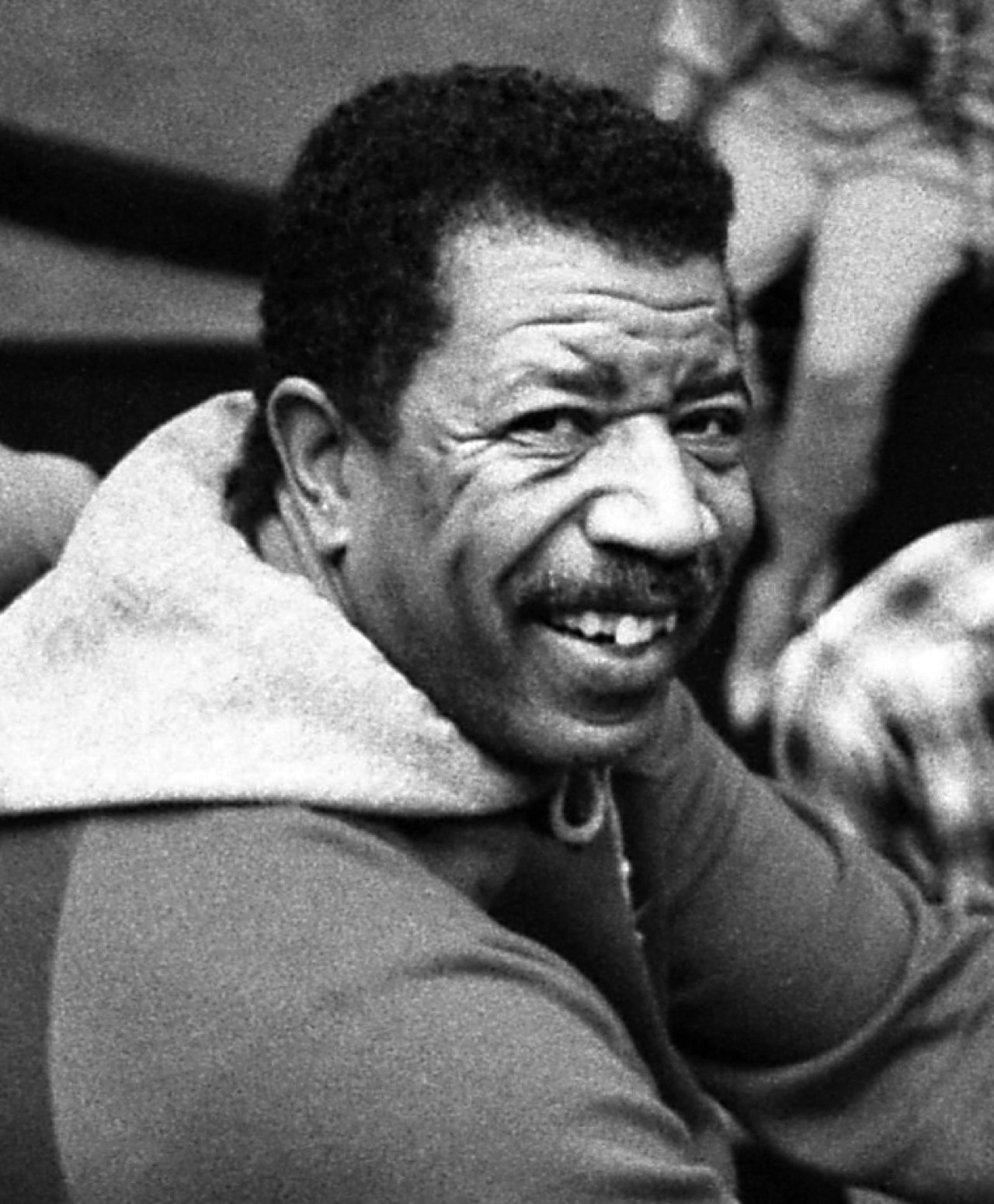
He spent more than 50 years on television and almost never got the punchline. That was the job. He knew it, he chose it, and he was better at it than nearly anyone.
“But in all those comedies, you have to remember one thing,” Hal Williams once said. “I wasn’t the funny guy. I was the straight guy in all the madness.”
Hal Williams died on Wednesday morning, July 15, 2026, at his home in Rancho Mirage, California. He was 91. His manager, Zna Portlock Houston, told TMZ that he died of natural causes at home. There was no long public decline, no last act of tragedy. A 91-year-old man who worked until he was 90 went to sleep in his own house.
If you were watching television in the 1970s, you knew his face long before you knew his name. He was Officer “Smitty” Smith on “Sanford and Son,” one half of the patrol car that kept rolling up to Fred Sanford’s junkyard. His partner was Officer “Hoppy” Hopkins, played by Howard Platt, a white cop with an unshakable belief that he was fluent in the culture around him. The comedy ran entirely on the gap between them. Hoppy would say something enthusiastic and wrong. Smitty would look at him. That look did more work than most monologues.
He appeared in more than 20 episodes across the show’s run, and the pairing was very nearly an accident.
“We did it one time in rehearsal and the producers thought it was funny,” Williams recalled of how the double act was born.
What happened after that says something about how the show worked, and about how much of Smitty was actually Hal Williams. The writers, he remembered, would hand the thing over to them outright. “They used to tell us they didn’t have anything to do that week and to go make up some lines,” he said. He and Platt would go off, write their own dialogue, bring back something that sounded like people instead of like a script, and the producers would put it on the air. “That was a fun show,” Williams said.
He had taken an unusually long road to that patrol car.
He was born Halroy Candis Williams on December 14, 1934, in Columbus, Ohio. He was a kid who went to the movies constantly and wanted, more than anything, to be a cowboy. What he became instead was a working man. He was a social worker. He was a corrections officer. He was a postal worker. He did community theater at night in the early 1960s the way other men bowled.
Then his marriage ended, and it cracked something open.
“I sat down after getting divorced and said, ‘What do I really want to try to do before the maker comes and gets me?'” he said. “And it was acting.”
He moved to Los Angeles in 1968 and gave himself a deadline of three years. Not a dream, a deadline. He worked nights at the postal facility at LAX and auditioned during the day, and he kept that job until “Sanford and Son” and “The Waltons” were both paying him at once. Only then did he quit the post office. A man who had spent his life around consequences was not about to gamble on a punchline.
The work came, and it kept coming, and it was almost always the same assignment: be the solid one. He was Harley Foster on “The Waltons” through the 1970s. He was the drill sergeant opposite Goldie Hawn in “Private Benjamin” in 1980, then again in the sitcom version. He turned up on “Roots: The Next Generations,” “Hill Street Blues,” “L.A. Law,” “The Jeffersons,” “Knots Landing,” “Magnum P.I.” He was Rudy on “The Sinbad Show.” He worked for Paul Schrader and for Clint Eastwood. Decades later a new generation met him on “Moesha,” on “Parks and Recreation,” in “Guess Who,” in “Flight,” and finally on the “Matlock” revival, still working at 90.
But the role that made him permanent came in 1985, and it very nearly did not exist at all.
“227” was being adapted from a stage play, and in the play his character was nothing like the man America would come to love. Williams described that original version cheerfully and without flattery: “I was a philandering sleaze in the play and I was having an affair with the vamp upstairs.”
For television, someone had a tidier idea. Make Mary Jenkins a single mother. Cut the husband. It was the safe, expected shape for a Black family sitcom in 1985, and Marla Gibbs refused it flatly.
“Marla didn’t want [her character] to be a black woman in the ghetto struggling to raise children,” Williams said.
Gibbs has never been vague about her part in that. “I had a big influence on how the show went and that’s the way I wanted it to go,” she said.
So Lester Jenkins was built instead, and Hal Williams was handed the quietest, most radical job on 1980s television: be a Black husband and father who simply stays. He was married to Marla Gibbs’ Mary. He was father to Brenda, played by a teenage Regina King in her first television role. Jackée Harry played Sandra, the neighbor, and won an Emmy for it in 1987. The show ran five seasons and 116 episodes on NBC, and at the center of it sat a man in a chair who loved his wife, tolerated her friends, and never went anywhere.
Nothing about Lester was showy. That was the entire point. Williams and Gibbs worked on the scripts together, pushing for a family that behaved like a family, and week after week millions of people watched a Black household that was solidly middle-class, intact, affectionate, and completely unremarkable in the best possible way.
Jackée Harry put it plainly after his death. As The Hollywood Reporter noted, she said Williams believed Black fathers on television should be “loving, present, and compassionate,” and that he “helped show America what that looked like.”
He was not naive about the cost of being that reliable. Being the steady one, over and over, builds a wall around an actor, and he felt it.
“Those shows have proven to be my detriment at times,” he said. “People don’t realize that I’m a serious actor. I’ve always tried to keep a foot in both camps, but it’s hard to fight the pigeonholing that goes on.”
That is about as close to a complaint as Hal Williams ever got in public. And when he took stock of the whole thing near the end, the arithmetic clearly delighted him.
“50 years that I’ve been lucky enough to do what I do, and 11 television series,” he said. “That’s unheard of.”
Here is the part that lands hardest, and it belongs at the end because he seems to have arranged it himself without meaning to.
Two days before he died, Hal Williams was in Ohio. He had gone back to the state where he was born, where the kid who wanted to be a cowboy used to sit in the dark watching other people be cowboys. He went for a “Sanford and Son” reunion, and he went with Howard Platt. Hoppy. The other half of the patrol car, more than 50 years later.
His manager said he came home tired from that trip. He had been dealing with some health issues. On Wednesday morning, in his own house in the desert, he died.
Ninety-one years old. A career that outran his own three-year deadline by about half a century. And the last thing he did was fly home to Ohio to sit next to his partner and let people tell him they grew up with him.
They did. That’s the thing about the straight man. He was in the background of your living room for 20 years, calm while everything else went sideways, and you never noticed how much you were counting on him being there until somebody told you he was gone.
He leaves behind children, grandchildren and great-grandchildren.
Rest easy, Smitty.